 US – English
 UK – English
 Canada – English
 Australia – English
 Danmark – Dansk
 DACH - Deutsch
 France – Français
 España – Español
 Sverige – Svenska
 Italia – Italiano
 Nederland – Nederlands
 Portugal – Português
 Suomi – Suomi
 Norge – Norsk
 日本 – 日本語
 Romanian – Română












How will Making Tax Digital affect accountants?
Run your entire firm on one platform

Key takeaways:
- MTD for Income Tax has replaced the single annual return with quarterly submissions for qualifying sole traders and landlords
- As of August 2026, HMRC calculates 66% of required taxpayers had signed up for MTD, and around 50% submitted their first quarterly update
- HMRC’s soft landing means no penalty points for late quarterly updates in the 2026/27 tax year, although the record-keeping requirements are in effect
- Data quality and reconciliation is the top-cited operational hurdle for accountants managing MTD clients, ahead of onboarding and software selection.
- Thresholds drop to £30,000 in April 2027 and £20,000 in April 2028, bringing many more clients into scope over the next two years.
Making Tax Digital for Income Tax has already changed how UK accounting firms operate, not just how clients file. Since 6 April 2026, sole traders and landlords earning over £50,000 report quarterly instead of once a year.
That shift touches staffing, capacity planning, and how firms price their services. It isn’t limited to the paperwork clients submit.
Table of сontents
- How will Making Tax Digital affect accountants?
- How Making Tax Digital affects accountants’ staffing and capacity
- How Making Tax Digital affects client management for accountants
- What happens if accountants or clients fall behind on Making Tax Digital
- Making Tax Digital deadlines accountants need to know
- How MTD is reshaping pricing and service models
- The advisory opportunity Making Tax Digital creates for accountants
- Choosing MTD-compatible software for your firm’s workflow
- Managing Making Tax Digital across your accounting practice
- FAQs
- Getting your practice ready for the next quarter
Table of сontents
- How will Making Tax Digital affect accountants?
- How Making Tax Digital affects accountants’ staffing and capacity
- How Making Tax Digital affects client management for accountants
- What happens if accountants or clients fall behind on Making Tax Digital
- Making Tax Digital deadlines accountants need to know
- How MTD is reshaping pricing and service models
- The advisory opportunity Making Tax Digital creates for accountants
- Choosing MTD-compatible software for your firm’s workflow
- Managing Making Tax Digital across your accounting practice
- FAQs
- Getting your practice ready for the next quarter
How will Making Tax Digital affect accountants?
Quarterly submissions have replaced the single annual return for clients in scope. Digital record-keeping is mandatory, not optional. Firms now face a recurring compliance cycle instead of one annual crunch.
That’s a structural shift in how work gets distributed across the year, not just a new form to fill in. Accountants who used to concentrate effort around January now need capacity spread across four filing windows a year, on top of existing VAT and payroll deadlines.
None of this should come as a surprise. MTD for Income Tax has been discussed and debated in practitioner communities for years before its April 2026 start date. What’s changed is that the debate is over. The obligation is live, and firms are now managing the operational reality of it.
How Making Tax Digital affects accountants’ staffing and capacity
Quarterly submission windows run about a month each, and they land on top of VAT quarter-ends, January, Easter, and summer holidays. Those are the exact periods most firms are already stretched thin.
For a firm with a growing portfolio of MTD clients, this isn’t a one-off filing task. It’s a repeatable quarterly process that needs dedicated capacity, not effort borrowed from other work when things get busy. That holds whether a firm has a handful of MTD clients or several hundred spread across multiple offices.
One mistake shows up more often than others: treating quarterly updates as four mini tax returns and staffing them the way firms staffed the old annual crunch. Each update is lighter on its own, but running four of them a year for every client multiplies touchpoints rather than shrinking the workload.
For more on why UK firms are already feeling this squeeze before MTD adds a new recurring cycle, see our piece on digital transformation in finance and accounting.
How Making Tax Digital affects client management for accountants
By some estimates, between 50% and 69% of income tax clients still hadn’t digitalised their books as MTD took effect, and there’s been little sign of improvement since. Data quality and reconciliation are cited most often as accountants’ top operational hurdle, ahead of client onboarding, software selection, and time and cost.
That means firms aren’t just filing quarterly. They’re also chasing, training, and troubleshooting clients who are still working from spreadsheets or paper.
How to triage: which clients need hands-on onboarding vs. a light-touch nudge
Not every client needs the same level of support. Sorting a portfolio early saves time across the whole first year of quarterly filing.
| Client signal | Recommended approach |
| Already using cloud accounting software and comfortable with digital tools | Light-touch nudge: confirm the software is MTD-compatible and set calendar reminders for each quarterly deadline |
| Working from spreadsheets but open to change | Scheduled onboarding: set up MTD-compatible software and migrate existing records before the next quarter opens |
| Working from paper or resistant to change | Priority hands-on onboarding: assign dedicated setup time and consider a light-touch reporting basis if turnover qualifies |
Firms are dealing with multiple client groups under MTD’s phased rollout, and each group has different cohorts of clients with varying needs, expectations, and technological experience.
Many of these clients will be working with an accountant for the first time. Every client will be getting used to MTD for the first time, and expecting their firm to provide the support they need.
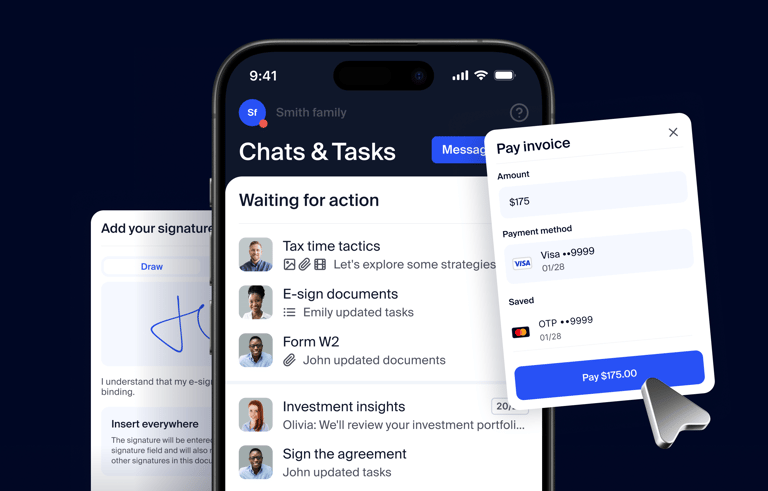
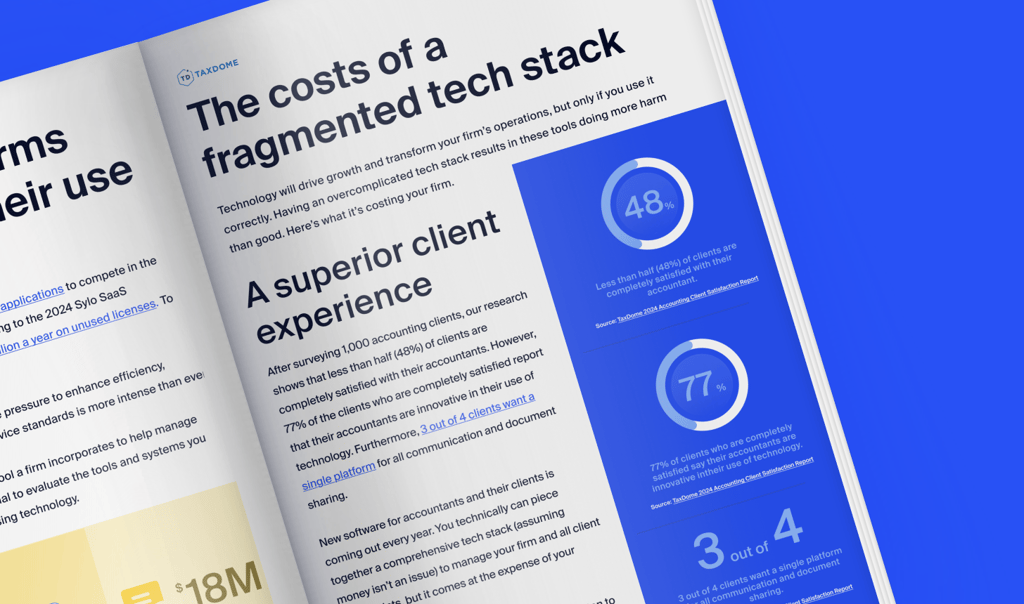
What they don’t want is to have to use half a dozen tools every few months to communicate with their accountant, share files, sign docs, and pay invoices. We know this because 75% of clients tell us they want one platform for all interactions with their accounting firm. Find out what else they want from a firm like yours in our Client Satisfaction Report.

What happens if accountants or clients fall behind on Making Tax Digital
Late submissions and payments now sit under a points-based penalty system. Each missed quarterly update or tax return deadline earns one point. Reach four points and a £200 penalty follows, with a further £200 for every subsequent missed deadline.
HMRC has confirmed a soft landing for the first year: there are no penalties for missing a quarterly update deadline for the 2026 to 2027 tax year. That grace period doesn’t extend to the 2026/27 final declaration, which is due 31 January 2028 and can still attract a penalty point.
The soft landing is real relief, but it shouldn’t undercut urgency. The underlying record-keeping obligation isn’t delayed, and late payment penalties still apply on their own separate schedule.
Making Tax Digital deadlines accountants need to know
The phased rollout is set by qualifying income thresholds confirmed on GOV.UK:
| Phase | Qualifying income threshold | Mandatory from |
| Phase 1 | Over £50,000 | 6 April 2026 (already in effect) |
| Phase 2 | Over £30,000 | 6 April 2027 |
| Phase 3 | Over £20,000 | 6 April 2028 |
For clients who joined in Phase 1, the first year’s quarterly deadlines are 7 August 2026 (already passed), 7 November 2026, 7 February 2027, and 7 May 2027.
Sign-up hasn’t kept pace with the mandate. As of August 2026, only around 570,000 of the roughly 864,000 taxpayers HMRC expects to be in scope had signed up, and 436,000 had submitted a quarterly update. That gap is a useful, sourced snapshot of where the industry actually stands, not just where the mandate says it should be.
How MTD is reshaping pricing and service models
A single annual fee tied to a single annual filing no longer matches the work involved. Ongoing quarterly reporting is a recurring service, and firms are shifting toward subscription or fixed-fee advisory pricing to reflect that.
| Old annual model | Recurring MTD model |
| One fee tied to a single yearly filing | Fee reflects four or more touchpoints a year |
| Pricing set at engagement, rarely revisited | Pricing reviewed as client complexity or scope changes |
| Value delivered once a year, at filing | Value delivered each quarter, through ongoing check-ins |
Framing the pricing conversation without it feeling like a bait-and-switch
Clients notice when a fee changes, even for good reason. Framing the conversation around the new quarterly workload, rather than announcing a price increase on its own, keeps the change from landing as a surprise.
Explaining what quarterly reporting actually involves for their business, before quoting a new fee, gives clients context for why the pricing model changed and not just that it did.
The advisory opportunity Making Tax Digital creates for accountants
MTD’s burden is real, and none of the staffing or client-management pressure above disappears just because there’s an upside. But quarterly touchpoints create four natural moments a year to talk about cash flow, tax planning, and business decisions, instead of one, at year end, when it’s too late to act on most of it.
Sentiment among accountants backs this up. 69% of those surveyed think MTD will benefit their business, and 56% see positive effects for their clients too.
That upside is an argument for building capacity deliberately, not a reason to underestimate the workload covered earlier in this article.
Choosing MTD-compatible software for your firm’s workflow
The right software choice comes down to a short list of criteria rather than a long list of features:
- Genuine digital record-keeping, not bridging software bolted onto a spreadsheet
- Quarterly submission built in, not added on as an afterthought
- Integration with your firm’s existing practice management setup
- Support for calendar-quarter elections, where a client’s accounting periods don’t line up with the standard tax-year quarters
For a closer, feature-by-feature comparison of the tools built specifically for MTD submission itself, see our guide to choosing MTD-compatible software. This article stays focused on what MTD means for how a practice runs, not on ranking the submission tools themselves.
Managing Making Tax Digital across your accounting practice
Tracking MTD status one spreadsheet at a time works for a handful of clients. It breaks down once a portfolio spans dozens or hundreds of clients across different thresholds, quarters, and exemption statuses.
The practical answer looks the same as managing any other recurring compliance cycle: track each client’s MTD status, each quarter’s submission progress, and any outstanding document requests in one place, rather than reconstructing that picture by hand every three months.
Kudzi Chinya, Director at UK-based firm Blue Hectare, described the value of that kind of centralised view:
Firms already managing quarterly tracking this way are also the ones rating practice management platforms most highly. TaxDome currently holds an average rating of 4.7 out of 5 on G2 among tax and accounting practice management software.
For a broader look at what to weigh when choosing a system built for this kind of tracking, beyond MTD submission itself, see our guide to practice management software for UK firms.
FAQs
How will Making Tax Digital affect my day-to-day work as an accountant?
It shifts your workload from one annual crunch to four smaller filing windows a year, plus more regular client contact around record-keeping and digital tools. Most firms feel this first in scheduling, since quarterly deadlines land alongside existing VAT and payroll work.
Do I need to hire more staff for MTD quarterly updates?
Not necessarily, but you likely need to redistribute existing capacity across the year rather than concentrating it around January. Firms that try to absorb MTD work into their current schedule without adjusting it are the ones most likely to feel understaffed.
What’s the biggest operational challenge firms are facing with MTD?
Data quality and reconciliation, according to independent research into the rollout. Client onboarding, software selection, and the added time and cost of managing the transition follow close behind.
Will MTD change how I bill clients?
For many firms, yes. A single annual fee tied to one filing doesn’t map cleanly onto four or more touchpoints a year, which is why many practices are shifting toward subscription or fixed-fee pricing that reflects the recurring workload.
Was the August 2026 quarterly deadline the same for all my clients?
No. The 7 August 2026 deadline covered the first quarterly period, 6 April to 5 July 2026, for clients who joined MTD from April 2026 on standard tax-year quarters. Clients on calendar-quarter elections or later joiners follow different windows. The next standard deadline is 7 November 2026.
Does adding new practice management software just create more work during MTD?
Not if the software is built for exactly this kind of recurring cycle. Setup takes real time up front, but a system built for tracking status, deadlines, and documents across many clients at once should reduce the manual chasing that MTD’s quarterly cadence multiplies, rather than add to it.
Getting your practice ready for the next quarter
MTD for Income Tax is no longer a future date on the calendar. It’s a live, recurring cycle that’s already reshaping staffing, client management, and pricing at UK accounting firms, with two more thresholds still to come in 2027 and 2028.
Firms that treat it as a one-off filing change are the ones most likely to feel the squeeze every quarter. Firms that build dedicated capacity and a single, centralised view of client status are the ones already rating their practice management setup highest, at 4.7 out of 5 on G2 for firms using TaxDome.

Jeff writes for TaxDome with experience in accounting, finance, and invoicing industries. He focuses on educating users about accounting trends and maximizing productivity through practical guidance on TaxDome’s features.
Get your free guide

Thank you!
The guide copy has been sent to your email. Please check your inbox!
Recommended articles

Top AI tools for accountants in 2026: key features and use cases compared

Why accountants are quitting: inside the forces reshaping the profession

How to start a virtual bookkeeping business from scratch