 US – English
 UK – English
 Canada – English
 Australia – English
 Danmark – Dansk
 DACH - Deutsch
 France – Français
 España – Español
 Sverige – Svenska
 Italia – Italiano
 Nederland – Nederlands
 Portugal – Português
 Suomi – Suomi
 Norge – Norsk
 日本 – 日本語
 Romanian – Română












Digital transformation in finance and accounting: breaking growth barriers with technology
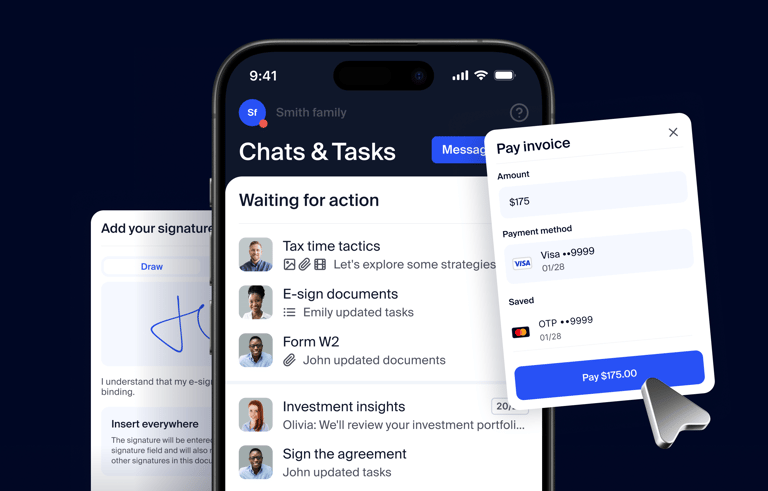
Run your entire firm on one platform
The UK is ramping up digital transformation in finance and accounting. While the headlines focus on Making Tax Digital (MTD), accounting firms are busy dealing with a bigger problem: inefficiency.
For each full-time employee, practices lose an average of £48,000 in billable time per year to unnecessary manual tasks. That’s valuable time and money lost to data entry, compliance admin, and chasing clients.
These inefficiencies drain productivity and hold back firms’ growth potential. Stretched resources limit client capacity and make it harder to adapt to regulatory changes, including MTD.
UK practices are turning to digital transformation to improve efficiency, free up resources, and unlock growth opportunities.
Table of сontents
- Why are UK firms ramping up digital transformation?
- The biggest challenges of digital transformation in finance and accounting
- Making digital transformation work for UK firms
- What does successful digital transformation look like for accounting firms?
- Digital transformation: more outcomes, fewer software trials
Table of сontents
- Why are UK firms ramping up digital transformation?
- The biggest challenges of digital transformation in finance and accounting
- Making digital transformation work for UK firms
- What does successful digital transformation look like for accounting firms?
- Digital transformation: more outcomes, fewer software trials
Why are UK firms ramping up digital transformation?
Demand for accounting services is growing in the UK — and not only for traditional services like bookkeeping. New research from Modulr finds that business strategy advice (75%) tops the list of demands from accountancy firms. This is followed by forecasting (73%), and accounts payable/receivable (66%).
The problem is, accounting firms can’t keep up. Almost half (45%) say they’re burdened by manual data entry and client communications (46%). Instead of driving growth, accountants are drowning in repetitive tasks.
Inefficiency doesn’t only cost the average practice £48,000 per employee each year; it puts valuable growth opportunities out of reach.
As the inefficiencies mount, the need for digital transformation in finance and accounting only grows:
- Time inefficiencies: manual data entry, repetitive admin, and disjointed processes
- Growth bottlenecks: inability to scale services as inefficiencies mount
- Burnout: 74% of accountants in the UK experience burnout symptoms, such as exhaustion, performance drops, and detachment
- Outdated systems: juggling tools that don’t integrate or support digital processes
- Competitive pressure: rivals offering faster, smarter service are winning market share
- Client expectations: clients increasingly demand digital services, online portals, and frictionless communication
- Adaptation challenges: firms are too busy repeating admin tasks to adapt to industry changes and regulations, such as Making Tax Digital (MTD)
Making Tax Digital (MTD) is a perfect example of how inefficiencies are holding back accounting firms in the UK.
This should be a golden opportunity for accountants. New regulations encourage businesses to seek professional help, which increases demand for your services.
Yet, Accountex finds 81.7% see MTD as their biggest challenge in 2025 — more than the 79.08% who recognise it as their greatest opportunity.
Unfortunately, regulations also create confusion and extra work — both for you and your clients.
Aside from the quarterly and annual returns, clients will need your help with the transition. They’ll ask a lot of questions, and probably make mistakes along the way.
Client interactions could skyrocket — so, if this is already a bottleneck for your firm, the best time to address it is now, especially as 79% of today’s clients want one secure portal for document exchange, signatures, messaging, and payments (TaxDome’s Client Satisfaction Report). And the same goes for every other inefficiency standing in the way of your growth potential.
The biggest challenges of digital transformation in finance and accounting
When it comes to digitising your accounting processes, finding tools that promise to solve your problems is easy. Implementing a complete set of tools that genuinely improves outcomes across your whole firm can be a much bigger challenge.
Accounting firms often struggle with this for several reasons:
| Challenge | Why it’s a problem |
| Software choices | Choosing the wrong tools for your needs causes more harm than good |
| Tool overload | Implementing too many tools creates complex workflows and overwhelms staff |
| Integration | Tools that limit your ability to build seamless workflows |
| Learning curves | Constantly learning to use new tools slows adoption and outcomes |
| Staff resistance | Your team isn’t as enthusiastic about your software choices as you are |
| Software expenses | Spiralling software fees from too many tools, upgrades, wrong choices, and switches |
| Security | Implementing systems that protect client data and comply with regulations |
| Productivity gains | Complex systems and tool overload result in minimal — or even negative – productivity gain |
| Expectations vs reality | Technology fails to live up to the expectations that secured buy-in |
Every accounting firm faces these challenges with digital transformation. Struggling with these isn’t a sign of failure. It’s a sign of how difficult it can be to choose and implement the best accounting technology for your firm, especially without the right guidance and support.
So, how do the UK’s leading firms manage digital transformation in finance and accounting?
Making digital transformation work for UK firms
Every accounting firm needs its own digital transformation roadmap. No framework can identify your firm’s inefficiencies or the best tools suited to fix them. You have to make these calls for yourself, and this starts with having a clear vision of what your firm needs.
1. Go in with a clear plan
Know what you need across the entire firm before you start selecting tools. Think process improvements, automation opportunities, and client-facing inefficiencies.
Make one person, or a small team, accountable for digital transformation. Give them clear goals, a timeline, and a budget to work with.
Plan the key phases for digital transformation (research, implementation, testing) and assign roles so everyone knows exactly what they’re doing.
2. Audit existing processes and workflows
Analyse processes at every level of your firm. Identify the bottlenecks creating unnecessary work, avoidable delays, and repetitive tasks.
Audit both internal and client-facing processes. Analyse workflows from start to finish and prioritise the bottlenecks that directly impact growth — those that slow efficiency, reduce your revenue, disrupt cash flow, or harm your client experience.
3. Centralise key processes first
Look for tools that can centralise key processes across your whole firm. Think client data management, billing and processing, or internal and client collaboration. These are the top-level processes that can create inefficiencies throughout your firm. This will help you identify the key products and features to look for from providers.
4. Get more from fewer providers
Using too many tools is as damaging as choosing the wrong ones. Research finds that 65% of UK employees feel overwhelmed by complex workplace technology.
Product knowledge isn’t the only problem, either. Tech overload creates integration problems and adds unnecessary steps to processes. This can make workflows less efficient, not more.
This is also the main reason software fees spiral out of control. You don’t want twelve tools to manage one process. You want a comprehensive system that can streamline and connect all processes — client data management, communication, documents, e-signatures, invoicing, and more — in one place.
5. Prioritise the client experience
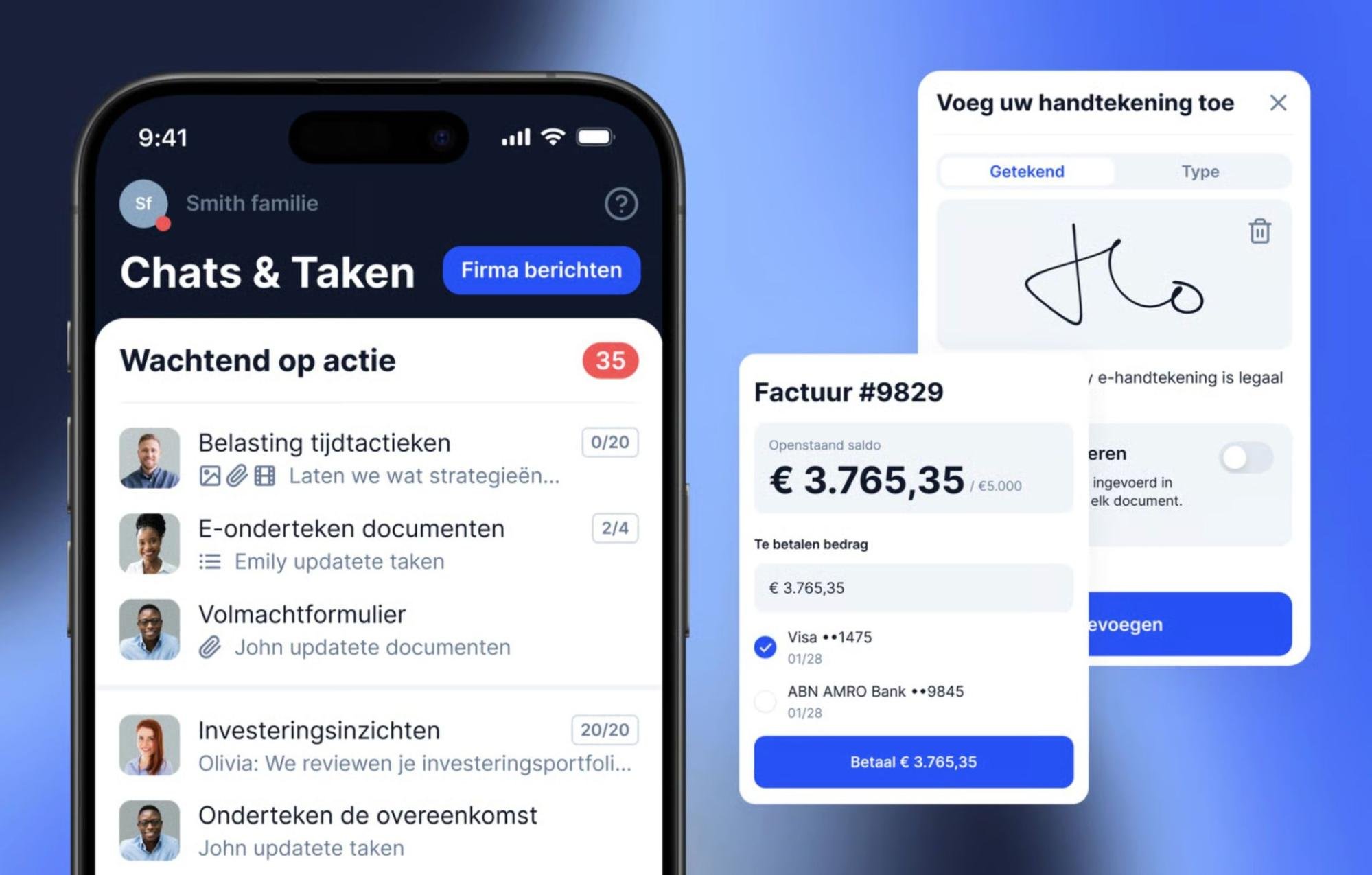
There’s no shortage of tools designed to improve internal processes. There aren’t so many capable of solving inefficient client interactions, though. Firms lose hours every week to onboarding, data collection, document requests, and other client-facing tasks.
These inefficiencies don’t only slow you down — they increase client frustration and threaten your retention rates. Growing firms need a practice management system that improves internal and client-facing processes equally.
6. Involve your team early and often
Speak to your team during the planning phase of digital transformation. Find out which tasks slow them down and which delays prevent progress. Involve them in product testing and get feedback throughout the implementation phase.
Take their opinions into account and explain your decisions with transparency. Get buy-in from the people who’ll actually be using these tools on a daily basis as early as possible. This reduces the risk of staff resistance to new tools and eases the learning curve for them.
7. Invest in onboarding and training
Staff and client experiences are both affected by your technology choices. You’ll need to onboard and train staff for new tools and updated processes. You’ll also need to train clients for any client-facing systems you implement, such as a client portal and client mobile app.
8. Roll out in phases, not all at once
A firm-wide transformation doesn’t happen overnight. Be strategic with your rollout plan and test everything in phases to minimise disruption. Start with internal processes and test changes in one department — or a set of connected processes. For example, you might start with billing and payments systems, knowing this won’t impact daily operations.
A phased rollout helps your firm adapt to gradual changes and resolve minor issues at each stage. Once you complete internal rollouts, you can focus on client-facing systems. By this time, your team will be trained and ready to support clients on their end.
9. Track outcomes, not just adoption
Digital transformation should improve outcomes, not just replace analogue processes with software.
Most firms fail because they implement tools that don’t improve productivity or performance. Some tools even introduce more time drainers, such as constant context switching, endless product training, or having to frequently assist clients on how to navigate them.
If you planned properly, you should know what success looks like: revenue growth, time saved, shorter turnarounds, increased team capacity, and improved client retention. Track these metrics from day one and be ready to take action if things don’t look right. Adoption is a key step — but what matters more are the outcomes it delivers.
What does successful digital transformation look like for accounting firms?
Digital transformation opens space for growth by unblocking bottlenecks. It improves the efficiency of internal processes and client-facing services. This frees up time, budget, and other resources that you can dedicate to high-value activities.
Every firm is different, but going digital should improve a practice in five key areas:
- Efficiency: saving hours every week by automating repetitive tasks
- Accuracy: reducing manual input means fewer errors, stronger compliance, and greater consistency
- Operational efficiency: improved data management, reporting, and insight lead to smarter planning
- Client satisfaction: with shorter turnarounds, higher retention rates, and a seamless experience aligned with what clients expect
- Revenue: higher average revenue per client (ARPC) and revenue growth rate
The outcome: your team’s not busy entering data, chasing clients, or working through backlogs anymore. They’re focused on high-value tasks, improving client services, and playing a bigger role in your firm’s success story.
Case study: replacing complex systems with effective tools
Global Tax Consulting set out to modernise its operations in 2024. The UK-based firm approached TaxDome in late 2023, frustrated by disjointed tools and “clunky” digital processes.
The firm has replaced a complex toolkit with TaxDome — a complete, end-to-end practice management platform. Now, the firm has a centralised platform for improving efficiency throughout the practice.
This includes a CRM designed specifically for accounting practices, which firm owner Emma McDermott says is “five steps ahead of any CRM system that I’ve used”.
Global Tax Consulting’s clients are enjoying the digital transformation, too. Client reviews praise the branded portal and mobile app for simplifying their experience — and they’re not alone.
TaxDome’s client mobile app on App Store and Google Play, rated 4.9/5 with more than 25,000 reviews, simplifies communication, document requests, e-signatures, and the whole client experience.
Emma highlights three key areas where TaxDome improved outcomes:
- Client satisfaction, positive reviews, and retention
- Task organisation and oversight
- Operational efficiency and daily time savings
Read Global Tax Consulting’s case study for the full breakdown of how Global Tax Consulting replaced complex systems with TaxDome.
Digital transformation: more outcomes, fewer software trials
Digital transformation isn’t defined by the tools you implement. It’s defined by improved outcomes — building a more efficient firm that’s ready to seize growth opportunities.
The UK is battling a decades-long productivity problem, and it lags behind other OECD countries in digital technology investment. As an accounting firm, the good news is that most of your competitors are struggling to make digital transformation work. This also means businesses are desperate for accounting services that provide quality, digital experiences.
With demand for accounting services rising in the UK, and new regulations coming into effect, now is the time to step up and be that provider. Move beyond implementing tools to achieving outcomes with a digital system that improves operations throughout your firm.

Aaron produces practical content for TaxDome, drawing on 11 years in SaaS copywriting and marketing. He helps accounting and tax professionals get the most from TaxDome and other tools, making complex topics clear and actionable.
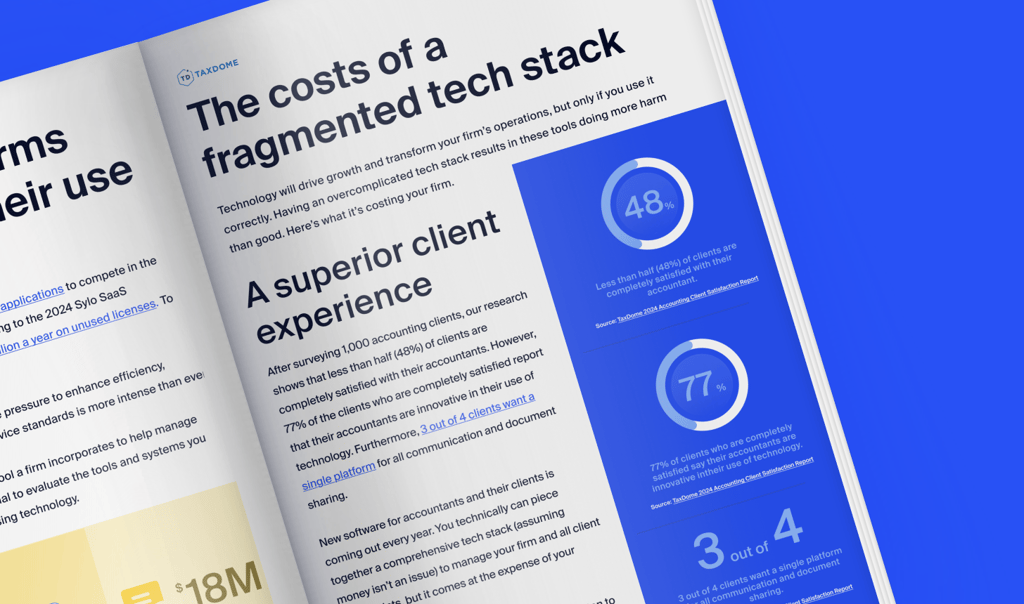
Get your free guide

Thank you!
The guide copy has been sent to your email. Please check your inbox!
Recommended articles

How will Making Tax Digital affect accountants?

Top 5 Karbon alternatives for accounting practice management

Top 6 UK accounting conferences to attend in 2026