 US – English
 UK – English
 Canada – English
 Australia – English
 Danmark – Dansk
 DACH - Deutsch
 France – Français
 España – Español
 Sverige – Svenska
 Italia – Italiano
 Nederland – Nederlands
 Portugal – Português
 Suomi – Suomi
 Norge – Norsk
 日本 – 日本語
 Romanian – Română

20 questions to ask a CPA or accountant before hiring (plus red flags)
Run your entire firm on one platform
Key takeaways:
- The most important questions to ask an accountant cover five categories: credentials and licensing, experience with businesses like yours, exact scope and fees, who does the work, and how quickly they respond.
- Always verify credentials independently. Check CPA licenses through NASBA’s CPAverify or your state board of accountancy, and confirm the preparer has a valid PTIN through the IRS directory.
- Get scope, fees, and responsibilities in a written engagement letter before work begins. Unclear scope is one of the most common causes of billing disputes.
- A preparer who refuses to sign your return is a red flag. The IRS links unsigned returns to inflated refund promises and fees based on refund size.
- Responsiveness matters more than most people expect. 32% of businesses that left an accounting firm cited poor service as the reason.
What do you need to know about an accountant before you hire them? Really, it starts with three key things: are they qualified, do they have experience with businesses like yours, and what’s it going to cost you?
Once you’ve got this covered, everything else comes down to how you’re going to work together and the finer details of your agreement.
We put together this guide to help you steer the conversation, from start to finish. Complete with 20 questions and sample answers to help you find the perfect accountant and get the relationship started on the right foot.
Table of сontents
- What to look for in an accountant or CPA
- 20 questions to ask before hiring an accountant
- How to verify an accountant’s credentials
- What should be in your engagement letter?
- Red flags when hiring a CPA or accountant
- CPA, enrolled agent, or tax preparation chain: which do you need?
- FAQs
- Interview with confidence
What to look for in an accountant or CPA
Before you start interviewing candidates, it helps to know what to look for in an accountant at a high level. Most hiring mistakes start with the early basics: verifying credentials, confirming relevant experience, getting clear pricing in writing, and testing whether the firm actually responds when you call.
These six criteria give you a filter to apply before you start comparing candidates.
- Verifiable credentials. A CPA license, enrolled agent designation, or attorney status, confirmed through the state board or the IRS directory, not just a claim on a website.
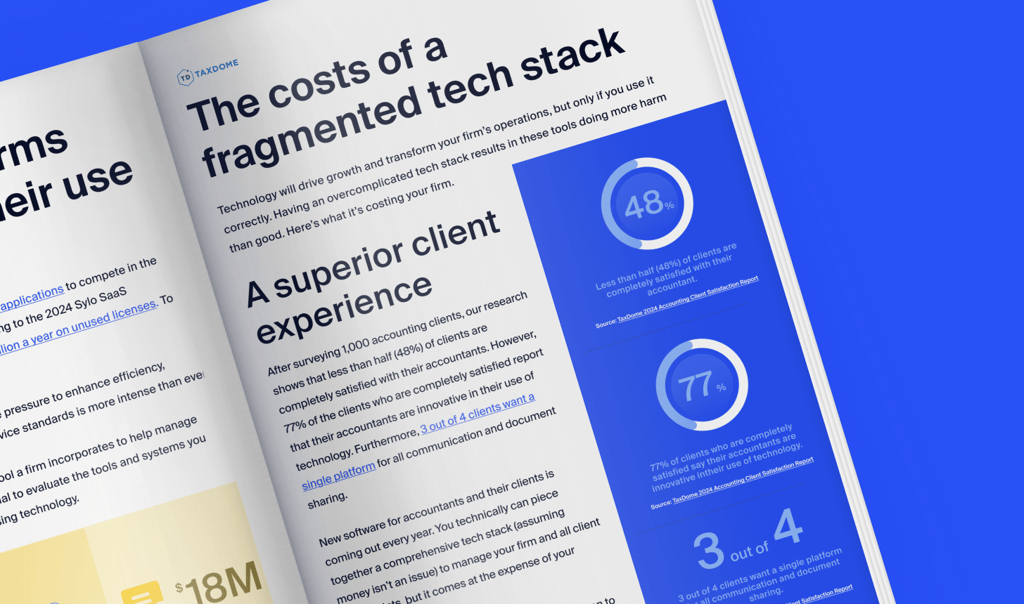
- Relevant experience. Work with clients in your industry, at your business size, and with your entity type. 29% of businesses that switched firms cited a lack of industry knowledge as the reason
- Clear, upfront pricing. A written fee structure that spells out what is included, what costs extra, and how quick questions are billed.
- Responsiveness. A specific response-time commitment, even during busy season. Poor service is the single most cited reason businesses leave an accounting firm.
- Secure technology. A client portal or encrypted platform for exchanging documents, not plain email. For growing businesses especially, the technology a firm uses has a direct impact on the quality of the client experience.
- Year-round availability. The IRS recommends choosing someone available year-round, not just during tax season.
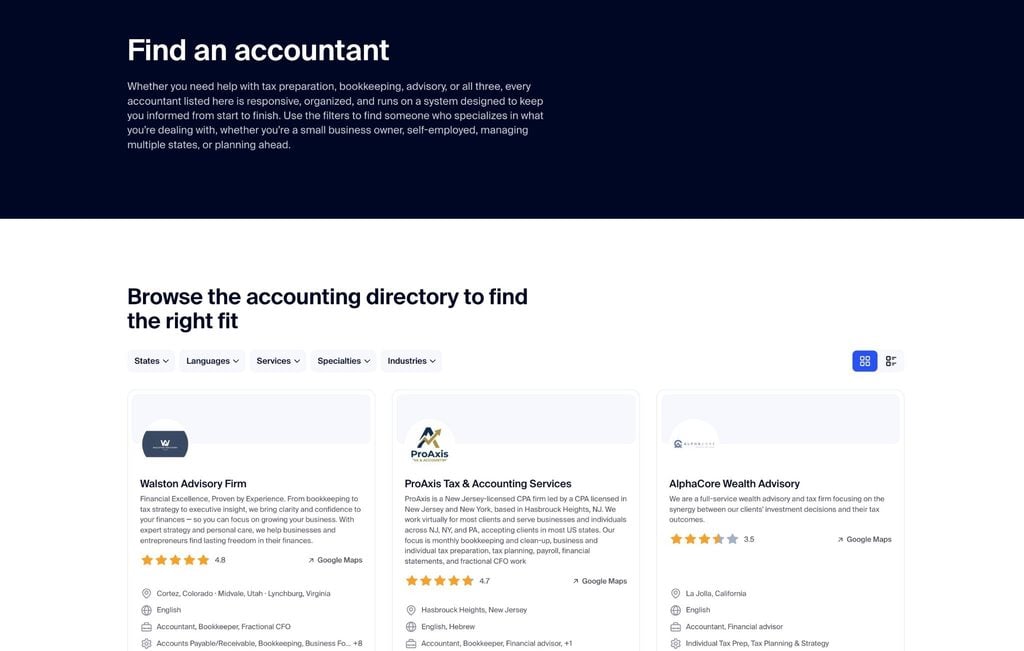
If a candidate clears all six of these, they are worth interviewing in depth. If you are still deciding whether you need professional help at all, see our guide on whether to hire an accountant for your small business. And if you want to cut out the legwork of finding the right accountant, use the new TaxDome Finder to get a list of accountants or CPAs that meet your needs today.
20 questions to ask before hiring an accountant
The table below groups the questions to ask accounting firms and solo practitioners into seven categories. Each row includes the question itself, why it matters, what a strong answer sounds like, and the red flag that should make you think twice.
You do not need to ask all 20 in a single meeting. Start with the categories most relevant to your situation, and use the “good answer” column to benchmark what you hear against what a well-run firm would actually say.
| Question | Why it matters | Good answer | Red flag |
| 1. Credentials and licensing | |||
| Are you a CPA, enrolled agent (EA) or do you hold another credential? | Only CPAs, EAs, and attorneys have unlimited representation rights before the IRS. Knowing the credential tells you what the person can legally do for you. | Names a specific, verifiable credential and explains what it covers. | Vague answer, no credential named, or claims it “doesn’t matter.” |
| Which state licenses you, and is your license current? | CPA licenses are issued at the state level. An expired or disciplined license is a disqualifier. | Names the state and invites you to verify on CPAverify or the state board. | Hesitation, or discourages you from checking. |
| Do you have a Preparer Tax Identification Number (PTIN)? | By law, anyone paid to prepare or help prepare federal returns must have a valid PTIN and must sign and include it on the return. | “Yes, and you’ll see it on every return I file for you.” | Doesn’t have one, won’t share it, or says they’ll leave it off the return. |
| 2. Experience and fit | |||
| How many clients in my industry, size bracket, and entity type do you work with? | Industry-specific experience changes the quality of advice you get. A firm that knows your sector anticipates problems a generalist might miss. | Gives a specific number and can describe common issues in your niche. | Claims to “handle everything” without specifics, or has no clients in your space. |
| Can I speak with a current client reference? | References let you verify responsiveness, accuracy and whether the firm delivers what it promises. | Offers names and contact details without hesitation. | Deflects, or substitutes website testimonials for a live reference. |
| How do you stay current on tax law changes that affect my situation? | Tax law changes frequently. An accountant who relies on outdated knowledge can cost you money. | Describes specific CPE requirements, industry associations, or newsletters they follow. | Can’t name a recent change relevant to your situation. |
| 3. Scope of services | |||
| What exactly is included in the engagement, and what falls outside it? | Unclear scope is one of the most common causes of billing disputes. Getting it in writing helps prevent disagreements before they start. | Walks through the deliverables and timelines, and offers to put it in an engagement letter. | Vague answer like “we’ll handle whatever you need” with no written scope. |
| Do you handle bookkeeping, tax, payroll, and planning, or only some of these? | Knowing the full menu avoids hiring multiple providers when one could cover everything. | Clear breakdown of in-house services vs. what gets referred out. | Unclear about what they actually do vs. outsource. |
| Will you represent me if the IRS contacts me? | CPAs, EAs, and attorneys can represent you before the IRS. A general bookkeeper cannot. | “Yes, I have unlimited representation rights” (with the credential to back it up). | Avoids the question or admits they cannot represent you, but still charges full CPA rates. |
| 4. Pricing and billing | |||
| How do you charge: flat fee, hourly, retainer, or value-based? | Different fee structures carry different risks. Hourly rates can spiral; flat fees need a clear scope. | Explains the model, what drives cost changes, and provides a written estimate. | Won’t give a ballpark or says “it depends” with no follow-up. |
| What costs extra beyond the base engagement? | Hidden fees for phone calls, amended returns or “rush” work are a common complaint. | Lists add-on fees explicitly and includes them in the engagement letter. | Says “nothing” but the engagement letter is vague, or there is no engagement letter. |
| How are quick questions billed? | You need to know whether a five-minute call costs $50 or is included. | Clear policy: included in retainer, billed in 15-minute increments, or a set number of calls per month. | No answer, or you find out after the first invoice. |
| 5. Communication and responsiveness | |||
| Who is my main point of contact, and will I ever be handed off? | At larger firms, the person you interview may not be the person doing your work. | Names the day-to-day contact and explains the team structure. | Can’t say who will handle your account. |
| What is your typical response time, including during tax season? | Responsiveness is one of the top reasons businesses switch accounting firms. 32% of businesses that left an accounting firm cited poor service. | Gives a specific window (e.g. “within one business day”) and sticks to it during busy periods. | No commitment, or qualifies with “we’re really busy in spring.” |
| How often will we meet or review my financials? | Regular check-ins catch problems early instead of at year-end. | Proposes a cadence (monthly, quarterly) tied to your business cycle. | Only reaches out at tax time. |
| 6. Technology and security | |||
| How do we exchange documents? Do you use a secure client portal? | 89% of accounting clients want assurance that their data is stored securely. Sending tax documents by plain email is a data-security risk. | Uses an encrypted portal or secure file-sharing platform and can show you how it works. | Asks you to email sensitive documents or share files through unsecured channels. |
| Which accounting and practice management software do you use? | 83% of businesses spending $10,000 or more a year on accounting say a firm’s use of technology is a key factor in their decision. | Names current, well-known platforms and explains how they improve turnaround and accuracy. | Uses outdated desktop software with no client-facing tools, or can’t name their stack. |
| 7. Relationship and continuity | |||
| Who actually does the work on my account? | You need to know whether a senior CPA or a junior associate handles your files. | Explains the team structure and who reviews work before it goes to you. | Evasive, or the person you meet during the sales process disappears afterward. |
| What happens if my main contact leaves the firm? | Staff turnover at accounting firms is common. A good firm has a transition plan. | Describes a documented handoff process and introduces a backup contact. | No plan, or “that won’t happen.” |
| If we part ways, how do I get my records back? | Your financial records belong to you. The process for getting them should be straightforward and written into the engagement letter. | Clear, written process with a reasonable timeline and no excessive fees. | Vague, or implies it will be difficult or expensive. |
The strongest candidates give specific, verifiable answers: a named credential, a concrete response-time commitment, a written fee breakdown. Vague reassurances are the consistent tell of a weak one.
Pay particular attention to the questions that feel least urgent in the moment, like who actually does the work, what happens if your contact leaves, and how you get your records back.
How to verify an accountant’s credentials
Asking about credentials is only half the job. The other half is checking them yourself before signing anything. Here is a step-by-step process.
Check CPA licenses with the state board of accountancy
CPA licenses are issued at the state level. NASBA’s CPAverify is a free, single-source national database covering 53 of the 55 U.S. jurisdictions. Search by name and state to confirm the license is active and check for disciplinary flags.
For full details, including license history and disciplinary orders, go directly to the issuing state’s board of accountancy website. CPAverify shows current status, but the state board is the authoritative record.
Search the IRS directory for CPAs, EAs, and attorneys
The IRS Directory of Federal Tax Return Preparers with Credentials and Select Qualifications lists attorneys, CPAs, enrolled agents, enrolled retirement plan agents and enrolled actuaries with valid PTINs. You can search by name, city, state or credential type.
The directory does not list every paid preparer. It includes only those with a recognized credential or an Annual Filing Season Program record of completion.
Confirm the preparer will sign returns with their PTIN
By law, anyone paid to prepare or help prepare federal returns must have a valid PTIN and must sign and include it on the return. Ask upfront whether they will sign, and verify their PTIN appears on the completed return before you file it.
Look for disciplinary actions
CPAverify surfaces enforcement and disciplinary flags submitted by state boards. If any flag appears, check the state board’s site for the full details before making a decision. The IRS also advises checking with the state board for any disciplinary actions.
Verify their specializations and industry expertise
More than half of businesses that stop working with an accountant move to a firm that specializes in their industry. Only 2% revert to a generalist firm. You can avoid an unnecessary switch by asking potential accountants about their specializations and clientele to determine how qualified they are to serve your business.
What should be in your engagement letter?
An engagement letter is a written agreement between you and your accountant that puts everything discussed during the interview into a binding document. Getting it in writing helps prevent billing and scope disputes before they start. If the conversation went well but nothing was documented, you have a handshake, not an agreement. Here is what the letter should cover.
- Scope of services. The specific deliverables: tax returns, bookkeeping, payroll, planning, or whatever else is included.
- Fees and billing terms. The fee structure (flat, hourly, retainer), payment schedule, and what triggers additional charges.
- Deadlines and responsibilities. Who provides which documents by when. Missed client deadlines can delay filing and shift liability.
- Communication expectations. How often you will meet or receive updates, the primary contact, and expected response times.
- Document and data handling. How sensitive information is exchanged, stored, and protected. The letter should reference the firm’s security practices.
- Termination and record return. How either party can end the engagement, the notice period, and the process for returning your financial records.
Every item on this list should be in the letter before you sign it. If your accountant does not offer an engagement letter, ask for one explicitly. If they resist putting scope, fees, and termination terms in writing, treat that as a red flag on par with the IRS warning signs in the next section.
Red flags when hiring a CPA or accountant
Some warning signs come directly from IRS guidance. Others are practical lessons from businesses that learned the hard way. The IRS publishes a specific set of behaviors it considers red flags, and they are worth knowing because each one is tied to documented patterns of fraud or misconduct. The practical red flags below carry less legal weight but are just as predictive of a bad experience.
IRS-flagged warning signs
- Won’t sign the return. A preparer who refuses to sign is known as a “ghost” preparer. The IRS links unsigned returns to inflated refund promises and fees based on refund size.
- Promises a big refund before seeing your documents. No legitimate accountant can guarantee a specific refund amount without reviewing your financial situation first.
- Fees based on the size of your refund. The IRS warns against preparers who charge fees as a percentage of the refund. This incentivizes inflating numbers.
- Cash only, no receipt. Legitimate businesses provide documentation for payments. Cash-only with no paper trail makes it impossible to prove what you paid or to whom.
- Directs your refund into their own account. Always confirm that the routing and account numbers on your completed return belong to you.
Practical red flags
- No engagement letter. If scope, fees and responsibilities are not in writing, every disagreement becomes your word against theirs.
- Vague pricing. If they cannot give you a clear estimate or explain what triggers extra charges, expect surprise invoices.
- Slow replies during the sales process. If responsiveness is poor before they have your business, it will not improve after.
- Asks for sensitive documents by plain email. Unencrypted email is not a secure channel for tax returns, bank statements or Social Security numbers.
- Cannot name who will do the work. If the firm cannot tell you who will handle your account, you have no way to evaluate the person actually doing the job.
None of these red flags on their own means the accountant is dishonest. But each one signals a lack of professionalism, transparency or accountability that tends to compound over time. If you spot two or more from either list, move on to your next candidate. If you are re-evaluating an accountant you already work with, our guide on when to fire your accountant walks through how to make that call.
CPA, enrolled agent, or tax preparation chain: which do you need?
The right type of preparer depends on the complexity of your tax situation, whether you need representation before the IRS, and how much year-round financial advice you want. Understanding the differences helps you avoid overpaying for credentials you do not need, or underpaying for expertise you do.
| CPA | Enrolled agent (EA) | National tax chain (e.g. H&R Block) | |
| Best for | Complex business taxes, audits, financial planning, advisory | Tax-focused work, IRS disputes, multi-state returns | Simple individual returns with straightforward income |
| IRS representation | Unlimited | Unlimited | Limited (unless the preparer is also a CPA or EA) |
| Licensing | State-issued license, ongoing CPE requirements | Federal (IRS), ongoing CPE requirements | Varies; some staff hold PTINs only |
| Scope beyond tax | Bookkeeping, payroll, financial statements, advisory | Primarily tax | Primarily tax preparation |
| Typical cost | Higher hourly or project rates | Mid-range | Lower flat fees for simple returns |
The simplest way to decide: if your taxes involve a business, multiple income sources or any chance you will need someone to represent you before the IRS, start with a CPA or enrolled agent. If you have a single W-2 with no itemized deductions, a national chain will handle it at a lower cost. For a more detailed breakdown of the differences, see our CPA vs. accountant comparison. For typical fee ranges across different service types, see how much a CPA costs and how much an accountant costs.
FAQs
What should I ask an accountant before hiring them?
Start with credentials, experience in your industry, scope and fee structure, who handles your account day-to-day, and response-time commitments.
How do I verify a CPA’s license?
Search CPAverify by name and state for free. For full disciplinary history, check the issuing state’s board of accountancy directly.
What are red flags when hiring a CPA?
Refusing to sign the return, promising refunds before reviewing your documents, refund-based fees, cash-only payments, no engagement letter, and slow responses during the hiring process.
How can I tell if my current accountant is good?
Evaluate their responsiveness, accuracy, and whether they flag issues before they become problems. Consistent silence between tax seasons is a warning sign.
Do I need a CPA or is an enrolled agent enough?
Both can represent you before the IRS. CPAs cover a broader range of services including audits and advisory. EAs specialize in tax at a lower cost.
What should an accountant’s engagement letter include?
Scope of services, fee structure, deadlines, communication expectations, document-handling procedures, and terms for ending the engagement and retrieving your records.
How many accountants should I interview?
Two to three. Enough to compare credentials, communication style and pricing without dragging out the search. Use the same questions for each.
Interview with confidence
Interview two or three candidates using the same questions, verify every credential independently, and get the full scope and fees in a written engagement letter before any work begins. Print or bookmark the 20-question table above and bring it to your next call.
TaxDome is rated 4.7 out of 5 across 7,600+ reviews from accounting firms. Every accountant listed in TaxDome’s directory uses the platform to deliver a secure, responsive client experience, giving you a head start on the technology and communication questions above.

Aaron produces practical content for TaxDome, drawing on 11 years in SaaS copywriting and marketing. He helps accounting and tax professionals get the most from TaxDome and other tools, making complex topics clear and actionable.
Get your free guide

Thank you!
The guide copy has been sent to your email. Please check your inbox!
Recommended articles

How much does a fractional CFO cost in 2026? Rates, retainers, and pricing models

SmartVault alternatives: 7 tools for tax and accounting firms compared (2026)
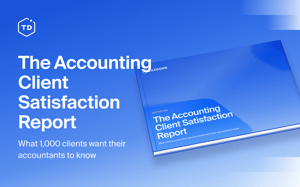
The Accounting Client Satisfaction Report: what 1,000 clients want from their accountants