 US – English
 UK – English
 Canada – English
 Australia – English
 Danmark – Dansk
 DACH - Deutsch
 France – Français
 España – Español
 Sverige – Svenska
 Italia – Italiano
 Nederland – Nederlands
 Portugal – Português
 Suomi – Suomi
 Norge – Norsk
 日本 – 日本語
 Romanian – Română

How much does a fractional CFO cost in 2026? Rates, retainers, and pricing models
Run your entire firm on one platform
Key takeaways:
- A fractional CFO typically costs $3,000 to $10,000 a month on retainer, or $150 to $500 an hour.
- A full-time CFO’s base salary runs $215,000 to $326,250, and the total first-year cost comes to roughly $335,000 to $500,000 once benefits, payroll taxes, and hiring costs are added (illustrative).
- Scope drives price more than title. Operational support costs less than strategic work like fundraising or M&A.
- Industry experience can carry a premium, with some industries willing to pay 25% or more for a specialist.
A fractional CFO typically costs $3,000 to $10,000 a month on retainer, or $150 to $500 an hour, compared with a full-time CFO’s base salary of $215,000 to $326,250. Whether you’re pricing it per month, per hour, or as the total cost to hire one, where you land mostly comes down to scope.
This guide covers how fractional CFOs charge, how costs compare with a full-time hire, and how to tell whether a quoted price fits the work.
Table of сontents
- How much does a fractional CFO cost in 2026?
- How fractional CFOs charge
- Fractional CFO cost by business stage
- Fractional CFO vs. full-time CFO: cost comparison
- What each level of finance help costs
- What affects fractional CFO pricing?
- When a fractional CFO price is a red flag
- Is a fractional CFO worth the cost?
- FAQs
- Finding the perfect fractional CFO for your business
How much does a fractional CFO cost in 2026?
There’s no single price for a fractional CFO. What you pay depends on how the engagement is structured, and most fall into one of four pricing models. NerdWallet’s guide to hiring a fractional CFO gives typical ranges for each.
| Pricing model | Typical cost | Best for |
| Monthly retainer | $3,000–$10,000/month | Ongoing strategic support |
| Hourly | $150–$500/hour | Ad hoc advice and short-term needs |
| Project-based | $10,000–$35,000+ per project | One-off work like a fundraise or systems implementation |
| Equity or hybrid | Reduced cash rate plus an equity stake | Early-stage startups with limited cash |
The right model depends on how often you need a CFO’s input. A retainer gives you predictable monthly costs for ongoing work, while hourly billing keeps spending low if you only need occasional advice. Project fees make sense when the need centers on a single event, and equity deals suit startups with more upside than cash.
How fractional CFOs charge
Each pricing model shapes more than the invoice. It decides how much access you get to your CFO and how predictable your finance costs are from month to month. Here’s how each one works in practice.
Hourly rates
Hourly billing suits businesses that need occasional advice rather than a standing engagement. Operational work, such as monthly reporting, cash flow management, and financial systems, sits toward the lower end of the range.
Strategic work, such as fundraising, M&A, or board-level guidance, sits toward the higher end.
Monthly retainers
Retainers are the most common structure for ongoing work. At the lower end, a retainer usually covers monthly financial reporting and cash flow forecasting.
Toward the higher end, it typically adds board reporting and active fundraising support.
Project-based pricing
Some engagements center on a single event rather than an ongoing cadence. Examples include preparing for a fundraise or implementing a new financial system.
Equity and hybrid arrangements
Early-stage companies short on cash sometimes offer a fractional CFO a reduced rate plus a small equity stake. This can work when both sides are confident in the company’s direction.
Equity granted early is hard to take back, though. Get outside advice, such as from a startup attorney, before offering equity to anyone outside the founding team.
Fractional CFO cost by business stage
A pre-revenue startup and a company preparing for an exit need very different amounts of a CFO’s time. As a business grows, the work moves from building basic models to managing boards, entities, and deals. That change drives most of the difference in cost.
| Stage | Common focus | What pushes cost up |
| Pre-revenue startup | Financial modeling, investor-ready basics | An upcoming first raise |
| Bootstrapped | Cash discipline, lean monthly reporting | Messy or incomplete books |
| Growing ($1M–$10M) | Monthly close, cash forecasting, systems buildout | Rapid hiring or new revenue streams |
| Mid-market ($10M–$50M) | Board reporting, budgeting, multi-entity complexity | Multiple entities or locations |
| VC/PE-backed or exit planning | Fundraising support, due diligence, M&A readiness | Active deal timelines |
You don’t need to budget for your end state on day one. Start with the hours your current stage requires, and scale the engagement up as complexity grows. Costs tend to spike around a raise or a deal, so plan for those moments before they arrive.
Fractional CFO vs. full-time CFO: cost comparison
On retainer, a fractional CFO costs $36,000 to $120,000 a year. A full-time CFO’s base salary runs $215,000 to $326,250, according to Robert Half’s 2027 Salary Guide.
Salary is only part of the cost. Benefits and payroll taxes make up about a third of total pay for management and finance roles, and the median cost to hire an executive is $15,000. Together, that puts the total first-year cost of a full-time CFO at roughly $335,000 to $500,000 (illustrative).
Savings aren’t the whole picture. A fractional CFO splits time across several clients, so same-day availability is limited.
They also won’t be as embedded in your team as a full-time hire. For a business making fast decisions, that daily presence has value a cost comparison doesn’t capture. For how CFO pay varies by company size, industry, and location, see our guide to how much CFOs make.
What each level of finance help costs
Fractional CFO pricing makes more sense next to the roles above and below it. Each level handles a different layer of your finances, and costs climb as the work becomes more strategic.
The table below draws on outsourced bookkeeping rates and BLS pay data for financial managers, a category that includes controllers.
| Role | What they do | Typical cost | When you need them |
| Bookkeeper (outsourced) | Recording transactions, reconciling accounts | $300–$1,500/month | Accurate day-to-day books |
| Financial manager, including controllers (in-house) | Financial statements, monthly close, internal controls | $166,570/year median | Consistent, compliant books and a fast close |
| Fractional CFO | Forecasting, strategy, fundraising and M&A support | $36,000–$120,000/year on retainer | Strategic decisions and scaling |
| Full-time CFO | Full-time in-house financial leadership | ~$335,000–$500,000 total year-one cost | Daily executive presence at scale |
Most growing businesses don’t need every level at once. Accurate books come first, so a bookkeeper is usually the place to start. A controller-level hire makes sense once your monthly close and internal controls need dedicated ownership. A fractional CFO fits when you need strategy on top of solid books but can’t yet justify a full-time salary.
What affects fractional CFO pricing?
Two businesses can get very different quotes for what sounds like the same CFO role. The difference usually comes down to a handful of factors that change how much time and expertise the work demands.
- Scope: operational support costs less than strategic work like fundraising or M&A.
- Hours: more hours each month means a higher retainer.
- Complexity: more revenue streams, entities or locations add work.
- The state of your books: cleanup work before a CFO can start adds cost.
- Upcoming events: a fundraise, acquisition or exit raises both hours and urgency.
- Industry experience: in TaxDome’s Niche Business Accounting Report, businesses earning over $1 million a year were twice as likely to hire a niche accountant, and some industries are willing to pay 25% or more for a specialist.
Most of these factors come down to time and timing: how many hours your finances need each month and how soon.
Industry experience is the exception, since specialist knowledge carries its own premium. In TaxDome’s Niche Business Accounting Report, businesses earning over $1 million a year were twice as likely to hire a niche accountant, and some industries are willing to pay 25% or more for a specialist.
When a fractional CFO price is a red flag
A quote that looks out of line isn’t always wrong, but it’s worth a closer look. The real warning sign is a mismatch between the price and the work being described, and that mismatch can run in either direction.
Too cheap
Some packages sold as fractional CFO services are priced well below the typical retainer range. At that price, the work is usually closer to bookkeeping or controller support than forecasting and strategy.
A low price alone isn’t a problem. A low price paired with a strategic CFO title is a mismatch worth questioning.
Too expensive
The opposite also happens: strategic CFO rates for work that’s really operational, like routine reporting or bookkeeping cleanup. If the deliverables sound operational, the rate should too.
How to check value
Before signing, ask for a sample deliverable, such as a 13-week cash flow forecast or a monthly board pack. Ask for references from similar-sized clients and a clear list of what falls outside the retainer.
For the full vetting process, including interview questions, see our guide to hiring a fractional CFO.
Is a fractional CFO worth the cost?
A fractional CFO tends to be worth it when cash feels tight despite healthy-looking profits. It’s also worth considering when a raise or acquisition is coming, or when big decisions are being made without a financial model behind them.
It’s usually not worth it yet if the books aren’t clean, since a bookkeeper should come first. It’s also not the right fit if the real need is compliance rather than strategy. In that case, an accountant offering accounting advisory services can cover the gap for less.
Picture a business a month out from a financing round. Investors are asking about customer acquisition cost and runway, and the founder’s spreadsheet wasn’t built to answer.
A fractional CFO rebuilds the model around the metrics investors care about, preps the founder for diligence questions and joins calls with the lead investor’s finance team. That’s a project-scale engagement, not a full-time hire.
FAQs
How much does a fractional CFO cost per month or per hour?
It depends mostly on scope and hours. Ongoing work is usually billed as a monthly retainer, while occasional advice is billed hourly. The pricing table near the top of this guide shows typical ranges for each model.
Is a fractional CFO cheaper than a full-time CFO?
Usually, by a wide margin. A full-time hire carries salary, benefits, payroll taxes and hiring costs, while a fractional CFO is billed only for the hours or scope you agree on.
Do fractional CFOs take equity?
Sometimes, mainly with early-stage startups that offer a reduced cash rate plus a small equity stake.
How does a fractional CFO compare with a controller?
A controller manages the books and the monthly close. A CFO builds forecasts and strategy on top of them. The cost difference reflects that difference in scope.
Can my accountant act as my CFO?
Not usually. Accountants typically focus on compliance, tax filings and accurate books, while a CFO focuses on forecasts and decisions before they’re made. Many accountants offer advisory services, but full CFO-level strategy is a different scope.
Finding the perfect fractional CFO for your business
What a fractional CFO costs comes down to how you structure the engagement and how much of their time you need. Retainers suit ongoing strategic work. Hourly billing covers occasional advice, while project fees fit a single event like a raise.
Your stage and timing matter just as much. Most businesses can start with fewer hours and scale up as complexity grows, budgeting ahead for the raise or deal that will push costs up. Even at the top of the range, a fractional CFO costs far less than a full-time hire once benefits and hiring costs are counted.
Before you request quotes, get specific about what you need and ask each provider the same questions. That makes it much easier to spot a price that doesn’t match the work, whether it’s too high or too low.
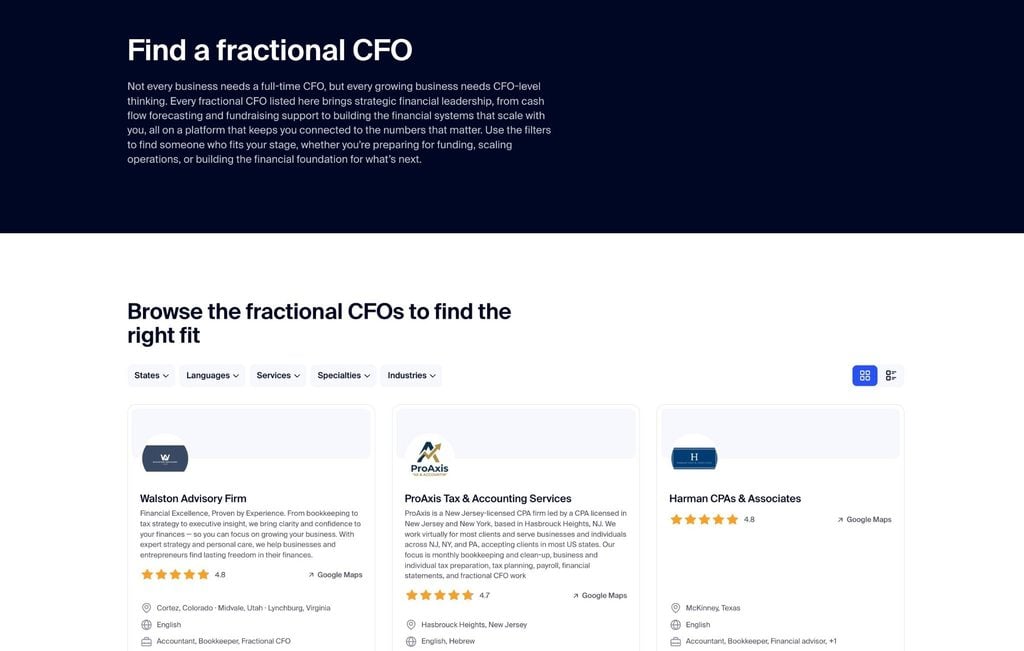
When you’re ready to compare options, start with CFOs who already work with businesses at your stage.

Aaron produces practical content for TaxDome, drawing on 11 years in SaaS copywriting and marketing. He helps accounting and tax professionals get the most from TaxDome and other tools, making complex topics clear and actionable.
Get your free guide

Thank you!
The guide copy has been sent to your email. Please check your inbox!
Recommended articles

20 questions to ask a CPA or accountant before hiring (plus red flags)

SmartVault alternatives: 7 tools for tax and accounting firms compared (2026)
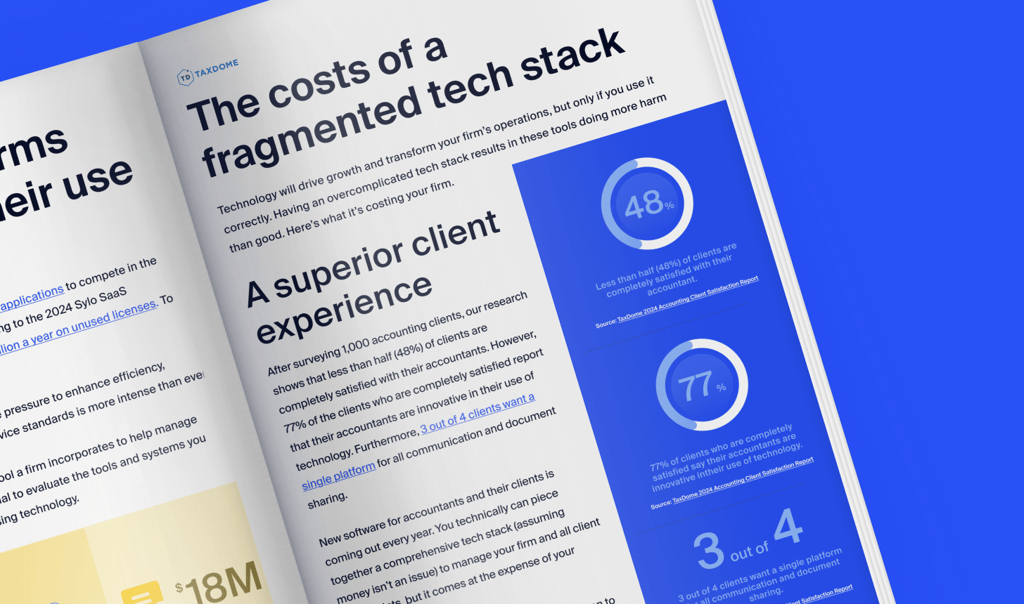
The Accounting Client Satisfaction Report: what 1,000 clients want from their accountants