 US – English
 UK – English
 Canada – English
 Australia – English
 Danmark – Dansk
 DACH - Deutsch
 France – Français
 España – Español
 Sverige – Svenska
 Italia – Italiano
 Nederland – Nederlands
 Portugal – Português
 Suomi – Suomi
 Norge – Norsk
 日本 – 日本語
 Romanian – Română












How to start a virtual bookkeeping business from scratch
Run your entire firm on one platform

In-house positions at companies and accounting firms aren’t the only option for bookkeepers anymore. Remote accounting roles more than doubled between 2019 and 2023, with a growing number of bookkeepers choosing the independent path over traditional employment.
The freedom, the flexibility, and the opportunity to build something of your own are within reach. Demand for bookkeeping services is rising steadily, with more than 71% of companies globally outsourcing to external experts. Meanwhile, the latest accounting and practice management technology removes many of the barriers to starting a virtual bookkeeping business.
With the right planning and preparation, you could be celebrating your first anniversary as a successful bookkeeping business owner this time next year.
Table of сontents
- Top reasons to start a virtual bookkeeping business
- Step 1: Prepare for the realities of running a virtual bookkeeping business
- Step 2: Sort your legal and business foundation
- Step 3: Build the tech stack to power your virtual bookkeeping business
- Step 4: Define your services and niche
- Step 5: Set your fees and pricing model
- Step 6: Find and land your first clients
- Step 7: Turn onboarding into a competitive advantage
- The step that never ends: building towards new growth targets every year
- Frequently asked questions: virtual bookkeeping business
Table of сontents
- Top reasons to start a virtual bookkeeping business
- Step 1: Prepare for the realities of running a virtual bookkeeping business
- Step 2: Sort your legal and business foundation
- Step 3: Build the tech stack to power your virtual bookkeeping business
- Step 4: Define your services and niche
- Step 5: Set your fees and pricing model
- Step 6: Find and land your first clients
- Step 7: Turn onboarding into a competitive advantage
- The step that never ends: building towards new growth targets every year
- Frequently asked questions: virtual bookkeeping business
Top reasons to start a virtual bookkeeping business
If setting up your own virtual bookkeeping business sounds like the most satisfying path in your career, you’re clearly not alone. And it’s easy to see why when the benefits of being your own boss are so compelling:
- Unlimited earning potential: your income is only limited by the amount of work you can handle per month
- Choose your own clients: within reason, you decide who you work with and how to manage client relationships
- Specialize in niche industries/services: focus on the industries and services you care about — niching down is the strategy that consistently maximizes revenue for bookkeeping businesses (more on this later)
- Choose your own way of working: you only have to think about your own interests and your clients, without any employer restrictions
- Full control over your schedule: you can fit your work around a schedule that suits you and your clients
- Work from anywhere: being virtual means you can work remotely from anywhere you choose
- Low startup costs: if you’re setting up a solo bookkeeping business, your startup costs are minimal
- Build your own business: there’s something undeniably special about the experience of building your own business
- Client relationships: by working more closely with clients, you can cater to their needs in ways that larger firms often struggle to
Of course, there are also challenges to running an online bookkeeping business, which brings us to our first step in setting yourself up for success.
Step 1: Prepare for the realities of running a virtual bookkeeping business
If you’re starting a new virtual bookkeeping business, chances are you’re setting out on your own — at least initially. In this case, the biggest challenges you’ll deal with in running a solo bookkeeping business are:
- You wear every hat: you’re not only the bookkeeper, but also the business owner, the accountant, the marketer, and everyone else
- Capacity is finite: you take on the role of many people, but you’re still one person, and you can only do so much in a day
- Non-billable work eats into your time: it’s not always easy to cover the non-billable work involved in running a sole practice in your fees
- No work means no income: there are no salary guarantees, paid holiday, or sick leave
- Location independence cuts both ways: you can work with clients anywhere, but you are also competing with virtual bookkeepers globally, including those in lower-wage markets
- Pricing perception: some prospects may assume you’re significantly cheaper than a firm, especially if you’re a solo virtual bookkeeper
- Payment delays: sole practitioners are disproportionately affected by late invoice payments
- Data security is your responsibility: you’re responsible for protecting your clients’ sensitive data and using it responsibly — and legally liable if you’re a sole practitioner
If you’re setting up a partnership, a limited company, or you intend to employ staff, you’re dealing with a different set of challenges in running a virtual bookkeeping business. Whichever approach you take, solid research will help you understand exactly what you’re signing up for.
Bonus tip: This is a good moment to connect with other virtual businesses operating as the same company type. Aside from tips and advice, you can build some early connections with other providers who might send clients your way when they need bookkeeping services.
Step 2: Sort your legal and business foundation
Handling the initial legal and admin isn’t the most glamorous part of starting a virtual bookkeeping business, but it is one of the most important.
First, you need to decide on your business structure. Most virtual bookkeepers start out as sole proprietors, which is generally the easiest and most affordable approach. Your business income is reported on your personal tax return, and you’re responsible for setting aside your own taxes.
Registration and licensing requirements vary by state and business structure, so it pays to understand your obligations from the start.
Liability exposure is the main downside to sole proprietorship. Legally speaking, you are the business, so any claims against the business are made against you. As a solo virtual bookkeeper, you’ll want professional liability insurance, also known as errors and omissions (E&O) insurance, as standard. We also recommend cyber liability insurance to cover against attacks, breaches, and fraud, given the sensitive nature of client data you handle.
The picture is more complex for limited companies. An LLC creates a separate legal entity, which provides meaningful protection for your personal assets, but comes with higher setup costs and ongoing compliance obligations.
Other considerations:
- Look into whether your state requires a business license or DBA registration
- Choose your business name carefully
- Check domain and social handle availability (for your preferred business names)
- Open a dedicated business bank account
- Keep personal and business expenses strictly separate from day one
- Set aside 25–35% of net income to cover federal, state, and self-employment taxes
- Get an EIN from IRS.gov to receive payments without sharing your Social Security number
- Check whether your professional association membership includes any insurance benefits
Step 3: Build the tech stack to power your virtual bookkeeping business
As a virtual bookkeeping business, your tech stack is integral to every aspect of your operation. So what does it take to build a system capable of running a fully remote bookkeeping business?
Here are the key essentials:
| Tech | Role / key tools |
| Accounting/bookkeeping software | Your day-to-day toolkit for completing bookkeeping and accounting tasks for clients |
| Practice management software | Run your virtual bookkeeping business: task management, workloads, and client relationships |
| Client communication | Virtual communication tools: email, messaging, video calls, phone calls, SMS, etc. |
| Client portal | A secure space for clients to share files, complete tasks, and ask questions |
| Calendar and scheduling | Manage meetings, availability, and bookings |
| File sharing and document storage | A secure system for sharing and storing sensitive client documents |
| E-signatures | Digital signing for engagement letters and client agreements |
| Time tracking | Track billable hours for transparent and accurate billing |
| Billing and invoicing | Automate billing, invoicing, and reminders |
| Website | The focal point of your online presence and marketing strategy |
| Marketing | Tools that help you generate leads and automate marketing activities |
| Security | Protect your business and your clients from security threats |
| Hardware | Computer hardware, on-premise storage, mobile devices, and other physical tech |
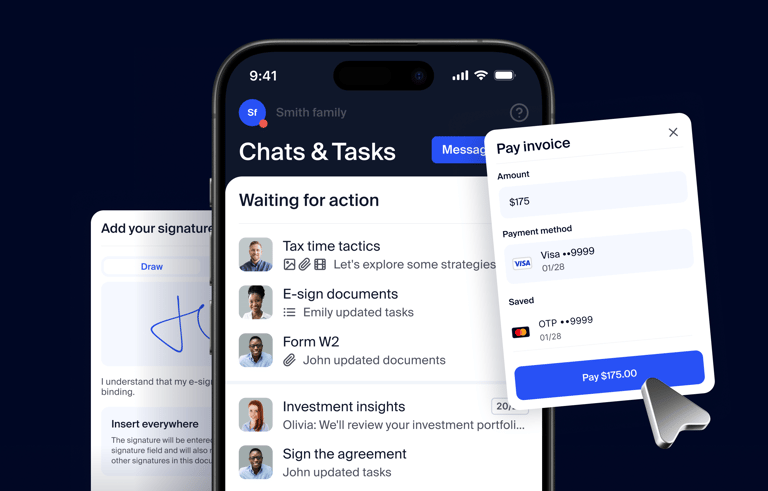
If you’re looking at this table and wondering how you can possibly implement all of these tools, don’t worry. This is precisely what TaxDome was built for: to put everything you need to run your bookkeeping business into one platform.
As long as you’ve got your hardware covered and your accounting/bookkeeping software, TaxDome brings everything else you need to the table. You can manage clients, automate your most important workflows, and run billing and invoicing on autopilot.
Crucially, your clients get everything they need to work with you efficiently: integrated messaging, notifications, secure file sharing, e-signatures, and mobile document scanning.
All of this is built into the top-rated client portal and app in the industry, with a 4.9/5 review score from 35,000+ clients around the world.
Step 4: Define your services and niche
Now, you get to choose which bookkeeping services you want to offer and how you prioritize them. One of the great benefits of going solo is that you decide what to focus on. Bookkeepers typically offer a mix of bank reconciliation, accounts payable and receivable, payroll, and financial statement preparation.
If you’ve got additional expertise or experience that can help you stand out against the competition, use it.
In 2026, 85% of accounting firms in the US offer bookkeeping services — the joint-top service currently provided.
- Bookkeeping — 85%
- Client advisory — 85%
- Tax services — 72%
- Payroll — 55%
- Financial reporting — 51%
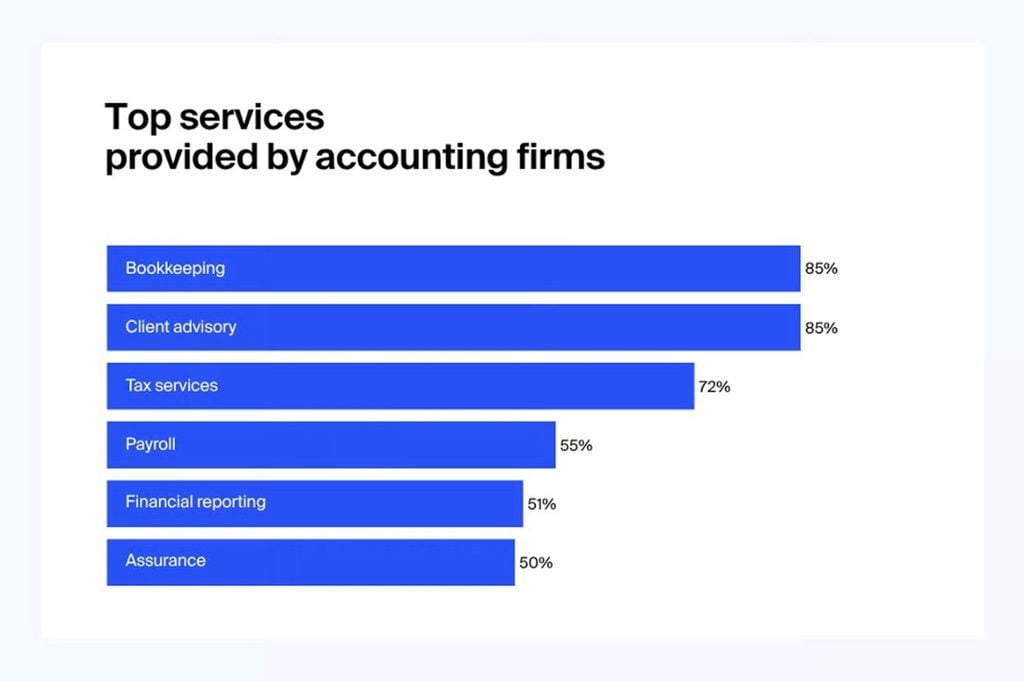
This means you’re competing against most firms in the country if you provide the standard range of bookkeeping services. As an independent, you might be able to compete on pricing but this could hem you in to managing clients with lower budgets.
The good news is that, if you can carve out your own space in the industry, firms list bookkeeping among the highest-margin services.
- Client advisory — 60%
- Bookkeeping — 57%
- Tax advisory — 39%
- Payroll — 24%
- Assurance — 15%
- Financial reporting — 13%
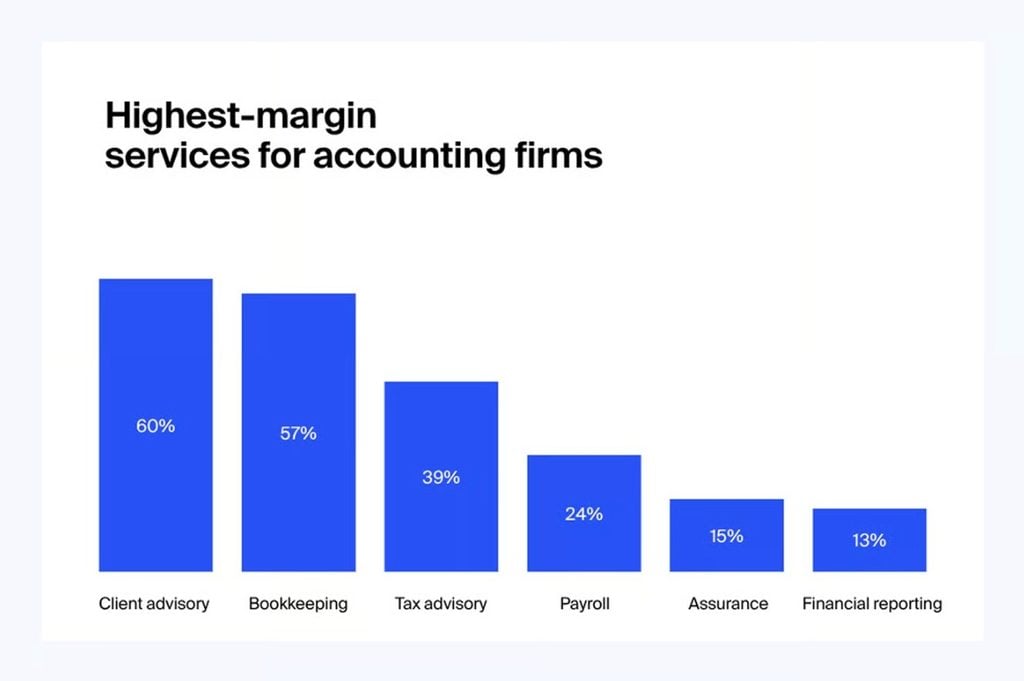
Becoming one of those high-margin bookkeeping service providers may seem daunting, but we’ll let you in on a little secret. We asked hundreds of top-spending accounting clients what they look for in a service provider, and the key takeaway is clear: niche down.
Businesses making over $1M are 2x as likely to hire a niche accountant and they’re willing to pay 25% more on average for a specialized service. Niching down doesn’t only win the top-spending clients, it keeps them on the books. Only 2% of clients leaving a niche firm return to a generalist; if they leave, 98% are looking for another specialist.
Key takeaway: Niche down and provide the best client experiences in your field — this is how you attract and retain the most valuable clients.
Step 5: Set your fees and pricing model
According to NerdWallet (2026), freelance bookkeepers typically charge between $25 and $60 per hour, with an average of $43/hour on platforms like Upwork. Monthly retainers for small businesses generally run between $300 and $900, rising to $1,000–$2,500 or more for complex clients with payroll, multiple entities, or inventory management.
You can use these figures as a general guide, but it’s also worth checking the going rate in your state or local area. You might want to undercut slightly to get your first clients, or give them a temporary discount, so you don’t lock yourself into lower fees.
Once you know your target earnings, you can select the appropriate pricing model for each service and relationship type.
| Pricing model | Best for | Main risks |
| Hourly | Ad-hoc or non-standard workWork where scope is hard to predict upfront | Clients dislike cost uncertaintyHigher risk of disputes over creeping costs |
| Fixed fee | Routine, predictable servicesBookkeeping, payroll, and tax preparation | Undercharging if scope is not defined clearlyLimited flexibility if scope expands |
| Retainer/subscription | Ongoing services with consistent monthly scopeThe standard model for virtual bookkeepers | Overcommitment if you underestimate workloadsLacks flexibility as client needs change |
| Value-based | High-impact specialist or advisory servicesWork with measurable outcomes for clients | Difficult to implement without deep client knowledgeHigh price points can put some clients off |
| Project-based | One-off or occasional engagements | Scope creep if work is not assessed and agreed upfrontRisk of undercharging on complex jobs |
| Prepayment | Fixed-fee servicesOngoing services with fixed or agreed feesClients with a history or late payments | Some clients may hesitate to pay before seeing results |
| Deposit + outstanding payment(s) | Large projects | Some clients may hesitate to pay before seeing results |
| Tiered pricing | Appealing to a range of client sizes and budgets | Complexity increases as the client base growsHarder to manage across different service levels |
For a more in-depth look at fees and pricing models, read our post on accounting service pricing: from hourly rates to value-based fees.
Step 6: Find and land your first clients
Referrals are the most important marketing strategy for accountants and bookkeepers. In our Niche Business Accounting Report, 58% of clients said they found their current firm through trusted referrals — far more than any other marketing channel.
| How did you find your current accountant/firm? | |
|---|---|
| Referral (from business or person) | 58% |
| Online search (Google, Yelp, etc.) | 17% |
| Social media | 10% |
| Webinar or event | 6% |
| Cold outreach from accountant | 4% |
| Responded to an advertisement | 3% |
| Other | 2% |
If you already have a professional network capable of generating leads, make full use of it. If you don’t, you want to build one as quickly as possible by landing your first clients and making an impression worthy of recommendation.
If you’re starting from scratch, freelance platforms like Upwork can be one of the quickest ways to land your first clients, but reaching your target fees can be a challenge. Paid advertising is generally more reliable for reaching clients ready to pay reasonable fees, but you have to invest in the ads up front (as well as a website to capture leads).
Aside from referrals, SEO is the most robust long-term strategy for capturing leads, but it takes time to build an online presence. Each approach has its pros and cons, so take a look at our post on the best ways to market a bookkeeping business if you’re unsure.
Once you land your first clients, focus on delivering the best quality service and client experience possible. This is how you retain your best clients, build loyalty, and work your way to referrals that generate the bulk of your leads for you.
Step 7: Turn onboarding into a competitive advantage
Onboarding new clients involves a lot of work, and this creates immediate bottlenecks if you rely on manual workflows. Onboarding eats into your schedule, where you could be spending time on billable work instead. This reduces the amount of work and clients you can handle at any given time, which limits your profit margin per client, total earnings, and growth potential.
Inefficient onboarding doesn’t only affect your productivity and profitability. Clients feel the impact, too. Every manual interaction between you and your clients creates unnecessary inconvenience and delays that breakthrough moment when clients realize they hired the right bookkeeper.
We see the impact of this in clear numbers: in our Client Satisfaction Report, 1 in 5 clients would pay up to 50% extra for a faster service.
So, how can you reverse the burden on manual onboarding and turn this into a competitive advantage?
- Automate client onboarding and intake to minimize the manual workload for you and your clients
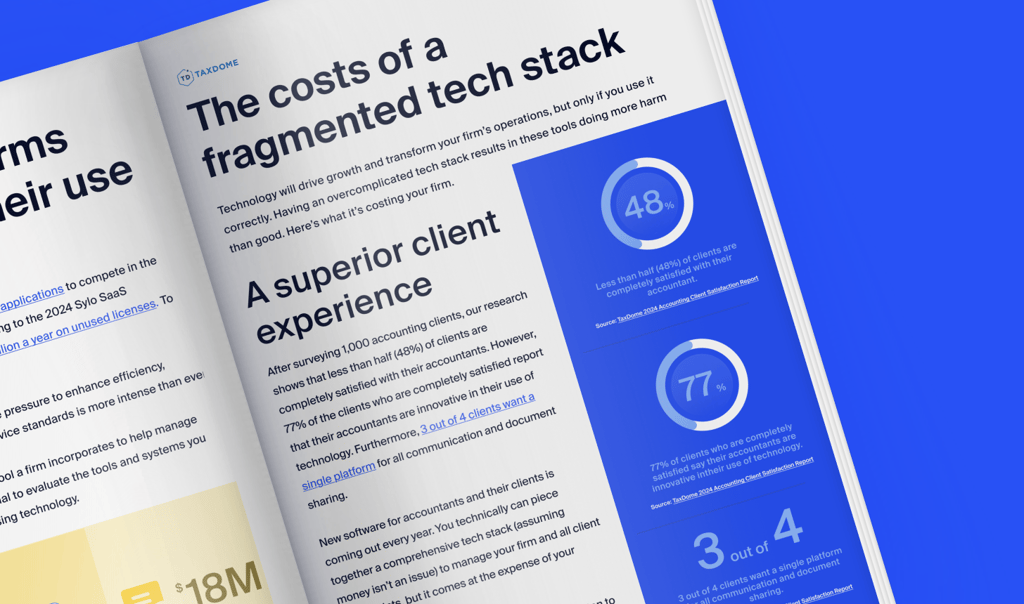
- Give clients one login for all tasks, file sharing, and communication — 75% of clients tell us they specifically want this from their service provider
- Automate the bookkeeping workflows that impact your clients, as well as you, to increase your productivity and improve client experiences
Most bookkeeping and practice management tools are designed to help you work more efficiently. We built TaxDome to be more than an internal productivity system. We know how important internal workflows are. But we also recognize that clients have to feel the impact of your productivity gains to receive the kind of experiences that drive loyalty, retention, and referrals.
The step that never ends: building towards new growth targets every year
Running an online bookkeeping business shouldn’t be a constant struggle once you get past the initial setup phase. The whole point of going solo is to enjoy the benefits of being your own boss, not suffer consequences. Once you build your first client base, growth should sustain itself with your reputation generating the bulk of new leads — remember, 58% of clients choose bookkeepers and accountants via referrals.
We see the same pattern from working with thousands of accounting and bookkeeping firms around the world. Internal efficiency helps them complete work faster on their end, but it doesn’t resolve the blockers that happen during client interactions: onboarding, communication, file sharing, signatures, and approvals.
The turning point where growth starts to snowball comes from workflows that keep your work moving and improve experiences for your clients. This is where internal efficiency drives outcomes for your clients and the reviews, referrals, and your reputation become your strongest growth strategy.
Take a 2-minute TaxDome tour to see how we power bookkeeping businesses to hit new growth targets every year.
Frequently asked questions: virtual bookkeeping business
Is a virtual bookkeeping business profitable?
Yes, a virtual bookkeeping business can be very profitable. With low startup costs and minimal overheads, it shouldn’t take long to turn a profit once you land your first clients. Bookkeeping is also one of the highest-margin services in accounting, with a strong potential for client retention if you deliver quality experiences.
What does a virtual bookkeeper do?
A virtual bookkeeper records and organizes a business’s financial transactions remotely: reconciling accounts, managing AP/AR, processing payroll, and producing monthly financial statements. The work is identical to in-house bookkeeping.
How many clients can one virtual bookkeeper handle?
This depends on the size of the clients and the complexity of their books. Most full-time solo bookkeepers who sign up for TaxDome are managing fewer than 10 clients when we start working with them, but they’re handling significantly more within their first year of implementation.
What do freelance bookkeepers charge per hour?
Freelance rates in the US typically range from $25 to $60 per hour, but you can earn significantly more with a strong enough reputation. Many bookkeepers move toward fixed monthly retainers as their business grows, and you can explore other pricing models for different service types.
Should I specialize in one accounting platform or support multiple?
Most bookkeepers start with QuickBooks Online, and then add Xero and other popular tools if they want to maximize reach. Specializing in QuickBooks is a solid place to start, but you may decide to incorporate enterprise solutions if you want to move up-market.
How many hours a week do virtual bookkeepers typically work?
This is different for every bookkeeper, and it largely depends on how much work you have coming in, and how efficiently you complete it. This is where automation can multiply your earning potential while giving you greater control over how many hours you put in.

Aaron produces practical content for TaxDome, drawing on 11 years in SaaS copywriting and marketing. He helps accounting and tax professionals get the most from TaxDome and other tools, making complex topics clear and actionable.
Get your free guide

Thank you!
The guide copy has been sent to your email. Please check your inbox!
Recommended articles

Buy Now, Pay Later: offer clients payment flexibility

Top AI tools for accountants in 2026: key features and use cases compared

Why accountants are quitting: inside the forces reshaping the profession