 US – English
 UK – English
 Canada – English
 Australia – English
 Danmark – Dansk
 DACH - Deutsch
 France – Français
 España – Español
 Sverige – Svenska
 Italia – Italiano
 Nederland – Nederlands
 Portugal – Português
 Suomi – Suomi
 Norge – Norsk
 日本 – 日本語
 Romanian – Română












The future of accounting: Will automation replace accountants?
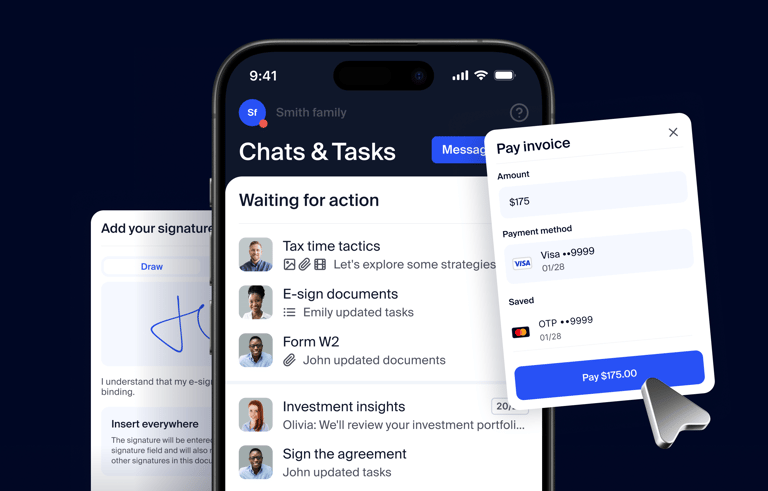
Run your entire firm on one platform
The latest AI technology raises a question that would have seemed unthinkable a decade ago: will accounting be automated? Not just the repetitive data entry and reconciliation work that accounting software has automated for years by this point, but the compliance, analysis, and advisory services that clients value most.
We work closely with accounting firms and professionals every day, and we continue to enhance their abilities by developing automation in TaxDome. So, what’s the real impact of AI on the industry as it stands, and could accounting be fully automated in the near future?
Table of сontents
- What does accounting automation mean in the AI era?
- Which accounting tasks can be automated?
- Which accounting tasks are hard to automate?
- Will automation replace accountants?
- How accountants’ roles are evolving
- Benefits of accounting automation for firms and clients
- Limitations and risks of accounting automation
- Accounting automation in the AI era: enhancing, not replacing accounting professionals
- Accounting automation: frequently asked questions
Table of сontents
- What does accounting automation mean in the AI era?
- Which accounting tasks can be automated?
- Which accounting tasks are hard to automate?
- Will automation replace accountants?
- How accountants’ roles are evolving
- Benefits of accounting automation for firms and clients
- Limitations and risks of accounting automation
- Accounting automation in the AI era: enhancing, not replacing accounting professionals
- Accounting automation: frequently asked questions
What does accounting automation mean in the AI era?
Automation is nothing new to the accounting industry, but AI is redefining what it can do for accountants and their clients. Where traditional rule-based automation follows fixed processes to run repetitive tasks, AI is increasingly capable of analyzing data and making decisions that previously required human judgment.
This is changing the scope of accounting automation for firms and accounting professionals.
The impact of AI-powered automation on accountants
AI automation promises to empower accountants to do more with their time. A 2025 MIT and Stanford study found that accountants using AI supported 55% more clients per week. They also closed books 7.5 days faster and spent 8.5% less time on routine back-office processing.
With rule-based automation handling routine tasks, such as importing client data, AI can analyze the data to identify gaps, anomalies, and patterns. As the technology advances, it frees up more time for accountants to prioritize other tasks.
The caveat is that AI skills are becoming indispensable for accounting professionals. Accountants who can evaluate AI outputs critically, know when to override them, and apply professional judgment where it counts will be better positioned than those who can’t.
The impact of AI-powered automation on accounting firms
In 2025, 46% of accountants report using AI every day. At the same time, 81% say it improves their productivity, while 95% say it reduces compliance time and frees up resources for strategic advisory.
AI is amplifying the impact of automation on accounting firms as we speak, and we’re seeing these gains in real time:
- Team efficiency: automation handles low-value, time-consuming tasks, reducing manual workload and freeing staff to focus on work that requires expertise
- Increased capacity: firms can serve more clients with existing resourcing, increasing profit per client and revenue per employee
- Resource prioritization: with compliance tasks taking up less time, teams can dedicate more capacity to advisory and other high-value services
- Managing tax season and busy periods: automation helps absorb the workload spikes of busy periods, helping firms achieve more during tax season with less reliance on temporary hires
- Improved client experience: faster turnarounds, proactive communication, and more time for advisory work improve the overall client relationship
- Talent shortage: with 75% of CPAs at or near retirement age, and hiring increasingly competitive, automation helps firms do more with the teams they have
- Revenue growth and scalability: firms that unlock capacity from AI efficiency gain open new growth potential and increase their ability to handle the operational challenges of scaling
Firms using TaxDome grew their client bases by an average of 22% from 2024 to 2025. Learn how they’re using accounting automation to deliver consistent quality to clients as they grow, and increase revenue faster than headcount from our first Accounting Industry Index report.
Which accounting tasks can be automated?
AI-powered accounting automation is allowing teams to run more complex workflows on autopilot. In addition to routine tasks, such as data entry, accountants can automate a growing range of preparation and analysis work.
| Task | Automation outcomes |
| Data entry and bookkeeping | Transactions are captured, categorized, and recorded in real time, eliminating manual input and keeping books continuously up to date |
| Bank reconciliation | Accounts are matched and reconciled automatically, with exceptions flagged for review rather than found through line-by-line checking |
| Accounts payable and receivable | Invoices are captured, coded, and routed for approval without manual handling, and payment reminders go out without anyone chasing them |
| Expense tracking and categorization | Expenses are categorized as they occur, with anomalies flagged immediately instead of during month-end reviews |
| Payroll processing | Calculations, deductions, and filings are handled accurately and on schedule, reducing the compliance risk that comes with manual payroll management |
| Financial reporting | First-draft reports are generated directly from live data, giving accountants an advanced starting point to work with |
| Routine tax preparation | Data gathering and form population for straightforward returns is handled automatically, letting professionals focus on review and complex cases |
| Audit procedures | Full transaction datasets are reviewed rather than statistical samples, surfacing irregularities more completely than manual methods allow |
| Cash flow forecasting and monitoring | AI analyzes transaction data continuously, flagging emerging cash flow issues and projecting future positions before they become problems |
| Fraud detection and anomaly flagging | Transactions are monitored in real time and irregularities surfaced automatically, catching issues earlier and more consistently than periodic manual review |
| Compliance monitoring and disclosure checklists | Procedural checklist work is handled systematically, reducing the time professionals spend on repetitive preparatory tasks before the substantive work begins |
With AI driving new innovation in accounting automation, the scope of opportunities and challenges is rapidly evolving. The impact is reshaping the accounting profession itself, not to mention the operational effects on accounting firms and client experiences.
Headline impact:
- 95% say AI reduces compliance time, freeing up resources for strategic advisory (Published in TaxDome Accounting statistics blog post, original source: Intuit)
Priorities:
- 54.2% of finance teams are stuck in partial automation (Rossum Document Automation Trends Report)
- 61.6% say accuracy matters more than speed
- What are the primary business objectives driving your finance automation strategy?
- 61.1% Improving the accuracy of financial data
- 47.8% Increasing team efficiency and scalability
- 44.2% Accelerating financial close and reporting cycles
- 39.1% Reducing operational costs
- 34.2% Strengthening fraud detections and risk management
- 29.9% Freeing up staff for more strategic, analytical work
- 18.7% Navigating global compliance and e-invoicing mandates
Outcomes:
- Automating data entry can reduce costs by up to 80% (Xero)
- Automation can reduce the cost of processing invoices from $9.40 to $2.78 (Source, Source)
- Firms linking deliverable documents to invoices collect payment 2.5x faster — 4.4 days on average, compared to 11 days for firms that do not (TaxDome Accounting Industry Index)
The client impact:
- 85% Of businesses agree that saving money through tax strategies justifies higher fees (TaxDome Niche Business report)
- 75% of clients are willing to spend up to four hours providing information if the experience is seamless (TaxDome Client Satisfaction report)
- 75% clients say they desire a single platform for all communications and document sharing (TaxDome Client Satisfaction report)
- 89% say it’s important that accountants are quick to respond to an initial inquiry (TaxDome Client Satisfaction report)
Which accounting tasks are hard to automate?
As much as AI has progressed in recent years, it still struggles with certain accounting jobs. Anything that involves ambiguity or requires considered decision-making is vulnerable to hallucinations or inconsistent outcomes. In these instances, you have to be more selective about which tasks you can fully automate, and those that require human oversight.
Tasks requiring professional judgment
These tasks hinge on interpreting ambiguous or incomplete information in context. AI can flag anomalies and inconsistencies, but determining their significance, cause, and appropriate response requires professional expertise that goes beyond pattern recognition.
Examples:
- Complex revenue recognition
- Fraud investigation and interpretation
- Materiality calls and reserve-setting
- Audit sign-off and professional accountability
Tasks requiring advisory expertise
Effective advisory work depends on understanding a client’s specific circumstances, goals, and risk tolerance. Translating that understanding into a forward-looking recommendation involves qualitative judgment that AI cannot reliably replicate.
Examples:
- Tax planning and multi-jurisdiction strategy
- M&A due diligence and business valuation
- Cash flow interpretation and scenario planning
- Budgeting and forecasting for growth decisions
Tasks requiring human relationships
Client trust is built through consistent, empathetic human interaction. The ability to listen, read a situation, and communicate in a way that builds confidence is fundamental to these tasks.
Examples:
- Client communication and sensitive conversations
- Regulatory representation
- Onboarding new clients and understanding their business context
- Delivering difficult news
While it’s difficult to fully automate these accounting tasks, partial automation can drastically improve outcomes for teams and clients. For example, you can automate client engagements and requests to free up resources for communication that genuinely requires accounting expertise.
Will automation replace accountants?
No, automation won’t fully replace accountants. Instead, it will continue to elevate the capabilities of accountants and firms that use the technology most effectively. This is more true than ever in the age of AI, where implementation alone doesn’t guarantee outcomes.
Ultimately, firms need to achieve a meaningful productivity boost from AI and automation to unlock the capacity and revenue gains. Don’t forget about the client impact, either. Firms that leverage AI to improve client outcomes and experiences will be the ones that win and retain the top-spending clients.
So, while automation won’t replace accountants across the board, accountants with strong AI and automation skills could replace those without. Clients will favor the firms that deliver the best outcomes for them, and firms will hire accountants with the appropriate technical skills.
How accountants’ roles are evolving
AI is fundamentally reshaping what it means to work in accounting. As automation takes on more of the process-heavy work, the profession is shifting toward a model where accountants spend more of their time on analysis, strategy, and client relationships. For those willing to adapt, that shift represents a significant opportunity.
- From data processing to advisory: automation handles the routine work, freeing accountants to focus on analysis, strategy, and client guidance
- Greater focus on value and client outcomes: the measure of a good accountant is shifting from process execution to the quality of outcomes delivered
- Deeper client relationships: more capacity means more time for proactive conversations about what’s coming, not just what has already happened
- AI literacy and skills: knowing how to use AI tools effectively and get reliable outputs is becoming a baseline professional requirement
- AI oversight and output validation: accountants are increasingly responsible for supervising AI outputs and ensuring nothing is accepted at face value
- Data analytics and financial storytelling: interpreting AI-generated data and communicating it clearly to non-finance stakeholders is now a core skill
- Predictive and forward-looking analysis: AI enables accountants to help clients anticipate trends and risks before they materialize
- Changing responsibilities for junior staff: with AI handling preparatory work, junior accountants take on judgment-based responsibilities earlier in their careers
Benefits of accounting automation for firms and clients
An effective automation strategy should benefit both accounting teams and clients. Internal process efficiency is great, but it only gets you so far if client delays bring workflows to a halt. Equally, if clients don’t receive improved experiences from your automation strategy, you’re missing out on the gains in retention and reputation.
End-to-end accounting automation improves both sides of the firm-client relationship, from start to finish.
| Automation | Firm impact | Client impact |
| Tasks and reminders | Automated task assignment and deadline trackingLess manual follow-up across the team | Clear visibility on what’s neededTimely reminders without chasing |
| Client onboarding | Standardized intake reduces manual setupFaster time to first deliverable | Less friction from day oneFaster access to firm services |
| Document gathering | No manual chasingFaster file completionFewer email threads | Simple submission processClear view of what’s outstanding |
| Client communication | Less manual follow-upConsistent messaging across clients | Always kept informedNo need to chase updates |
| Engagement and intake | Automated engagement creation on proposal sign-offInstant workflow triggering | Faster service initiationClearer scope from the start |
| Approvals and e-signatures | Faster sign-off collectionFull audit trail without manual tracking | Quick, convenient signing processNo printing or scanning required |
| Billing and payments | Automated invoicing and payment collectionReduced admin overhead | Transparent billing processFaster invoice resolution |
| Reporting and insights | Faster report generationGreater output detail | More actionable financial dataFaster access to reports |
| Compliance and tax prep | Reduced preparation timeLower error risk | Faster turnaround on filingsGreater accuracy confidence |
Earlier, we revealed that firms using TaxDome grew their client bases by an average of 22% between 2024 and 2025.
These high-growth firms show a consistent approach to implementing accounting automation. They don’t stop at automating internal processes to improve team efficiency. They use our platform to automate end-to-end processes that improve team performance and client experiences.
Limitations and risks of accounting automation
In accounting automation, the two biggest risks are not using it enough and not using it effectively. This is nothing new, but AI is bringing new risks and limitations that firms have to overcome to unlock the technology’s full potential:
- Accuracy and consistency: AI systems are prone to hallucinations and struggle to produce consistent output
- Confirmation bias: AI systems show a consistent tendency of confirmation bias, where they find reasons to agree with the user input or justify their own
- AI literacy and trust: general understanding of AI technology and its limitations remains alarmingly low, with studies consistently finding people overestimate its capabilities
- A new Dunning-Kruger Effect: a study led by Aalto University reveals a pattern of heavy AI users being unable to properly evaluate their performance, often overestimating their abilities with the technology
- Data quality dependency: AI output depends heavily on the data fed to it, which requires a certain level of data literacy for effective management
- Over-reliance and reduced human oversight: in a study by the American Psychological Association, 58% of professionals said AI did most of the thinking for them
- Cognitive offloading: over-reliance and overestimation increase the risk of using AI for inappropriate tasks
- Cybersecurity and data privacy: accounting systems hold sensitive financial data, while AI development outpaces governance and security standards
- Ethical and accountability gaps: AI adoption raises new questions over accountability when it produces inaccurate or unethical output
- The “black box” problem: the process and reasoning behind AI actions isn’t always clear or fully understood
- Implementation reality for firms: the cost of implementing AI automation is stacking up for accounting firms, and ROI is not guaranteed
This is not a complete list of the risks and limitations of AI-powered automation, but don’t let these issues put you off. Every one of these risks you overcome is another advantage you gain over competitors who don’t.
Accounting automation in the AI era: enhancing, not replacing accounting professionals
AI is making new things possible with automation technology, but we’re not about to see accountants be replaced by robots. Instead, we’re seeing it handle more of the routine groundwork to free up resources for tasks where professional accounting expertise is most important.
In practice, this means accountants can spend less of their time copying and pasting data, and more of it on analysis, advisory, and other priority tasks. For accounting firms, every productivity gain unlocks capacity to handle more client work with existing resources. And, as we’re seeing with TaxDome customers, firms that simplify client management workflows can put those efficiency gains back into the quality of service delivery and client experiences.
Accounting automation: frequently asked questions
Will accounting be fully automated?
No. Routine tasks like data entry and reconciliation can be largely automated, but judgment, advisory, and client relationship work cannot. A hybrid model is the most likely outcome.
What percentage of accounting can be automated?
It varies by task. Routine processing carries a high automation risk, while advisory and complex compliance work face much lower risk. No single figure applies to the profession as a whole.
Will CPAs be replaced by AI?
No. CPAs carry legal authority that AI cannot replicate — they sign audit opinions, represent clients before tax authorities, and bear professional liability for their work.
Are bookkeeping jobs at risk from automation?
More so than professional accounting roles. Bookkeepers who want long-term career security should move toward advisory, analysis, or practice management work.
What skills do accountants need in an AI-driven world?
Data analytics, AI literacy, advisory and communication skills, and technology fluency. The priority is being able to translate AI outputs into actionable advice for clients.

Aaron produces practical content for TaxDome, drawing on 11 years in SaaS copywriting and marketing. He helps accounting and tax professionals get the most from TaxDome and other tools, making complex topics clear and actionable.
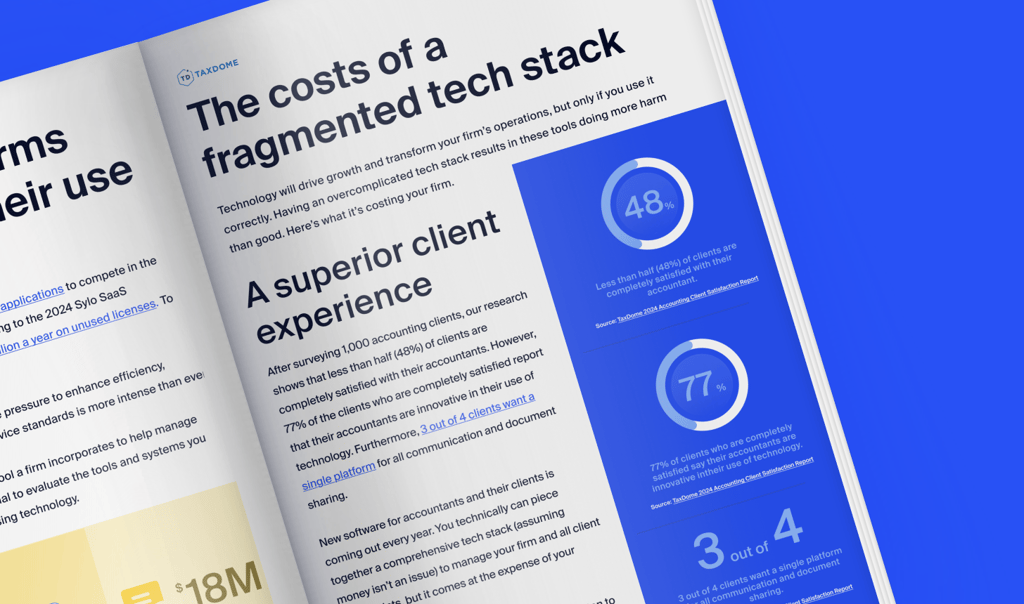
Get your free guide

Thank you!
The guide copy has been sent to your email. Please check your inbox!
Recommended articles
Niche Business Accounting Report statistics: what business clients will pay for specialized expertise

Buy Now, Pay Later: offer clients payment flexibility

Top AI tools for accountants in 2026: key features and use cases compared