 US – English
 UK – English
 Canada – English
 Australia – English
 Danmark – Dansk
 DACH - Deutsch
 France – Français
 España – Español
 Sverige – Svenska
 Italia – Italiano
 Nederland – Nederlands
 Portugal – Português
 Suomi – Suomi
 Norge – Norsk
 日本 – 日本語
 Romanian – Română












Accounting process improvement: Practical strategies, tools, and real-world examples
Run your entire firm on one platform
Key takeaways:
- Process inefficiencies compound as firms grow. What slows you down with 50 clients will stop you with 200.
- The hardest process to fix is getting client data in on time. Everything downstream depends on it.
- Standardization feels uncomfortable at first, but it’s what makes accountability possible and growth manageable.
- Automation only works when the process is clean first. Automating a broken workflow just breaks it faster.
- Process improvement is not a project with an end date. Firms that keep reviewing keep growing.
Growth brings opportunity, but it also exposes the cracks in accounting processes. Systems that worked with a smaller team and fewer clients collapse under the pressure. Now, the missed deadlines are piling up, clients are getting frustrated and your team’s productivity is flatlining.
You can’t take on more clients because your team’s already inundated with backlogs. Growth slows, revenue stumbles and you don’t have the resources to reverse the trend.
Leading firms prevent this with accounting process improvement. They know that the impact of inefficiencies multiplies as client bases grow. So, they routinely analyze and improve processes to prevent growth barriers from developing.
To bring a real-world perspective to this guide, we looked to John Higgins, CPA, CITP, founder and CEO of Higgins Advisory, and a long-time strategic advisor who’s spent decades helping accounting firm leaders diagnose and fix the process problems holding them back, from workflow automation to AI.
Table of сontents
Why growing firms need accounting process improvement
Growth creates complexity. More clients and increased workloads make it harder to deliver consistent results. Without continuous improvement, the processes that helped you get here get in the way of reaching the next growth target.
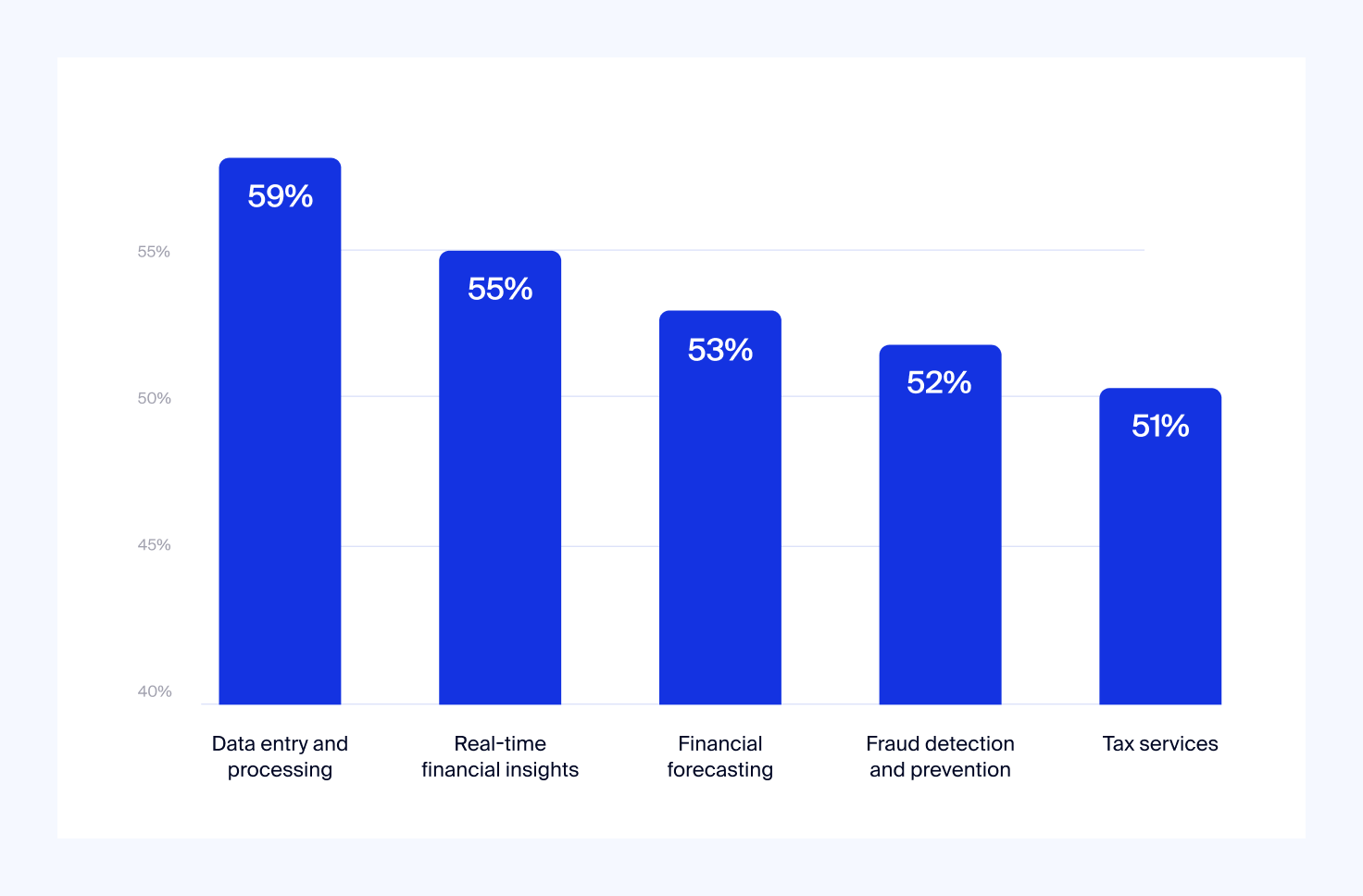
According to RightRev, 53% of accountants say manual processes slow them down and increase the risk of errors. Meanwhile, in a QuickBooks survey, 59% of accountants say data entry and processing is the top reason they turn to AI and automation.
We’re talking about the manual data entry slowing down accounting processes. The email back-and-forths holding up tasks. The late payments restricting cash flow and the repetitive admin work in recurring services.
Multiply these inefficiencies by each client your firm manages, and you can see how this creates growth bottlenecks.
John Higgins has seen this play out across firms of every size. The warning signs, he notes, rarely announce themselves: “The most common is simply a realization that the current process is broken. Usually identified through excessive time spent on a task, a high error rate, or simply concern communicated by the staff performing the process.”
As he puts it, the most visible indicator is often the simplest: “Perhaps the most obvious sign is when there are paper documents involved in the process.”
Which accounting processes need the most improvement?
Any accounting process suffering from repetitive manual tasks and avoidable delays is first in line. Of course, every firm is different, but the most common processes that need continuous improvement include:
- Data management: reduce manual data entry and verification
- Team and project management: automate task assignment, statuses and tracking throughout workflows
- Client onboarding: simplify onboarding for clients and remove manual tasks for your team
- Recurring services: automate repeating processes for bookkeeping, payroll, tax prep, etc.
- Client communication: centralize communication channels and minimize unnecessary interactions
- Document requests: automate document creation, sending and requests
- Billing and payments: automate time tracking, invoicing, reminders and payments
John singles out one process that consistently proves hardest to fix: “Getting client data in a timely and efficient manner continues to be the most elusive process to streamline.”
The reason is upstream. As John explains, “The old adage ‘garbage in, garbage out’ aptly applies here. When the process starts with missing or incomplete input data, it creates a lot of unnecessary effort to track down the required information, as well as ‘cleaning up’ unorganized or inaccurate data.”
Minimizing these inefficiencies at the source will improve the outcomes of everything your firm does. You complete accounting services faster, improving the quality and consistency of outcomes. Client satisfaction climbs, payments clear faster and client ROI increases.
Your team celebrates new client acquisitions instead of dreading the extra workload.
Accounting process improvement example: +9% firm growth with client onboarding and workflow automation
In 2023, BHR Finans & Regnskap increased growth by +9% by improving accounting processes with TaxDome. Having reached the limits of existing systems, the firm wanted to improve oversight and reduce manual workloads. It wanted to free up resources to drive further growth.
What did BHR Finans & Regnskap improve?
- Automated client onboarding from inquiry to the first invoice
- Increased oversight with project management and pipeline automation
- Simplified document customization with TaxDome templates
- Automated document sending and requests
- Centralized client communications
Read our BHR Finans & Regnskap case study for more details.
How do the top firms improve accounting processes?
The top accounting firms don’t make changes for the sake of it. They consistently analyze processes and identify inefficiencies that require action. Then comes the hard part: implementing changes that genuinely improve outcomes.
1. Identify your growth bottlenecks
You need to know exactly where your growth bottlenecks are to make impactful process improvements. Analyze every level of the business, not only accounting services, to identify inefficiencies.
Look for bottlenecks in sales and onboarding, client management and revenue operations. Time wasted on billing, invoicing and late payments can be even more damaging than an inefficient accounting process.
Use all of the relevant business data you can access, but also speak to your teams. Know what they’re spending their time on and which repetitive tasks are clogging up their schedules.
Delays and repetitive tasks are the two most common warning signs that a process needs improving. Flag processes with a high volume of either, so you can analyze them in more detail.
John agrees on these warning signs, which he says are “often revealed in the form of an inordinate amount of time being spent on the process and the related time charges to the billing file.”
2. Find the root causes of inefficiency
To improve an accounting process, you need to pinpoint the root causes of inefficiency. Otherwise, you’re treating the symptom, not the underlying condition.
Start by listing the negative outcomes of inefficiencies. Then, investigate the root causes.
| Negative outcome | Root causes |
| 👎 Losing prospects to rivals | ⛔ Complex onboarding
⛔ Messy client communication ⛔ Delays in sending proposals or engagement letters |
| 👎 Overload during tax season | ⛔ Excessive client back-and-forth
⛔ Manual doc and signature requests ⛔ Late/insufficient client responses ⛔ Lack of workload visibility |
| 👎 Low client ROI | ⛔ Poor client records
⛔ Manual data entry ⛔ Repetitive manual tasks ⛔ Excessive communication ⛔ Late payments |
| 👎 Missed deadlines | ⛔ Overloaded team members
⛔ Lack of workflow automation ⛔ Poor task visibility ⛔ Unclear task hand-offs ⛔ Insufficient project management system |
| 👎 Poor cash flow | ⛔ Manual billing and invoicing
⛔ Inflexible payment options ⛔ Manual payment reminders |
| 👎 Inconsistent service quality | ⛔ No standardized processes
⛔ Missing SOPs ⛔ Lack of automated workflows ⛔ Overloaded team members |
One root cause John encounters frequently is deceptively simple: “Continuing to execute the same process in the same inefficient way.”
When that’s the case, he recommends going straight to the source.
“Ask the staff, ‘What problems do you see with the process? What ideas do you have for improving the process?’”
— John Higgins, CPA, CITP, founder and CEO of Higgins Advisory, LLC
Make sure you address the root causes of inefficiency before implementing any changes. You’ll often find one root cause affects multiple processes. This helps you prioritize process improvements that will make the biggest impact across your practice.
3. Review task management and workloads
Your task management system often reveals the earliest warning signs of process inefficiency. Missed deadlines, lost work and delays between stages are all indicators that it’s time for a review.
Pay close attention to processes in three key areas:
- Projects and tasks: are tasks clearly assigned and deadlines being met? Can your team track progress through every stage of workflows?
- Internal collaboration: is communication centralized in one place? Are responses timely? Is your team hitting deadlines on workflows that require extensive collaboration?
- Client management: is onboarding as effortless as possible? Is client communication seamless and are document requests fulfilled quickly?
Where multiple people run the same process, comparison is a quick diagnostic. As John explains, “If you have multiple people executing the same process, it will become evident quickly if it is a people problem when you can compare one against another.”
Accountability matters here too. “This requires leadership to ensure everyone is fulfilling their responsibilities and hold people accountable. Which may often be the partners themselves.”
Every project management platform on the market promises to improve these processes. However, general-purpose tools rarely meet the complex needs of accounting firms.
This is why many practices outgrow platforms like ClickUp and start looking for a more complete solution. A true practice management system capable of simplifying the most complex accounting processes.
4. Automate repetitive tasks
Manual admin work is one of the biggest drains on time and capacity, but it’s also one of the easiest to fix. Efficient processes automate repetitive tasks that don’t need human input. This frees up time and other resources for more pressing activities.
Start by identifying high-frequency, low-value actions across your workflows. These are the tasks that slow your team down without adding much value:
- Client reminders: automate follow-ups for missing documents, e-signature requests or pending approvals
- Task assignments: trigger recurring to-dos for monthly close, tax prep or payroll cycles
- Job progressions: automatically move jobs to the next stage when prior tasks are completed
- Email touchpoints: automate email exchanges, client requests, data collection and other routine tasks
- Invoice scheduling: automate recurring billing, payment reminders and late fee notices
- Client task checklists: assign step-by-step tasks to clients (e.g. “Upload 1099s”, “Sign engagement letter”) and track completion
Automating these workflows can save accounting teams hours every week. We know this because TaxDome customers cut repetitive tasks by 73% per month with our automation tools.
Despite the opportunity, John cautions against rushing the setup: “Not providing proper training to the staff on how the software will be integrated into the process… Firms end up wasting a lot of staff time and a lot of money on software that is not properly utilized.”
5. Remove avoidable delays
Some delays are unavoidable, but most aren’t. When accounting processes stall, it’s often because there’s no clear next step. Someone’s waiting on input from elsewhere or the person holding up progress doesn’t even realize.
In most cases, nobody’s to blame for these delays. They’re caused by gaps in systems, allowing tasks to slip through, or a lack of automation, adding unnecessary tasks to workloads
Common delays that you can reduce or eliminate with process improvement include:
- Switching between multiple tools to complete tasks
- Backlogs of recurring tasks and workflows (that should be automated)
- Waiting on documents from clients
- Pending signatures and approvals
- Waiting on transaction info from clients
- Chasing clients or staff for updates
- Tasks left unassigned
- Manual job hand-offs
- Manual data input and verification
- Manually creating proposals or engagement letters
- Manually creating invoices and chasing late payments
These delays mount up as your firm takes on more clients and juggles larger workloads. You found ways to deal with them in the past, but there comes a point where your team is at capacity and avoidable delays limit your growth potential.
6. Standardize key processes
Standardizing processes implements frameworks for consistent outcomes. First, you eliminate inefficiencies. Then, you automate repetitive tasks. And, finally, you ensure your team always has the tools and guidance required to do their job.
John is direct about what standardization requires: “They have to change the way they work and be accountable… You can only have so much flexibility. A standard process is a standard process.”
As a growing accounting firm, start with the following steps:
- Centralize data management with a CRM designed for growing accounting firms
- Automate repeatable workflows to complete processes faster and reduce manual errors
- Automate pipelines for recurring services like monthly bookkeeping and tax preparation
- Streamline task management with clear roles and responsibilities at every stage of key processes
- Embed SOPs into workflows with clear instructions for manual processes and tasks
- Reduce admin work with accounting templates for complete workflows, proposals, tax organizers and more
- Simplify the client experience by automating onboarding, data collection and client tasks
The benefits extend beyond consistency. As John notes, “It becomes easier to identify who is not following the standard.” He also flags a common failure at the leadership level: “When the partners all do the tax return review process differently.”
John offers practical advice on how to make standards stick: “Generate videos capturing the actual execution of the workflow narrated by someone who is knowledgeable about the process.”
Standardizing complex accounting processes takes a lot of work. The returns keep stacking up over time, though. Your team completes tasks faster every day, but quality and consistency both increase. Crucially, further process improvement is significantly easier once you reach this point.
7. Ongoing process improvement
Process improvement is an ongoing strategy for growing firms. Your demands increase at every growth stage and reviewing processes ensures you’re equipped to reach the next one.
Pay attention to performance data, know the warning signs of process inefficiencies and investigate changes quickly.
John’s approach is structured: “Set up a schedule and look at processes on a rotating basis and assign teams to each process to distribute the workload.”
There’s no such thing as a perfect process, and there are always opportunities to improve.
Even small changes can have a big impact. Automating a document request, tightening a review loop, or simplifying client onboarding can save hours each week across multiple engagements.
The firms that keep improving are the ones that keep growing.
John points to communication as what sustains it.
“Communication across the firm is critical to make sure people have an opportunity to communicate to leadership when a process is not working well.”
— John Higgins, CPA, CITP, founder and CEO of Higgins Advisory, LLC
But what’s just as important here is ownership: “Identify a champion for each process and ensure that there is clear and consistent communication about the process to those involved.”
Accounting process improvement example: +43% revenue growth through improved visibility and client communication
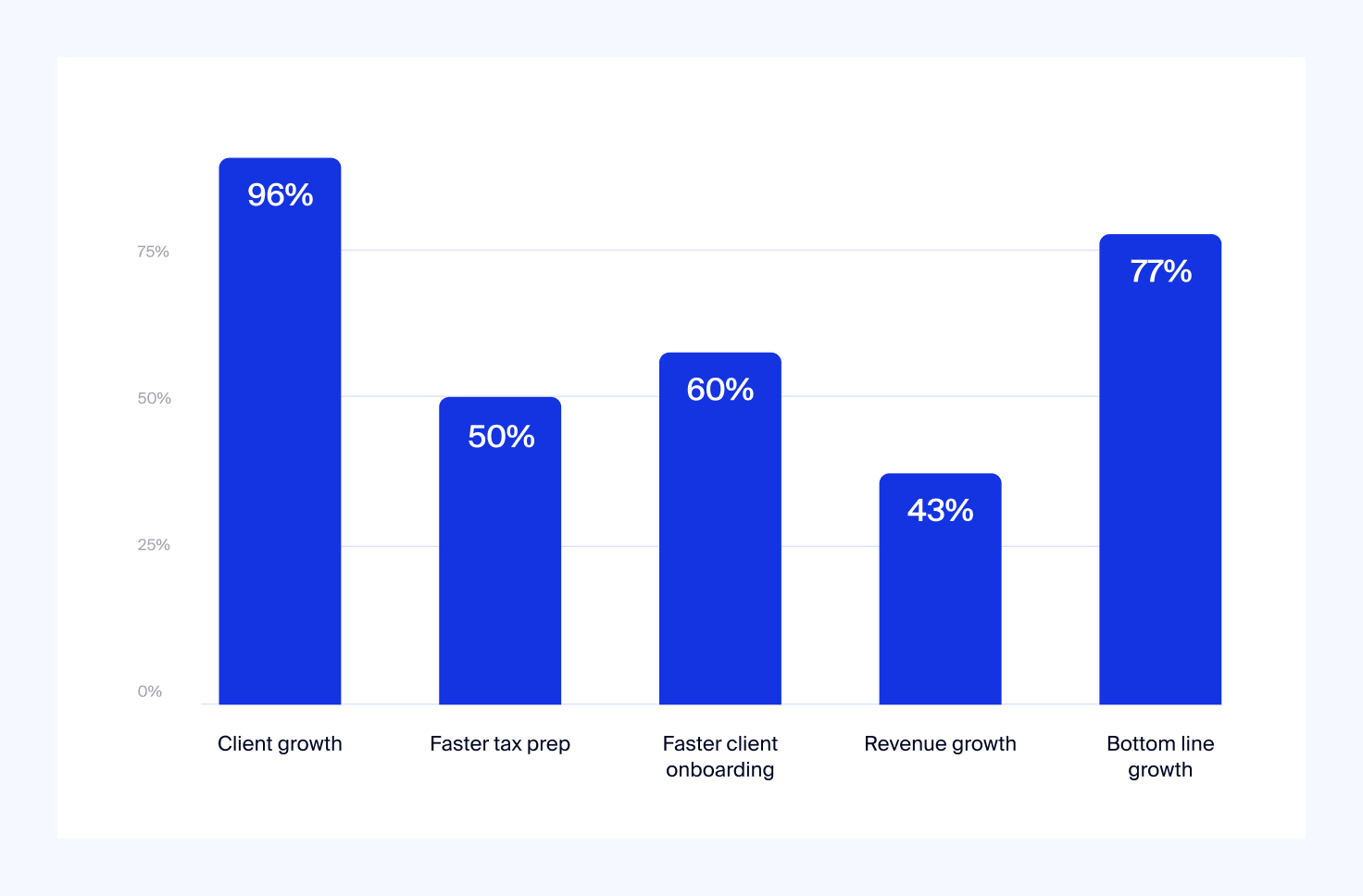
In 2024, NeatBooks LLC increased revenue by 43% by transforming the client experience. With manual workloads stalling growth, the firm wanted to reduce delays and improve clarity for clients and staff. With TaxDome, the practice automated pipelines and removed friction throughout the client experience. It centralized communication and collaboration between team members and clients alike. These process improvements helped Neatbooks increase client growth by 96%.
What did NeatBooks LLC improve?
- Introduced pipelines for complete task visibility and team accountability
- Automated status updates and reminders to improve client engagement
- Centralized all client communications and documents into one secure portal
- Created a mobile-first experience that its clients love
- Reduced onboarding time by 60% and tax prep time by 50%
Download our NeatBooks LLC case study to learn how they did it.
How technology makes or breaks accounting process improvement
Technology implementation is a process in itself, but it doesn’t automatically improve outcomes.
Unfortunately, many firms get stuck in the adoption phase. They put all their effort into adopting and learning new tools, but never reach the value phase. Now, you spend all this time and money on technology, but what are you really getting in return?
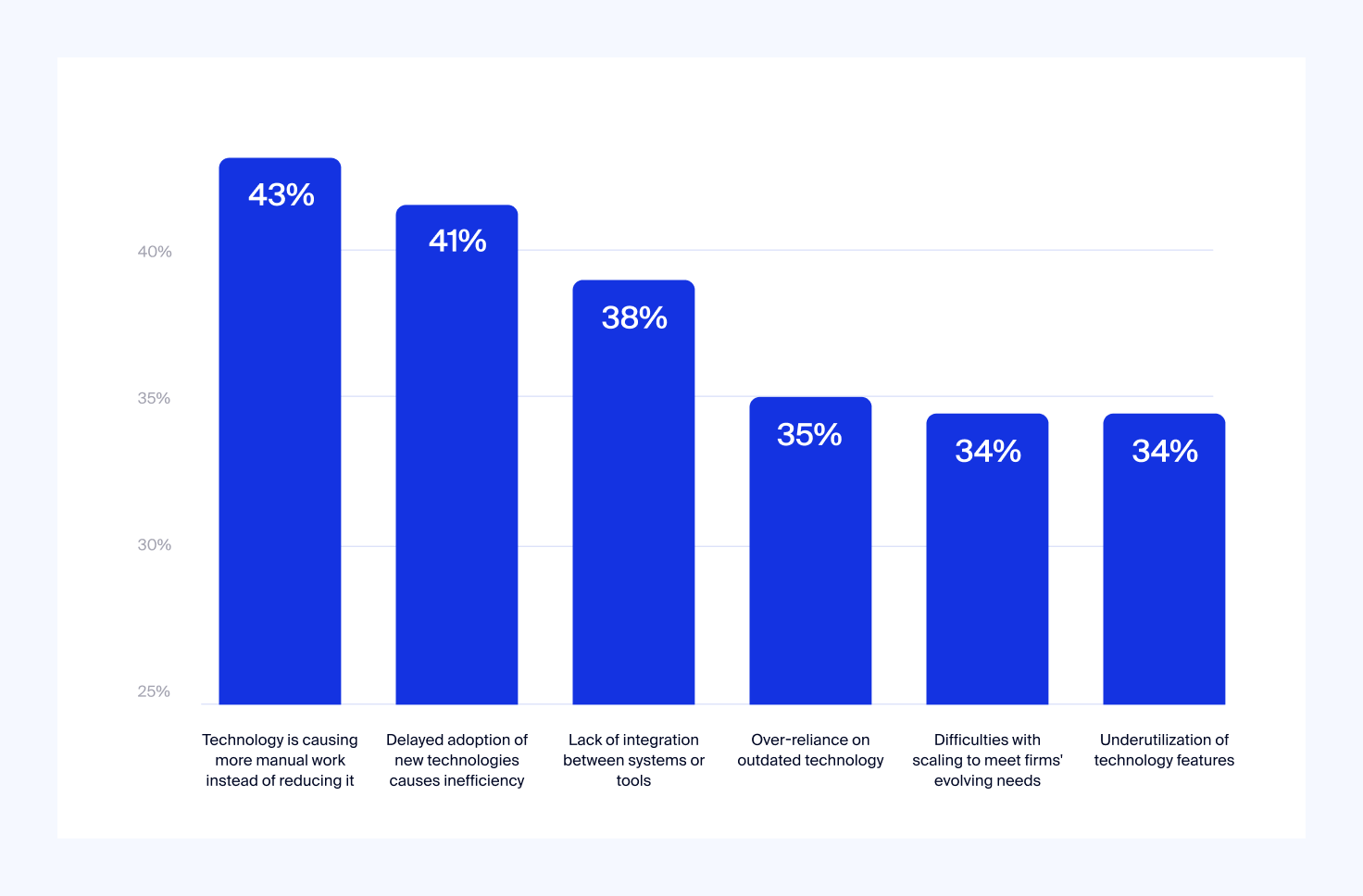
In a recent survey from CPA.com and BILL, 43% of firms say that technology is actually increasing manual work instead of reducing it. Another 38% face integration problems between multiple tools. While 34% cite difficulties with finding solutions that can scale with their firms’ evolving needs as they grow.
The old culture of “there’s an app for that” encourages you to look for a new tool every time you identify a problem.
You end up with a tech stack that’s more complex than the workflows you wanted to simplify in the first place. One that creates more work than it saves. Your team spends more time learning new tools and switching between apps than actually completing their tasks.
Your software fees multiply, but you never get the results you need. You feel the constant pressure to upgrade plans or switch to another provider.
Accounting firms need a complete toolkit designed to solve the daily challenges that create growth barriers. This means one, complete solution that can improve the following processes:
- Team and project management: assign tasks with clear ownership, track progress and balance workloads
- Workflow automation: eliminate repetitive tasks by automating assignment, statuses, reminders and recurring jobs
- Client onboarding: automate client onboarding so your team can focus on work that generates revenue
- Client management and communication: put all of your client data, documents and communications to one place
- Data collection and management: automatically import client data and store it securely
- Document and signature collection: automate file requests, approvals and e-signatures with built-in reminders
- Tax preparation: build repeatable workflows for tax prep, review and approvals, with embedded SOPs to ensure consistency
- Recurring service workflows: automate job creation and scheduling for bookkeeping, payroll and other recurring services
- Billing and payments: set up recurring invoices, enable online payments and automatically send reminders
- Analytics and reporting: inform smarter business decisions for you and your clients with financial reporting and practice insights
We know how hard it is to find a solution that supports process improvement across your whole firm. We know, because it’s taken years of hard work to build the most complete, end-to-end practice management system that truly does.
Improve your accounting workflows with TaxDome
Don’t let technology become another inefficient process holding you back. The software market is filled with tools designed for the average business, not for the complex needs of accounting firms.
TaxDome is purposefully engineered to remove the bottlenecks limiting your firm’s growth potential. The days of integrating 12 different tools for standard workflows are over. It’s time for a complete practice management system that improves accounting processes from start to finish.

Aaron produces practical content for TaxDome, drawing on 11 years in SaaS copywriting and marketing. He helps accounting and tax professionals get the most from TaxDome and other tools, making complex topics clear and actionable.
Get your free guide

Thank you!
The guide copy has been sent to your email. Please check your inbox!
Recommended articles

Niche Business Accounting Report statistics: what business clients will pay for specialized expertise

Buy Now, Pay Later: offer clients payment flexibility

Top AI tools for accountants in 2026: key features and use cases compared