 US – English
 UK – English
 Canada – English
 Australia – English
 Danmark – Dansk
 DACH - Deutsch
 France – Français
 España – Español
 Sverige – Svenska
 Italia – Italiano
 Nederland – Nederlands
 Portugal – Português
 Suomi – Suomi
 Norge – Norsk
 日本 – 日本語
 Romanian – Română












How to start a bookkeeping business in 2026: the complete guide
Run your entire firm on one platform
Starting a bookkeeping business in 2026 is one of the most accessible paths into self-employment in professional services. Startup costs are low (often under $3,000), demand is high, and cloud-based tools mean you can run a profitable firm from your laptop without ever renting office space.
But “easy to start” doesn’t mean “easy to succeed.” The bookkeepers who build sustainable six-figure businesses are the ones who get the fundamentals right from day one legal structure, pricing, client acquisition, and the right tech stack.
This guide walks you through every step of launching a bookkeeping business, including realistic startup costs, pricing models that actually work, how to find your first clients, and a complete startup checklist. Updated for 2026.
Table of сontents
Why start a bookkeeping business? Benefits you didn’t expect
You already know that running a business gives you flexibility and financial control, but bookkeeping comes with unexpected advantages most people miss.
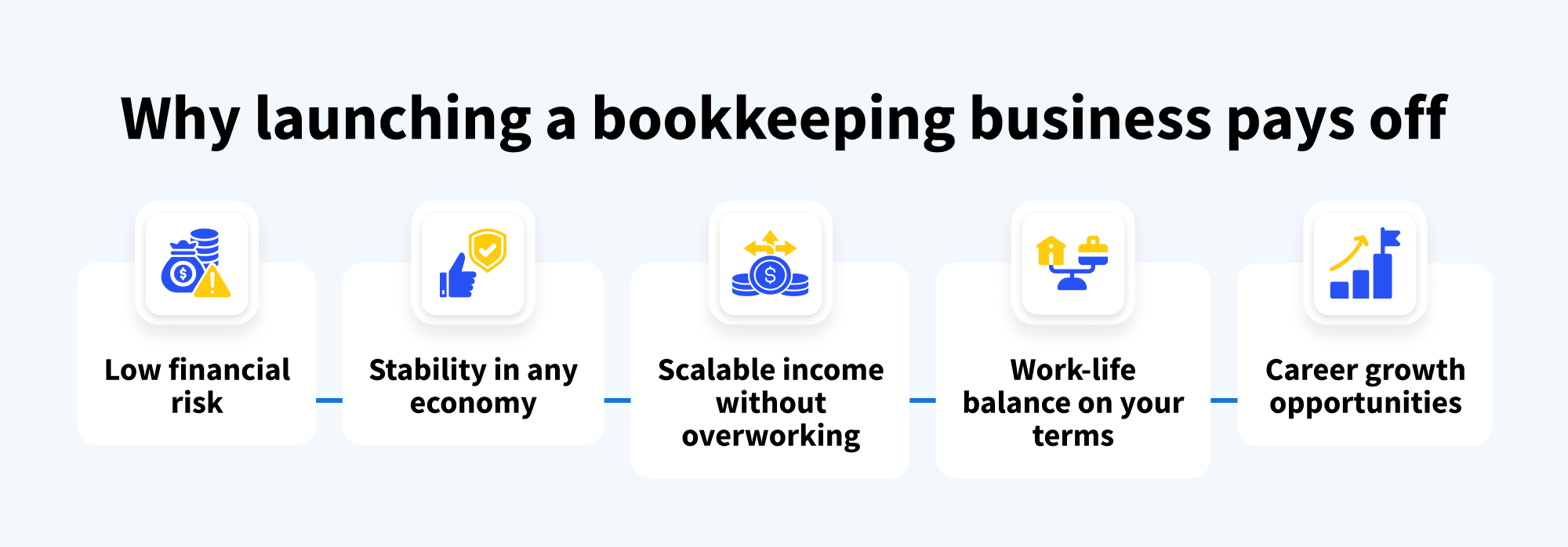
1. Low financial risk
Most businesses require big upfront investments. Bookkeeping doesn’t. With just a laptop and software, you can start small, avoid debt, and grow at your own pace.
2. Stability in any economy
When money’s tight, businesses rely on bookkeepers more than ever. Owners need to track every dollar, and the person who understands their numbers best becomes their go-to advisor. That trust turns bookkeepers into an essential part of the business.
3. Scalable income without overworking
Bookkeeping rewards skill, not just hours worked. While beginners might charge $300/month per client, experienced ones can bring in $2,500+ for the same effort.
4. Work-life balance on your terms
Choose the clients that fit your lifestyle. Prefer stability? Work with established businesses. Love variety? Focus on startups. Your clients shape your schedule, influence your workload, and ultimately define your quality of life.
5. Career growth opportunities
Bookkeeping isn’t a dead end — it’s a launchpad. Grow into consulting, run a firm, or even step into a CFO role. Financial expertise keeps you in demand wherever your career takes you.
Do you have what it takes to run a bookkeeping business?
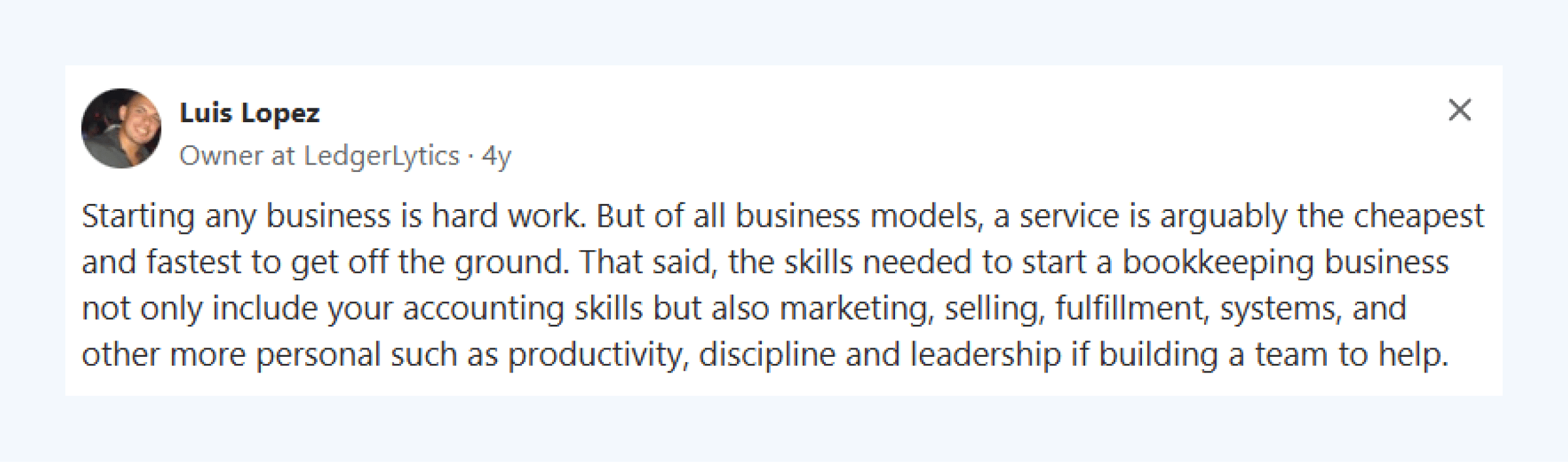
Being a great bookkeeper and starting a bookkeeping business are two different things. To build a thriving business, you need technical expertise, business acumen, and strong personal qualities.
Before you start a bookkeeping business, check yourself against these three key areas to see where you already excel — and what you might need to improve.
1. Bookkeeping skills (your technical foundation)
- Financial literacy: debits, credits, accrual vs. cash accounting, and financial reports
- Software proficiency: QuickBooks, Xero, TaxDome, and other accounting tools
- Attention to detail: reconciling accounts, catching errors, and maintaining clean records
- Regulatory knowledge: staying updated on tax laws, sales tax rules, and compliance requirements
2. Business skills (growing and managing your firm)
- Client acquisition: marketing your services and communicating your value effectively
- Relationship management: setting expectations, onboarding seamlessly, and maintaining trust
- Process optimization: creating workflows that help you work smarter, not harder
3. Soft skills (personal traits that set you apart)
- Discipline: meeting deadlines, staying organized, and managing workload effectively
- Communication: explaining financial matters clearly to non-accountants
- Adaptability: handling new tools, changing regulations, and unique client needs
- Professionalism: clients share sensitive financial data, so integrity is key
- Patience: dealing with disorganized clients and fixing messy books takes persistence
The good news? These skills can be learned and developed over time.
How to start a bookkeeping business: a step-by-step guide
A strong foundation will set you up for sustainable growth, higher-value clients, and long-term success. Here’s how to do it right:
1. Understand your “Why?”
Before you dive into workflows and pricing, ask yourself: Why do you want to start a bookkeeping business?
Is it for more freedom? Higher earnings? A career shift? Jot it down. Your “why” is what will keep you motivated when challenges arise.
2. Define your niche and service offerings
Not all bookkeepers do the same work. Some focus on monthly bookkeeping, others specialize in financial clean-ups, and some offer advisory or CFO services. What kind of bookkeeper do you want to be?
Some high-demand markets to consider:
- Startups and small businesses
- E-commerce and online businesses
- Healthcare
- Construction and building
- Freelancers and creative professionals
- Traditional brick-and-mortar retail
- Restaurants and hospitality
The more specialized you are, the easier it is to market your services — and the more clients are willing to pay for your expertise.
3. Craft a solid business plan
Starting a bookkeeping business without a plan is like driving without a map — you might get somewhere, but not efficiently. It gives you clarity and ensures you’re building something sustainable
Your plan should answer:
- Who is your target market?
- How will you attract clients?
- What pricing model will you use?
- What tools and systems will you rely on?
Even a simple one-page business plan helps you stay focused and avoid common pitfalls. If you want a faster way to structure your ideas, an AI business plan generator can help you pull everything together quickly.
4. Set up your business legally and financially
Before taking on clients, you need to handle the legal and financial foundation of your business. Here’s what you need to do:
- Register your business with the relevant authorities
- Choose a legal structure (LLC, sole proprietorship, etc.) for your business
- Secure an employer identification number (EIN)
The way you legally start a bookkeeping business impacts everything — from taxes to client trust — so it’s worth getting it right from the beginning.
And once your business is legally established, it’s time to protect it with the right insurance.
5. Secure your business with the right insurance
No one likes to think about worst-case scenarios, but protecting your business from potential risks is essential.
- Errors & Omissions (E&O) insurance covers claims if a client accuses you of financial mistakes or negligence.
- General liability insurance protects against legal claims for accidents or damages related to your business.
- Cyber liability insurance safeguards client data in case of hacking or data breaches.
- Business property insurance covers office equipment and workspace damages.
If you’re handling payroll, tax prep, or advisory services, E&O insurance is a must. Some states or industries may even require it.
6. Get a bookkeeping business license
Licensing requirements for bookkeepers vary depending on your location. Some states or countries require a specific bookkeeping license, while others do not.
Here’s how to check if you need one:
- Visit your state or local government’s business registration website
- Check industry requirements through a professional bookkeeping association (e.g., AIPB or NACPB in the U.S.)
- Look at tax preparation laws — if you plan to offer tax-related services, additional licensing may be required
Even if a license isn’t required, obtaining certifications from recognized institutions (like QuickBooks ProAdvisor, AIPB, or NACPB) can boost credibility and attract higher-value clients.
7. Set up your business infrastructure
To run a bookkeeping business efficiently, you need a way to manage your firm, team, clients, and revenue operations all in one place.
That includes:
- Tracking projects and deadlines
- Ensuring seamless client communication
- Handling document collection
- Managing invoices and payments
Doing all of this manually? It’s a recipe for burnout.
That’s where TaxDome comes in. Instead of juggling multiple tools, you can have everything in one place. Plus, clients love it — the TaxDome mobile app is rated 4.9 stars because it makes their experience effortless.
It’s no surprise TaxDome continues to win industry awards and recognition.
8. Select the right bookkeeping software
Every bookkeeper needs reliable software to manage transactions, categorize expenses, and generate reports. Most professionals rely on QuickBooks Online (QBO) or similar tools for these tasks.
But managing bookkeeping and firm operations separately can slow you down. Soon, you won’t need multiple platforms — TaxDome is bringing bookkeeping and practice management together in one place.
You’ll get unlimited clients with no per-client fees, all included in your plan.
See what’s coming and how it will transform the way you work.
9. Determine your pricing strategy
Once your infrastructure is in place, the next big question is: How much should you charge?
The key is to price based on the value you provide, not just the time you spend. Consider these common models:
- Hourly pricing: simple but limits your earning potential
- Fixed pricing: more predictable income and scalable as you grow
- Value-based pricing: charge based on the client’s ROI rather than your time
If clients say “yes” too quickly, your rates might be too low. Research your market, test your pricing, and don’t be afraid to charge what your expertise is worth.
10. Create a professional online presence
Being visible online helps potential clients find you and feel confident in your business. At a minimum, you should have:
- A simple website outlining your services, niche, and contact info
- A professional LinkedIn profile (where many business owners search for bookkeepers)
- Testimonials or case studies to build credibility
If potential clients can’t find you online, they’ll move on to someone they can.
11. Find clients through effective marketing
When you first start a bookkeeping business, getting clients is the biggest challenge. But cold calling isn’t the only way to find them. Instead, focus on:
- Referrals: build relationships with CPAs, business coaches, and financial advisors
- Online communities: business owners frequently ask for bookkeeping help in Facebook groups, LinkedIn, and industry forums
- Content marketing: share valuable insights online to attract clients rather than chasing them
The goal is to position yourself as the go-to expert — clients will come to you instead of the other way around.
12. Track your expenses and financials
You help clients stay financially organized so your own books should be spotless. Keep your finances in order by:
- Using software for your own records
- Setting aside taxes monthly to avoid surprises
- Tracking business expenses to maximize deductions
Even as a bookkeeper, hiring an accountant for tax strategy is smart because knowing bookkeeping doesn’t mean you have to do your own taxes.
13. Understand funding options
Most bookkeeping businesses don’t need major startup funding, but if you plan to scale quickly, consider:
- Small business grants for professional services
- Business credit cards to manage cash flow and earn rewards
- SBA loans or lines of credit if you need to invest in hiring or technology
Having access to funding keeps your business flexible and helps you grow faster when opportunities arise.
FAQs
Can I open my own bookkeeping firm without being a CPA?
Short answer: Yes.
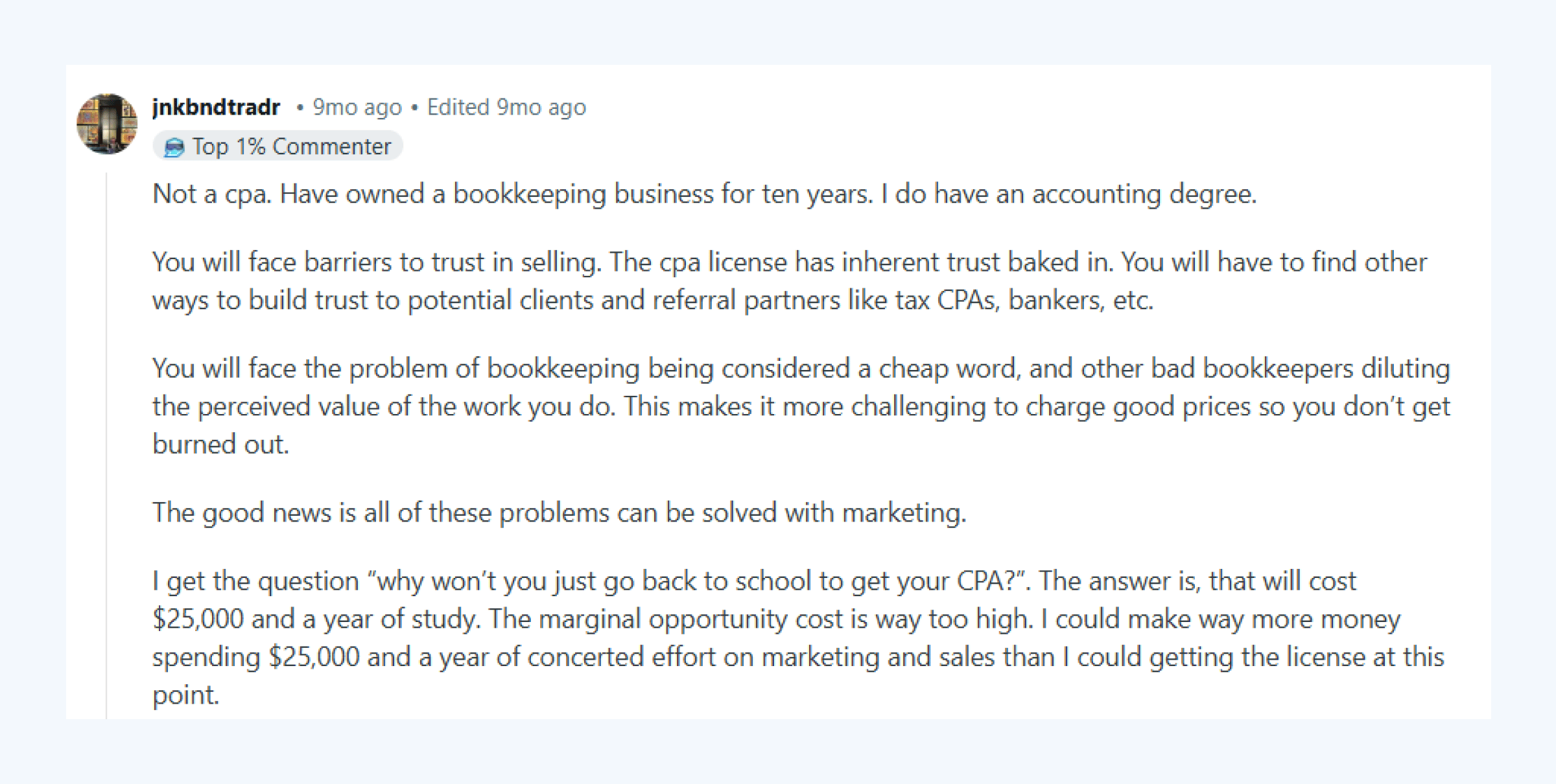
A CPA license is not legally required to start a bookkeeping business. However, CPAs naturally have built-in trust, so you’ll need to stand out in other ways to win clients from competitors.
But some experienced bookkeepers argue that investing in marketing provides a higher return than becoming a CPA:
Can I start a bookkeeping business part-time?
Yes! Many bookkeepers start part-time while keeping another job. It’s a great way to build experience, gain clients, and refine your processes before going full-time. Since a virtual bookkeeping business doesn’t require office space, you can work remotely and scale at your own pace. The key is setting up efficient workflows early on so you don’t feel overwhelmed as you grow.
Can I start a bookkeeping business from home?
Yes! Many bookkeepers want to know how to start a bookkeeping business from home, and the good news is — it’s easier than ever. With cloud-based software and client portals, you can run a fully remote bookkeeping business without the need for office space.
Is bookkeeping a lucrative business venture?
Absolutely. A bookkeeping business can be highly profitable, but success depends on choosing the right clients, pricing your services well, and leveraging automation.
What challenges may arise when starting a bookkeeping business?
Finding clients, setting the right pricing, and managing multiple accounts efficiently are common struggles. Many new bookkeepers also face trust barriers — clients may hesitate to hire someone without a CPA title. A strong online presence, a clear value proposition, and professional credibility can help. Using the right tech stack is also crucial — having disorganized workflows can slow down your growth more than anything else.
How can I market my bookkeeping business?
Forget cold-calling random businesses. Networking is the key to finding great clients. Connect with CPAs, financial advisors, and small business owners who already trust you. Join online business communities where entrepreneurs actively seek bookkeeping help. If you want to grow a remote bookkeeping business, focus on referrals, and content marketing — helpful posts and insights build trust and attract clients without aggressive selling. Furthermore, smart tools can help you automate Linkedin outreach to scale your connection efforts safely, allowing you to focus on managing replies and closing deals rather than manual prospecting.
Do I need to be tech-savvy to run a bookkeeping business?
Not necessarily. Most modern software is user-friendly and intuitive, even for those who aren’t tech-savvy. Plus, many platforms offer support, training, and resources to help you get started.
TaxDome, for example, provides free onboarding sessions and bootcamps to help you get up and running, along with best practices to streamline your workflow. With the right tools and a bit of guidance, running an online bookkeeping business can be much easier than you think.
How long does it take to start making money with a bookkeeping business?
Most bookkeepers land their first paying client within 1-3 months of launching, especially if they already have a professional network or niche expertise. Reaching a full replacement income (replacing a full-time job) typically takes 6-18 months, depending on how much time you can dedicate to client acquisition and whether you’re starting full-time or part-time. Specializing in a specific niche accelerates this timeline significantly because word-of-mouth referrals compound faster.
What’s the best business structure for a bookkeeping business?
For most solo bookkeepers in the US, an LLC offers the best balance of liability protection and tax simplicity. Sole proprietorships are easier to set up but leave your personal assets exposed if a client ever sues you not a trivial concern when handling financial data. Some bookkeepers elect S-corp tax treatment once their profits reach roughly $40K–$50K annually, because of potential self-employment tax savings. Consult a CPA for advice specific to your situation and state.
What software do I need to start a bookkeeping business?
At minimum, you’ll need: (1) accounting software for your clients’ books most commonly QuickBooks Online Accountant (free for bookkeepers) or Xero; (2) practice management software to handle client communication, document collection, billing, and workflow like TaxDome; and (3) a simple business bank account and basic invoicing setup for your own books. Many beginners try to skip practice management software and regret it within the first 10 clients, when manual document chasing and billing become unmanageable.
Bookkeeping business startup checklist
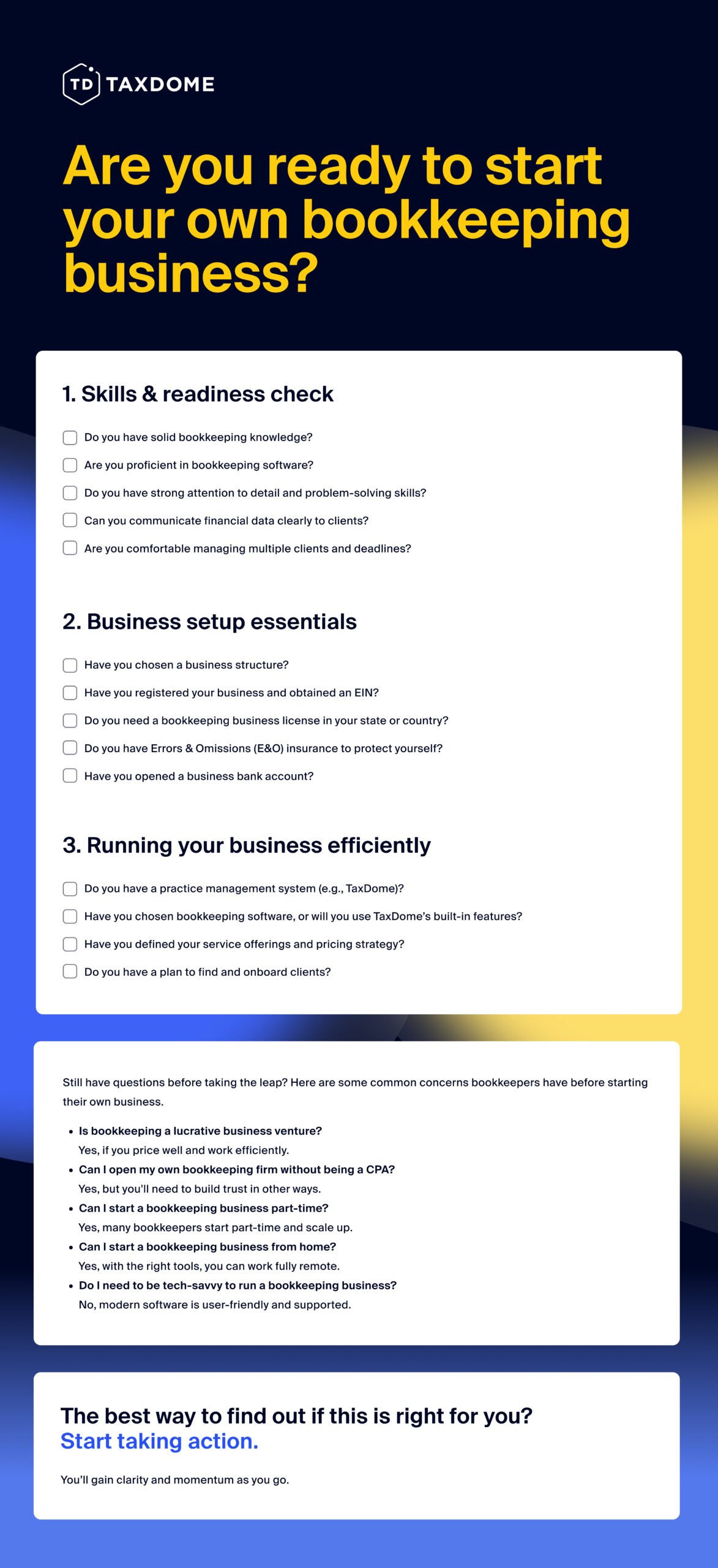
Whether you’re transitioning from a job or expanding your freelancing into a full-scale business, this checklist will help you make sure you’ve got everything covered.
Go through each section below and see where you stand. If you can check off most of these, you’re ready to launch!
Your next step
A bookkeeping business can be one of the most profitable and flexible ways to work for yourself but only if you get the foundation right. The bookkeepers who struggle aren’t the ones without skills; they’re the ones who try to run everything out of spreadsheets and email, then hit a ceiling at 10–15 clients because the admin work has consumed all their time.
The decision that most determines whether you scale or stall isn’t which accounting software you pick it’s whether you invest in a practice management system that handles client onboarding, document collection, workflow, and billing from day one. That’s the infrastructure that lets you take on client number 20, 30, or 50 without working evenings and weekends.
See how TaxDome helps bookkeepers scale
TaxDome is the practice management platform built for accounting, tax, and bookkeeping firms. Automate client onboarding, document requests, engagement letters, billing, and team workflows — all in one platform. Unlimited clients, no per-client fees, and AI-powered document tagging built in.

Mari develops TaxDome content by combining customer insights, industry research, and real-world trends. Her structured, automation-driven approach ensures messaging is clear, relevant, and supports more connected and efficient accounting firms.
Get your free guide

Thank you!
The guide copy has been sent to your email. Please check your inbox!
Recommended articles

9 best QuickBooks alternatives in 2026 for every business type
65+ key accounting statistics and insights for 2026

How to start an accounting firm: a step-by-step guide to running your own practice