 US – English
 UK – English
 Canada – English
 Australia – English
 Danmark – Dansk
 DACH - Deutsch
 France – Français
 España – Español
 Sverige – Svenska
 Italia – Italiano
 Nederland – Nederlands
 Portugal – Português
 Suomi – Suomi
 Norge – Norsk
 日本 – 日本語
 Romanian – Română











Top accounting interview questions and answers (with proven tips)
Run your entire firm on one platform

TL;DR:
- Prepare answers for the most common accounting interview questions
- Learn what interviewers want from every answer
- Train yourself to give impressive answers to any question
- Stand out by asking the right questions at the end of your interview
- Use interview questions to show why you’re the perfect accountant for the job
Every accountant has felt the pressure of accounting interviews. Summarizing years of knowledge and experience into short answers isn’t easy. But interviewers aren’t just interested in what you know; they’re interested in how you think.
Firms want professionals who stay composed, communicate clearly, and bring more than technical skills to the table. These example accounting interview questions and answers will help you stand out and land that next job.
Table of сontents
- What are the most common accounting interview questions?
- What technical accounting questions should you expect in the interview?
- How to handle scenario-based accounting interview questions
- Which behavioral and soft-skill questions should you prepare for?
- Expert tips for acing an accounting interview
- Questions to ask at the end of an accounting interview
- Ace your next accounting interview
Table of сontents
- What are the most common accounting interview questions?
- What technical accounting questions should you expect in the interview?
- How to handle scenario-based accounting interview questions
- Which behavioral and soft-skill questions should you prepare for?
- Expert tips for acing an accounting interview
- Questions to ask at the end of an accounting interview
- Ace your next accounting interview
What are the most common accounting interview questions?
These foundational interview questions evaluate fit, motivation, and communication. They help hiring managers see how your experience and goals align with the firm.
Tell me about yourself and your background in accounting
What interviewers are looking for:
✅ A clear, logical career story that highlights growth
✅ Professional confidence and self-awareness
✅ Alignment between personal goals and firm objectives
Interviewers want a brief, insightful story that reveals your professional development. Show what you can bring to the role and explain what you’ll gain from joining the firm.
Why did you choose a career in accounting?
What interviewers are looking for:
✅ Authentic motivation and curiosity
✅ A genuine interest in business outcomes
✅ Professional purpose aligned with long-term growth
Candidates who sound motivated beyond their own career prospects will stand out to interviewers. For example, you’re fascinated by the mechanics of business or the role accounting plays in strategy and decision making.
What accounting software are you most familiar with?
What interviewers are looking for:
✅ Adaptability to new tools and workflows
✅ Experience improving efficiency and accuracy with software
✅ Collaboration and openness to new technology
Familiarity with common tools is important, but interviewers are equally interested in your attitudes. Are you keen to learn new tools? Are you bringing tech skills to the position that their firm currently lacks?
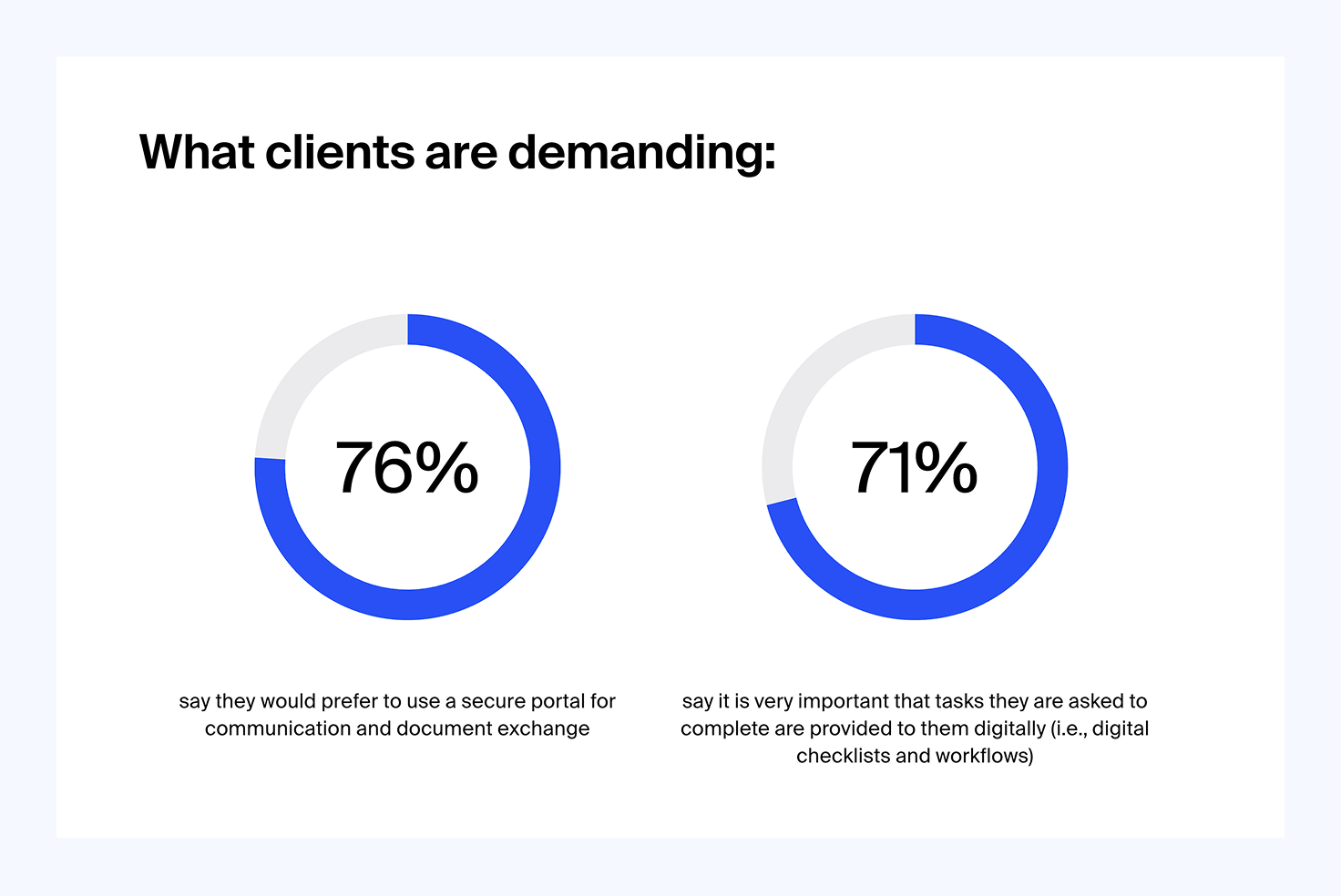
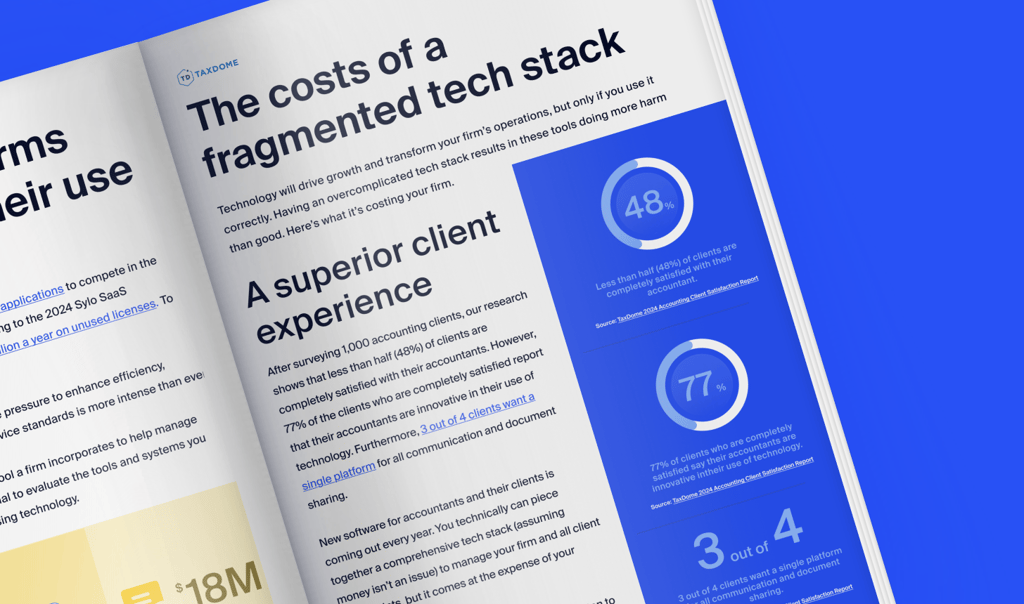
Bonus tip: Impress with your knowledge of what clients want from accounting firms — for example: 76% of clients want a secure portal for communication and document exchanges.
How do you prioritize tasks when working under pressure?
What interviewers are looking for:
✅ Ability to stay organized and calm under pressure
✅ Clear communication and teamwork
✅ Use of systems to manage competing priorities
Demonstrate a rational approach to prioritizing tasks for this interview question. Show that you can manage workloads, respond to changing priorities, and communicate clearly. Talk about your favorite tools and strategies for managing workloads and collaborating with team members.
What technical accounting questions should you expect in the interview?
Technical accounting interview questions test your knowledge, but interviewers want more than textbook definitions. They want to gauge your understanding of how accounting principles impact real business outcomes.
Explain the accounting equation
What interviewers are looking for:
✅ Clear understanding of the accounting equation
✅ Awareness of how it underpins all financial reporting
✅ Ability to connect theory to real business outcomes
Interviewers expect precision and context here. Define the equation accurately, but explain why it’s the logic behind every balance sheet and how it reflects a company’s financial health.
What’s the difference between accounts receivable and accounts payable?
What interviewers are looking for:
✅ Accuracy in explaining financial terms
✅ Understanding of how cash flow connects to operations
✅ Ability to explain concepts clearly and succinctly
Strong answers are simple, precise, and confident. Avoid overly technical definitions and communicate the business impact of the terms clearly. Instead of answering this as an interview question, consider how you would explain the difference to a new client.
Explain the three main financial statements and how they connect
What interviewers are looking for:
✅ Knowledge of each statement’s purpose
✅ Understanding of how they link together
✅ Comprehension of business impacts
Interviewers love this question because it tests your ability to summarize complex ideas clearly. Start with the explanation above, and expand on how the flow of information moves between the three statements. Give brief examples of the business impact where appropriate.
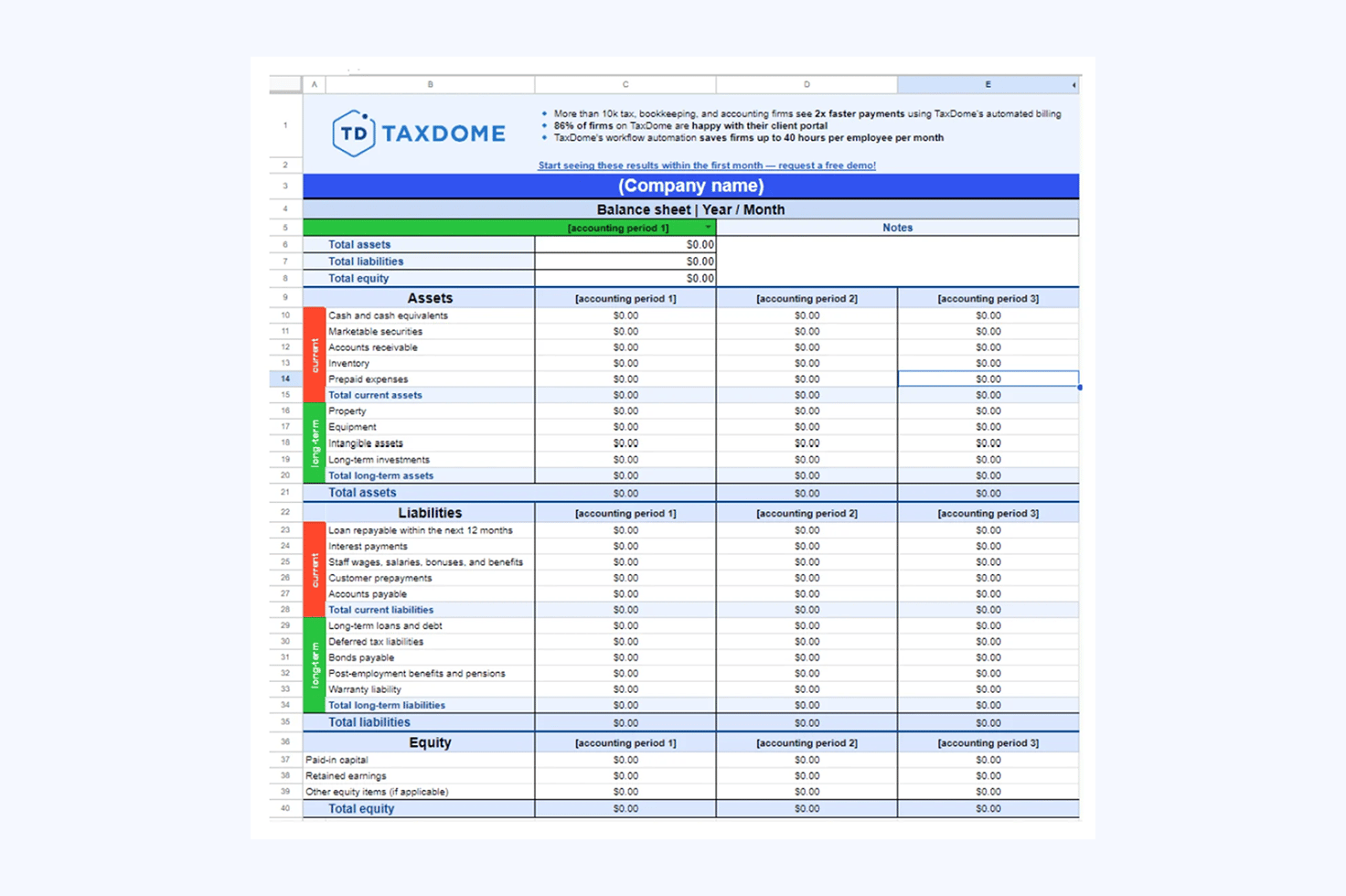
Bonus tip: Use our free accounting templates to prepare for interview questions about statements and reports.
How does purchasing new equipment affect the three financial statements?
What interviewers are looking for:
✅ Understanding of cause and effect
✅ Ability to connect the transaction across statements
✅ Awareness of timing and depreciation
Interviewers want candidates who understand the initial and ongoing impact of purchases across each statement. Stand out by asking for more context before you answer. For example, how did this company finance the purchase (cash or credit), and when did they complete the purchase?
What is EBITDA and how is it used?
What interviewers are looking for:
✅ Clarity and accuracy in definition
✅ Understanding of its business application
✅ Awareness of when it’s useful — and when it isn’t
A strong answer offers more than a definition. Candidates who acknowledge EBITDA’s purpose and its limitations demonstrate greater business awareness for this type of interview question.
How to handle scenario-based accounting interview questions
Scenario-based accounting interview questions assess your ability to apply core principles to real-world situations.
How do you assess whether a company can meet its short-term obligations?
What interviewers are looking for:
✅ Understanding of liquidity metrics
✅ Ability to interpret the context of numbers
✅ Informative trend analysis
Strong answers move from data to interpretation, showing the candidate can use ratios as a diagnostic tool, not just a formula. Show that you consider potential variables and long-term outcomes, even when you’re assessing short-term obligations.
Describe a time you discovered an accounting error — how did you handle it?
What interviewers are looking for:
✅ Integrity and accountability under pressure
✅ Ability to identify causes and propose solutions
✅ Communication and professionalism in escalation
Use this interview question to show that you’re capable of identifying errors in your own work and quick to raise issues. You resolve errors quickly, investigate causes, and implement changes to prevent them from recurring.
How do you minimize errors in financial reporting?
What interviewers are looking for:
✅ A keen eye for accounting errors
✅ Use of processes to increase accuracy
✅ Tech literacy and adoption
Demonstrate a process-driven attitude to minimizing errors in accounting tasks. This is a great chance to showcase your experience and tech literacy to a new firm. Discuss workflows you’ve implemented to improve accounting accuracy. Discuss your favorite tools and how they’ll enhance your performance in the job you’re applying for.
Which behavioral and soft-skill questions should you prepare for?
Behavioral and soft-skill interview questions aim to understand how you would operate as part of the firm’s team.
Describe a time you worked with a difficult team member
What interviewers are looking for:
✅ Communication and empathy in resolving conflict
✅ Initiative to address issues constructively
✅ Commitment to maintaining team effectiveness
Interviewers want to see that the shared goals you have in common with team members outweigh any workplace challenges. Show that you’re focused on outcomes and resolving potential issues by looking for practical solutions.
Describe an instance where you demonstrated leadership
What interviewers are looking for:
✅ Clear thinking and initiative under pressure
✅ Quick responses to problems and challenges
✅ An instinct to investigate the cause of issues
Interviewers are more interested in leadership that’s driven by achieving outcomes than demonstrating authority. Taking the lead means stepping up when your team needs you, but also encouraging others to do so when they’re the most suitable candidate.
How do you ensure accuracy when handling repetitive tasks?
What interviewers are looking for:
✅ Awareness of accuracy risks in repetitive tasks
✅ Active steps to ensure accuracy
✅ Willingness to support team members
Mistakes happen in accounting, but minimizing them is a key skill interviewers are looking for. Show a keen eye for scrutinizing your own work. At the same time, show that you’re equally willing to support colleagues in improving accuracy across the whole team.
Expert tips for acing an accounting interview
Preparing answers for the most common accounting interview questions is a good start. But understanding the key elements of an effective answer can help you respond to anything with confidence.
Practice incorporating these tips into every interview answer, and you’ll be ready to handle anything.
| Expert tip | Why it matters |
| Use the STAR method | Break answers into Situation, Task, Action, and Result to keep them focused and easy to follow. Explain previous job roles and the outcome you achieved. |
| Prepare examples | Choose situations that highlight judgment, ethics, or teamwork. Strong preparation helps you answer smoothly and confidently under pressure. |
| Connect examples to outcomes | Don’t just describe what you did — explain the result. Did you reduce errors, improve efficiency, or support a client’s decision? |
| Balance precision with simplicity | Great accountants can explain complex topics clearly. Avoid jargon and focus on helping your interviewer understand the impact of your work. |
| Demonstrate tech literacy | QuickBooks fluency is great, but what else can you bring? Ask about the firm’s tech stack and discuss tools they could benefit from. |
| Ask the right questions | Finish the interview by asking thoughtful questions about goals, tools, and culture. |
Questions to ask at the end of an accounting interview
What does a typical day look like for someone in this role?
Why it works: a practical question that gives you insight into daily workflow and expectations while showing engagement with the job role.
What does success look like in this position after six months?
Why it works: shows you think in outcomes, not just job responsibilities. It also helps you understand the firm’s performance expectations early on.
How does your firm support professional development and continuing education?
Why it works: asking about growth shows long-term thinking and signals that you value continuous improvement, a key trait in accounting.
How are performance and collaboration evaluated within your team?
Why it works: this question highlights emotional intelligence and curiosity about culture, not just KPIs — it tells interviewers you care about working well with others.
Which accounting tools or systems does your team use daily?
Why it works: demonstrates interest in process and efficiency — and naturally leads to a discussion about technology and collaboration.
Ace your next accounting interview
Firms want more than accounting skills from candidates. They need team players who bring soft skills, tech proficiency, and new ideas to the table. The accountants who stand out in interviews are the ones who can help firms achieve their next growth targets.
Referencing innovative tools and the outcomes you’ve achieved in your interview shows what you have to offer beyond the job description.
TaxDome has already transformed 10,000+ accounting firms across 25+ countries. Walk into your next interview knowing how a complete practice management platform streamlines processes, minimizes errors, and enhances client experiences.

Aaron produces practical content for TaxDome, drawing on 11 years in SaaS copywriting and marketing. He helps accounting and tax professionals get the most from TaxDome and other tools, making complex topics clear and actionable.
Get your free guide

Thank you!
The guide copy has been sent to your email. Please check your inbox!
Recommended articles
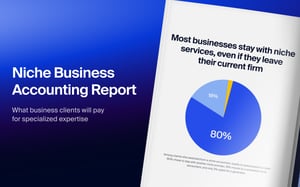
Niche Business Accounting Report statistics: what business clients will pay for specialized expertise

Buy Now, Pay Later: offer clients payment flexibility
Top AI tools for accountants in 2026: key features and use cases compared