 US – English
 UK – English
 Canada – English
 Australia – English
 Danmark – Dansk
 DACH - Deutsch
 France – Français
 España – Español
 Sverige – Svenska
 Italia – Italiano
 Nederland – Nederlands
 Portugal – Português
 Suomi – Suomi
 Norge – Norsk
 日本 – 日本語
 Romanian – Română












#Accounting workflow, #Practice management
Basic accounting principles: a guide to financial clarity

Run your entire firm on one platform

Key Takeaways (or TL;DR)
- Accounting principles ensure consistency and transparency in financial reporting
- The most important principles include revenue recognition, matching, and accrual accounting
- Both GAAP and IFRS follow similar foundations but differ in implementation
- These principles are essential for compliance, audits, and decision-making
Ensuring accurate and reliable financial reporting is achieved by diligently following a set of accounting principles. In this guide, we’ll explore the most widely-recognized ones, looking not only at what they entail but also the role they play in enabling stakeholders to effectively assess an entity’s performance and prospects.
Table of сontents
What are accounting principles?
Accounting principles are the fundamental concepts that dictate how financial information gets recorded, calculated, and communicated within a company. Their key purpose is to standardize the process so that the resulting financial statements are consistent and transparent.
In the accounting world, there are two main sets of principles that act as guiding lights:
- Generally Accepted Accounting Principles (GAAP), developed and regulated by the Financial Accounting Standards Board (FASB) for companies based in the United States
- International Financial Reporting Standards (IFRS), a globally-recognized set of standards overseen by the IFRS Foundation and the International Accounting Standards Board (IASB)
While GAAP and IFRS have some differences, they share the common goal of promoting uniformity, comparability, and reliability. By following these principles, organizations can provide investors, creditors, and regulators with accurate and useful financial information.
While both frameworks share common principles, they differ in several areas:
| Area | GAAP | IFRS |
| Approach | Rules-based | Principles-based |
| Inventory | LIFO allowed | LIFO prohibited |
| Revenue recognition | ASC 606 | IFRS 15 |
| Development costs | Expensed | Can be capitalized |
A complete overview of basic accounting principles
Now let’s dive deeper into some of the core accounting principles that underpin financial statements:
1. Historical cost principle
The historical cost principle states that assets and liabilities must be recorded at their original purchase cost or acquisition value in the financial statements.
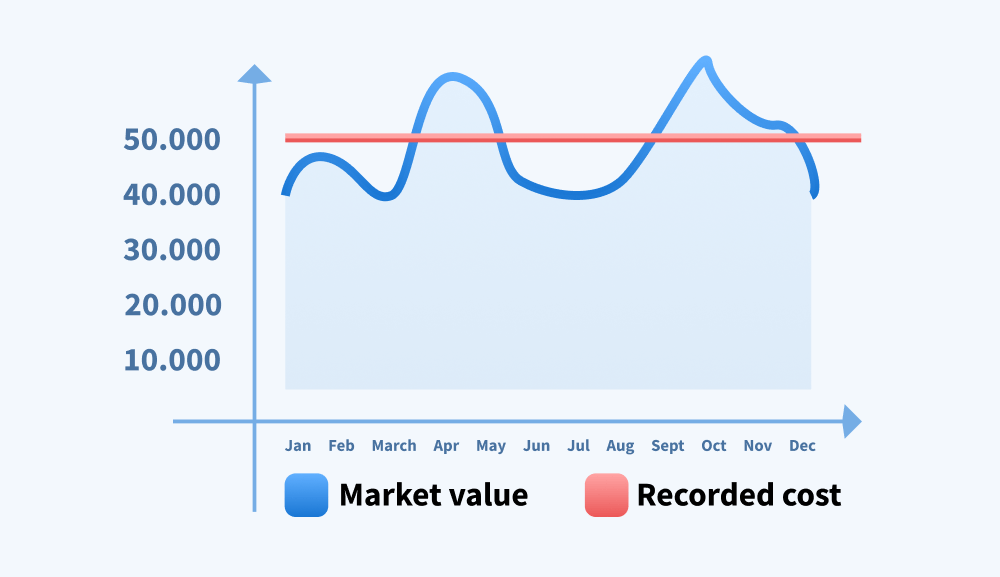
For example, if a company buys equipment for $50,000, that amount becomes the asset’s recorded cost, regardless of whether the market value fluctuates over time due to inflation, technology changes, etc.
Following this concept promotes objectivity and enables year-over-year comparisons of how resources are utilized. It allows stakeholders to analyze performance trends rather than dealing with constantly shifting valuations.
2. Revenue recognition principle
Revenue should be recognized when it is earned — not when cash is received. In other words, companies record income when they deliver goods or services.
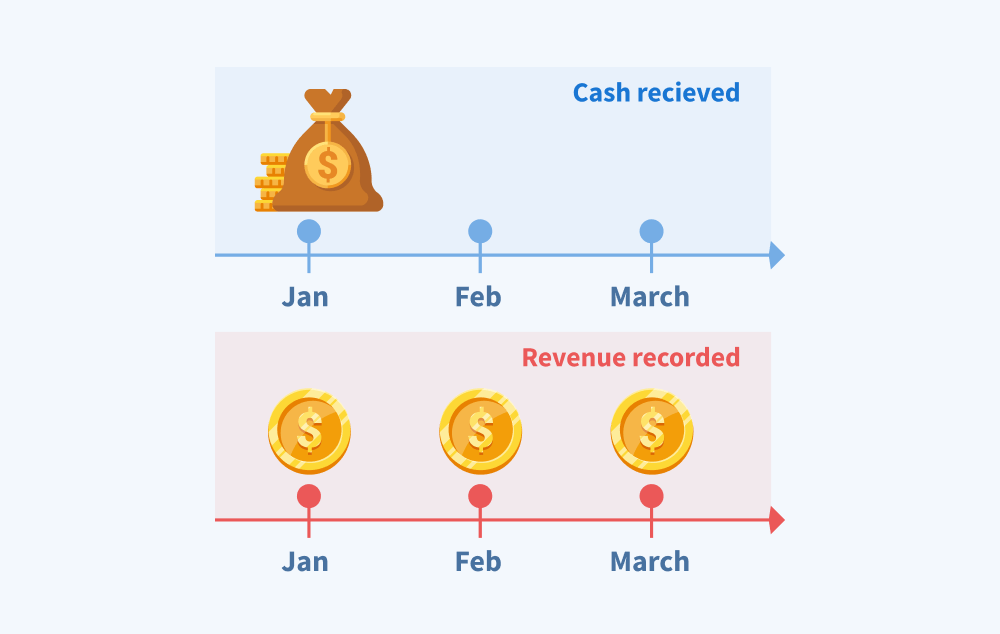
For example, a software company selling a $1,200 annual subscription would record $100 in monthly revenue as the services are delivered each month, not the full $1,200 upfront.
Properly applying revenue recognition prevents the inflation of profits. It gives stakeholders a realistic measure of a company’s earning power and reduces the risk of revenues being artificially over- or under-stated.
3. Matching principle
Also called the expense recognition principle, the matching concept requires that expenses be recorded and matched with the specific revenues they helped generate in the same reporting period.
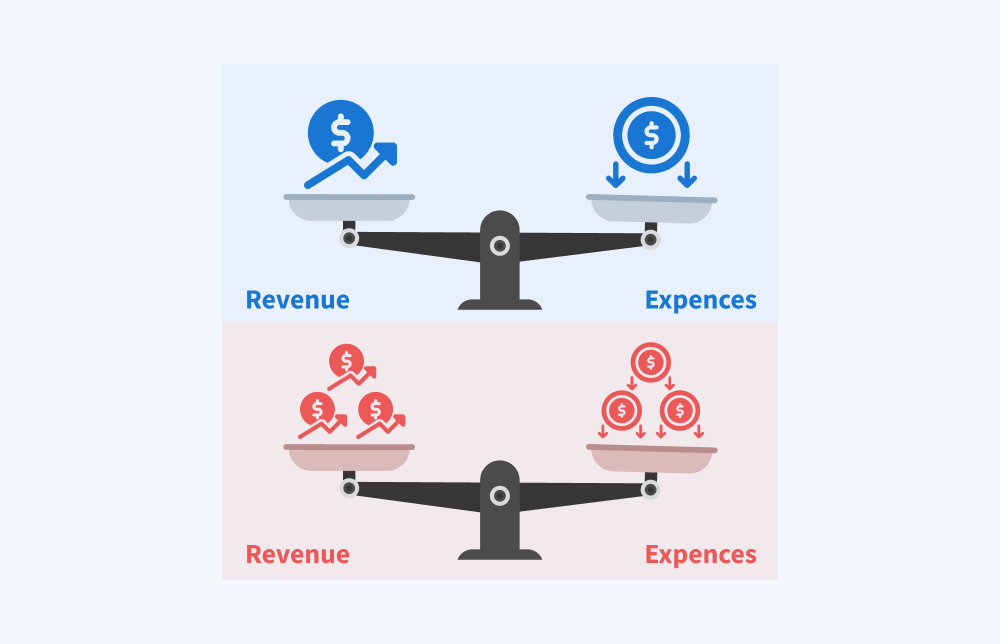
For example, if a retailer spends $5,000 on a 6-month advertising campaign that generates $50,000 in sales, the $5,000 expense would be recorded as $833 each month, matched to the incoming revenue.
Following this principle allows stakeholders to evaluate factors such as operational efficiency, pricing strategies, and overall periodic profitability. It promotes alignment between how money is spent and how it gets earned.
4. Full disclosure principle
The full disclosure principle states that all relevant financial details must be disclosed, either directly on the formal statements or in accompanying notes. This could include accounting policies, asset valuation methods, debt obligations, contingencies, and anything else that provides important context.

For example, a pharmaceutical company launched a promising new medication. To fully disclose, they’d detail projected revenue, marketing costs, expected market share, and any other information that gives insight into this opportunity’s potential financial impact.
This transparency provides stakeholders with insights into a significant growth opportunity and how it may positively impact the company’s future financial position.
5. Objectivity principle
Objectivity is the name of the game when it comes to financial reporting. This principle requires that financial information be accounted for and reported in an unbiased, impartial manner — completely free from any influences of personal opinions, preconceived notions, or subjective biases.

For example, if a company invests heavily in developing cutting-edge new products and services, they need to objectively report the substantial increase in research and development costs.
Following this principle ensures stakeholders get a clear view of the organization’s real financial standing and operational activities during that period.
6. Materiality principle
While thoroughness is appreciated, cluttering up financial statements with immaterial details benefits no one. The materiality principle states that information should only be disclosed if it’s significant enough that its omission could influence the decisions and assessments of stakeholders.

For example, a large manufacturing company replaces just a few minor pieces of equipment at one factory location. While part of their day-to-day operations, the relatively small investment would be immaterial compared to their overall massive asset base.
By following this rule, stakeholders can avoid getting caught up in small details when assessing the overall financial situation.
7. Consistency principle
Consistency, consistency, consistency — that’s the core of this principle. Once an organization opts for a particular accounting method or policy, it must be consistently applied across all reporting periods. No switching things up from year to year or quarter to quarter.

For example, a company chooses to depreciate its machinery using the straight-line method, with $10,000 in annual depreciation expense for each $100,000 asset. They must stick to that same depreciation method and schedule year after year until the assets are fully depreciated.
Applying accounting methods uniformly from period to period is what enables meaningful tracking and trend analysis. Consistency promotes reliable benchmarking.
8. Conservatism principle
The conservatism principle instructs organizations to avoid excessive optimism when dealing with uncertainty. Potential losses or liabilities should be recorded as soon as they are reasonably foreseen. However, contingent gains or revenues cannot be booked until they are virtually assured.

For example, if a company has $100,000 in outstanding receivable but doubts about its collectibility, the conservative stance would be to recognize an allowance for doubtful accounts or write off a portion of the receivable.
By adhering to this principle, financial statements are more likely to reflect a cautious and reasonable estimate of a company’s financial position, safeguarding against potential overstatement of assets or understatement of liabilities.
9. Accrual principle
With the accrual principle, revenue and expense recognition are not connected to the actual exchange of cash. Instead, they get recorded in the specific period when the revenue was truly earned or the expense was actually incurred, regardless of the timing of the cash flows themselves.
While the revenue recognition principle focuses just on the criteria for recording revenue, the accrual principle applies to the timing of recording both revenues and expenses.

For example, if a law firm provides legal services to a client in December but does not receive payment until January of the following year, it should record the revenue in December when the services were rendered, not when the cash was received.
This principle, when followed, allows for profitability evaluations to be based on real economic events rather than merely cash flows, and it paints a realistic picture of a company’s periodic performance.
10. Going concern principle
This principle assumes that an entity will continue operating indefinitely into the foreseeable future, carrying on as a “going concern” unless evidence indicates otherwise.

For example, when preparing financial statements, a software company with a steady stream of recurring revenue and no signs of financial distress would apply accounting methods based on the assumption of an indefinite lifespan.
Only organizations facing a crisis such as bankruptcy or a planned termination of operations would depart from the going concern assumption. Otherwise, financial statements presume the entity will keep operating long-term, allowing stakeholders to properly assess the value of its assets, liabilities, and overall positioning from that perspective.
11. Separate entity principle
This principle states that a business must be accounted for separately from its owners or other businesses. This ensures clear financial reporting and prevents mixing personal and business finances.
For example, a small business owner should not record personal expenses as business costs.
12. Monetary unit principle
This principle states that financial transactions should be recorded in a stable currency, such as USD, and typically ignore inflation in standard reporting.
For example, even if inflation rises, financial statements continue to report values in nominal currency terms.
13. Time period principle
This principle requires businesses to report financial results over specific time intervals, such as months, quarters, or years.
For example, companies prepare quarterly and annual financial statements to show performance over defined periods.
Accounting principles in 2026: what’s changing?
While the core principles remain unchanged, their application continues to evolve:
- Automation and AI are increasingly used in accounting workflows
- Cloud accounting platforms ensure real-time compliance
- Revenue recognition standards (ASC 606 / IFRS 15) are now fully adopted across most industries
- Regulators are placing greater emphasis on transparency and ESG disclosures
Conclusion
At their core, accounting principles exist to instill transparency, consistency, and ultimately confidence in an organization’s financial reporting. By following guidelines, including the historical cost principle for asset valuation or the revenue recognition rules that align profits with actual performance, stakeholders gain access to accurate and useful financial data.
Adhering to these long-standing accounting fundamentals ensures the numbers don’t mislead but instead provide a faithful representation of the underlying finances. It’s what allows financial statements to be meaningfully analyzed, compared, and acted upon with confidence.

Mari develops TaxDome content by combining customer insights, industry research, and real-world trends. Her structured, automation-driven approach ensures messaging is clear, relevant, and supports more connected and efficient accounting firms.
Get your free guide

Thank you!
The guide copy has been sent to your email. Please check your inbox!
Recommended articles

9 best QuickBooks alternatives in 2026 for every business type
65+ key accounting statistics and insights for 2026

How to start an accounting firm: a step-by-step guide to running your own practice