 US – English
 UK – English
 Canada – English
 Australia – English
 Danmark – Dansk
 DACH - Deutsch
 France – Français
 España – Español
 Sverige – Svenska
 Italia – Italiano
 Nederland – Nederlands
 Portugal – Português
 Suomi – Suomi
 Norge – Norsk
 日本 – 日本語
 Romanian – Română












How much does it cost to outsource accounting? 2026 outsourced accounting pricing
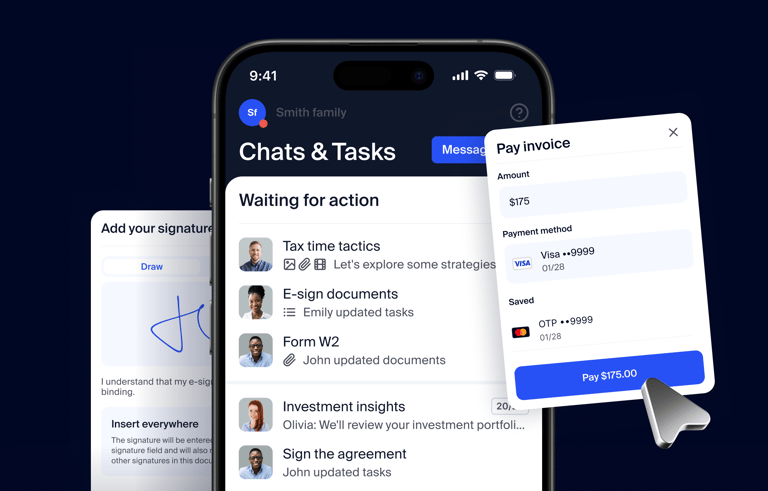
Run your entire firm on one platform
Key takeaways:
- Outsourced bookkeeping typically costs $300–$1,500 per month.
- Full-service outsourced accounting (bookkeeping plus AP/AR, payroll coordination, monthly close, and financial statements) runs $1,500–$3,500 per month.
- Most small businesses processing 50–200 transactions a month land in the $1,500–$3,000 range for comprehensive outsourced accounting.
- Tax preparation, catch-up bookkeeping, year-end support, and software setup are usually priced separately.
- A common provider rule of thumb: total finance and accounting costs should run 1–4% of annual revenue. The percentage typically falls as revenue grows.
- Price follows scope and transaction volume more than any other factors.
Outsourced accounting costs depend almost entirely on what you hand off. Bookkeeping alone runs $300–$1,500 per month. A full-service engagement that adds AP/AR, monthly close, and financial statements runs $1,500–$3,500 per month, with controller or CFO support on top of that for businesses that need strategic oversight.
This guide covers what each service level includes, how providers price their work, what is usually billed extra, and how to compare quotes on the same basis.
Table of сontents
- How much does it cost to outsource accounting in 2026?
- Outsourced accounting pricing models
- What’s included at each price level
- What’s usually billed extra
- What affects the cost of outsourced accounting?
- How much should a small business budget for accounting?
- Outsourced vs. in-house accounting: a quick cost check
- How to compare outsourced accounting quotes
- FAQs
- Finding the right outsourced accounting provider
How much does it cost to outsource accounting in 2026?
The short answer: it depends on how much of your accounting function you hand off. Here is the cost ladder from basic bookkeeping through a full outsourced accounting department.
| Service level | What’s included | Typical monthly cost | Best for | Learn more |
| Bookkeeping only | Transaction recording, bank reconciliation, basic reports | $300–$1,500 | Businesses with fewer than 100 transactions/mo and clean books | Bookkeeper cost guide |
| Full-service outsourced accounting | Everything above plus AP/AR, payroll coordination, monthly close, financial statements | $1,500–$3,500 | Small businesses processing 50–200 transactions/mo | Accountant cost guide |
| Plus controller oversight | All of the above plus cash-flow forecasting, custom reporting, internal controls | $2,000–$5,000 | Growing businesses that need financial strategy, not just record-keeping | — |
| Plus fractional CFO | All of the above plus budgeting, fundraising support, board reporting | $3,000–$10,000 | Businesses preparing for a loan, investor round, or major growth phase | Fractional CFO cost guide |
| Full outsourced accounting department (mid-market) | End-to-end finance function: bookkeeping through CFO advisory | $5,000–$12,000+ | Mid-market companies ($3M–$20M+ revenue) | — |
| Tax preparation | Federal and state business returns (separate engagement) | Varies | All businesses with filing obligations | CPA cost article |
Most small businesses processing 50–200 transactions a month will land in the full-service tier, typically in the $1,500–$3,000 range. The jump from bookkeeping to full-service is where most businesses see the biggest return: you go from clean records to a complete monthly financial picture. Above that, each tier adds a layer of strategic oversight, and the cost reflects the seniority of the person doing the work.
Outsourced accounting pricing models
How a provider charges matters almost as much as what they charge. These are the four models you will encounter most often.
1. Monthly retainer
You pay a fixed monthly fee for a defined scope of work. This is the most common model for ongoing outsourced accounting and the easiest to budget around.
Best for: businesses with steady transaction volume and predictable needs. The risk is scope creep. If your business grows or your needs change mid-contract, the retainer may not cover the extra work, and overages can add up quickly.
2. Hourly rates
You pay for time used. CPA hourly rates typically range from $200 to $500 per hour, with rates reaching $800 or more for highly specialized work.
Best for: short-term or unpredictable projects such as a one-time consultation or an audit. The risk is unpredictable bills. If your provider finds issues that take longer to resolve than expected, costs can climb.
3, Per-transaction
You pay a fixed fee for each transaction processed. Rates generally run $1–$5 per transaction, depending on complexity.
Best for: businesses with highly variable transaction volumes that would overpay on a flat retainer during slow months. The risk is that costs scale linearly with volume, so a spike in transactions means a spike in your bill.
4. Project-based (cleanup, system setup, year-end)
You pay a flat fee for a specific deliverable. Catch-up or cleanup work, for example, is usually billed separately and typically runs $1,000–$5,000+ depending on how far behind the books are.
Best for: one-time needs with a clear scope, such as cleaning up a year of miscategorized transactions or migrating to new accounting software.
What’s included at each price level
The table above gives the cost ladder. Here is what you actually get at each level and the signs that you have outgrown it.
Bookkeeping only ($300–$1,500/mo)
Transaction recording, bank and credit card reconciliation, and basic monthly reports. At this level, you are getting clean books, but you are not getting analysis, forecasting, or strategic advice.
Signs it’s time to move up: your monthly close takes more than a week, you are making decisions without current financial statements, or you need accrual-basis reporting, and your bookkeeper only works in cash basis.
Full-service outsourced accounting ($1,500–$3,500/mo)
Everything a bookkeeper does, plus accounts payable and receivable management, payroll coordination, monthly close, and full financial statement preparation. You get a complete picture of your finances each month.
Signs it’s time to move up: you need a cash forecast, your lender or investors are asking for projections, or you want someone reviewing the numbers for trends and risks rather than just recording them.
Plus controller oversight ($2,000–$5,000/mo)
Adds cash-flow forecasting, custom management reporting, internal controls review, and budget-to-actual analysis. A controller turns your financial data into something you can act on.
Signs it’s time to move up: you are preparing for a loan, investor round, or acquisition and need board-level reporting, or your business has multiple entities or complex revenue recognition needs.
Plus fractional CFO ($3,000–$10,000/mo)
Strategic financial leadership: budgeting, scenario planning, fundraising support, and board or investor reporting. The CFO focuses on where the business is going, not just where it has been.
Full outsourced accounting department ($5,000–$12,000+/mo)
An end-to-end finance function covering everything from daily bookkeeping through CFO-level advisory. This model is most common among mid-market companies that need the full stack but do not want to build and manage an internal team.
What’s usually billed extra
Even at the higher service levels, these items are almost always separate line items. Ask about each one before you sign an engagement letter.
- Tax preparation. Federal and state business returns are a separate engagement from ongoing accounting. For a breakdown of what tax prep costs on its own, see our CPA cost guide.
- Catch-up and cleanup work. If your books are behind or messy, expect a one-time project fee of $1,000–$5,000+ depending on the backlog. Many providers will not start ongoing work until the cleanup is done.
- Year-end or audit support. Preparing schedules and supporting documentation for an external audit is typically billed as a project.
- Software setup and migration. Moving from one accounting platform to another, or setting up a new system from scratch, is usually a separate project fee.
- Payroll (if not bundled). Some providers include payroll coordination; others charge extra. For standalone payroll pricing, see our payroll cost guide.
- Special projects. Entity restructuring, sales tax registration in a new state, or a one-off financial model are all outside the scope of a standard retainer.
The single most important question to ask any provider: what does “all-inclusive” actually include?
What affects the cost of outsourced accounting?
Two businesses can both pay for “full-service outsourced accounting” and land at very different monthly numbers. So, let’s look at the factors that determine how much an external accountant may charge.
Transaction volume
This is the single biggest cost driver. Providers typically price on transaction count, even when their proposals do not break it out explicitly. A business processing 500 transactions a month will pay significantly more than one processing 100.
Number of entities and entity type
S-corps and partnerships add compliance work that a sole proprietorship does not. Multiple entities mean multiple sets of books, multiple returns, and more reconciliation.
Operating in multiple states
Multi-state operations add sales-tax filings, payroll registrations, and nexus tracking. Each additional state increases the scope of work.
Industry complexity
Construction job costing, e-commerce with sales tax in dozens of states, and real estate with depreciation schedules all require specialized knowledge. Providers with that expertise charge accordingly. According to TaxDome’s Niche Business Accounting Report, 83% of businesses paying $10,000 or more a year for accounting say a firm’s use of technology is a key factor in their decision. The top reasons businesses switch firms are poor responsiveness and lack of industry insight.
State of the books
If a cleanup is needed before ongoing work can begin, that project fee adds to your total first-year cost.
US-based vs. offshore providers
Offshore providers can cost significantly less, but the trade-off is often less familiarity with US tax law and potential communication challenges around time zones and language. We have not included offshore price ranges here because reliable, independently sourced figures are scarce.
Industry specialization
A provider who specializes in your industry can often deliver more value per dollar because they already understand your chart of accounts, compliance requirements, and the metrics that matter.
How much should a small business budget for accounting?
A common provider rule of thumb is to plan for total finance and accounting costs of 1–4% of annual revenue. The percentage typically falls as revenue grows because many accounting costs do not scale linearly. Note that this range covers your entire finance and accounting function, not just bookkeeping. (TaxDome’s bookkeeper cost guide cites a narrower 1–3% rule of thumb for bookkeeping alone.)
Here is what that looks like at different revenue levels. These are illustrative figures, not prescriptive budgets.
| Annual revenue | 1% of revenue | 4% of revenue | Annual budget range | Monthly budget range |
| $500,000 | $5,000 | $20,000 | $5,000–$20,000 | $417–$1,667 |
| $1,000,000 | $10,000 | $40,000 | $10,000–$40,000 | $833–$3,333 |
| $3,000,000 | $30,000 | $120,000 | $30,000–$120,000 | $2,500–$10,000 |
| $5,000,000 | $50,000 | $200,000 | $50,000–$200,000 | $4,167–$16,667 |
The lower end of the range is realistic for a business with clean books, simple entity structure, and limited compliance needs. The upper end reflects businesses with multiple entities, multi-state operations, or a need for controller-level oversight and CFO advisory.
Outsourced vs. in-house accounting: a quick cost check
The BLS reports a median annual wage of $83,680 for accountants and auditors as of May 2025. Employer costs (benefits, payroll taxes, overhead) typically add 1.25–1.4× on top of salary. That puts the fully loaded cost of one in-house accountant at roughly $104,600–$117,150 per year, or about $8,717–$9,763 per month.
A full-service outsourced retainer runs well under half of that annually. Outsourcing also eliminates recruiting, training, and coverage-gap risks. The trade-off is less direct, day-to-day control over a dedicated employee.
How to compare outsourced accounting quotes
Price alone does not tell you whether a quote is good value. Use the table below to compare proposals side by side on the details that drive your actual experience and total cost.
| Provider A | Provider B | Provider C | |
| Services included | |||
| Transaction volume included | |||
| Overage pricing | |||
| Cleanup fee | |||
| Tax prep included? | |||
| Payroll included? | |||
| Software cost included? | |||
| Contract term | |||
| Named contact vs. rotating staff | |||
| Response-time commitment | |||
| How documents are shared (secure client portal vs. email) |
The last three rows matter more than most buyers realize. The Niche Business Accounting Report data on why businesses leave their firm (poor responsiveness and lack of industry insight) applies directly here. A secure client portal for document sharing, rather than email attachments, is a practical indicator of how seriously a provider takes both efficiency and data security.
FAQs
How much does outsourced accounting cost per month?
It depends on the service level. The ladder table earlier in this guide gives the full range from bookkeeping through CFO advisory.
Is outsourcing accounting cheaper than hiring an accountant?
Usually, yes. A single in-house accountant costs roughly twice as much as a full-service outsourced retainer once you factor in benefits, taxes, and overhead.
What’s the difference between outsourced bookkeeping and outsourced accounting?
Bookkeeping covers transaction recording, reconciliation, and basic reports. Outsourced accounting builds on that with AP/AR management, monthly close, financial statements, and potentially controller or CFO advisory.
Does outsourced accounting include tax preparation?
Usually not. Tax prep is almost always a separate engagement. Always confirm before signing.
How much does catch-up bookkeeping cost?
It depends on the backlog. See the “what’s usually billed extra” section above for the typical range.
Can I start with bookkeeping and add services later?
Yes. Most providers offer tiered service levels, and scaling up as your needs grow is a common path.
What should a small business spend on accounting?
A widely cited rule of thumb is 1–4% of annual revenue. The budget table earlier in this guide shows what that looks like at different revenue levels.
Finding the right outsourced accounting provider
Define your scope and transaction volume first. That is what determines your price tier more than anything else. Then compare quotes on the same basis: use the table above to make sure you are comparing included services, overage pricing, and the client experience, not just the headline monthly number.
Confirm what is billed extra (tax prep, cleanup, payroll, software) so you are not surprised after signing.
TaxDome is rated 4.7 out of 5 across 7,600+ reviews by accounting professionals. Use the TaxDome Accountant and Advisor Finder to connect with outsourced accounting providers who deliver a secure, transparent client experience.

Aaron produces practical content for TaxDome, drawing on 11 years in SaaS copywriting and marketing. He helps accounting and tax professionals get the most from TaxDome and other tools, making complex topics clear and actionable.
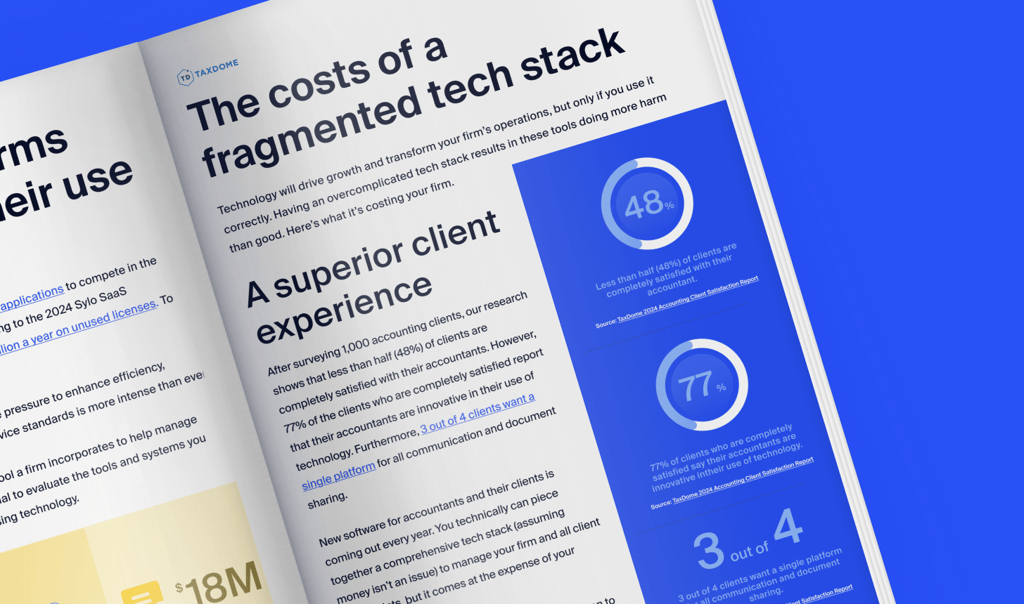
Get your free guide

Thank you!
The guide copy has been sent to your email. Please check your inbox!
Recommended articles

How much does a financial advisor cost in 2026? Fees, rates & tax rules

How to start an accounting firm: a step-by-step guide to running your own practice
Accounting process improvement: Practical strategies, tools, and real-world examples