 US – English
 UK – English
 Canada – English
 Australia – English
 Danmark – Dansk
 DACH - Deutsch
 France – Français
 España – Español
 Sverige – Svenska
 Italia – Italiano
 Nederland – Nederlands
 Portugal – Português
 Suomi – Suomi
 Norge – Norsk
 日本 – 日本語
 Romanian – Română












Communication in accounting: key skills to build stronger relationships
Run your entire firm on one platform
Client and team interaction is what holds an accounting practice together. How a firm manages conversations with both clients and staff often determines whether it grows or struggles.
In this article, we’ll dive into where accounting communication breaks down, which skills accountants need to master, and how firms can build workflows that keep everyone aligned and the work moving forward without unnecessary stress.
Table of сontents
- Why communication can make or break an accounting firm
- Common communication problems in accounting firms
- What communication skills do accountants actually need?
- Tips to improve communication skills accountants rely on daily
- How a 3,000-client firm transformed client communication with TaxDome
- Final thoughts
Table of сontents
- Why communication can make or break an accounting firm
- Common communication problems in accounting firms
- What communication skills do accountants actually need?
- Tips to improve communication skills accountants rely on daily
- How a 3,000-client firm transformed client communication with TaxDome
- Final thoughts
Why communication can make or break an accounting firm
Every firm juggles two sides of communication: client interactions and internal collaboration. Issues with one almost always affect the other — let’s take a closer look at how it works in practice.
Poor internal communication undermines teams and profitability
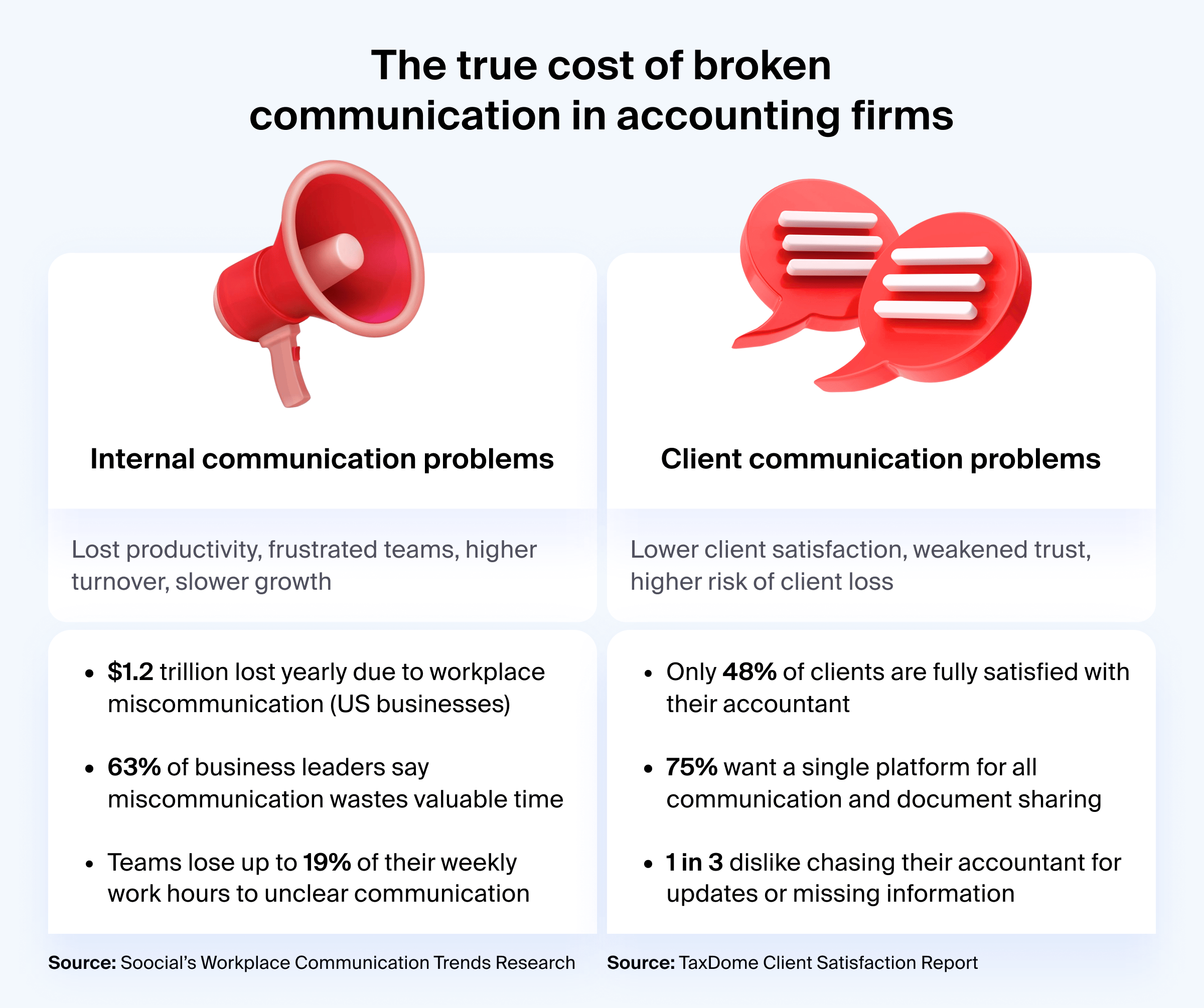
Inside the firm, weak communication rarely shows up as one big failure. Instead, it’s a thousand little breakdowns, and these gaps don’t just slow work down — they create frustration, rework, and unnecessary fire drills.
The cost is massive. Soocial’s research estimates that ineffective information exchange drains roughly $1.2 trillion from US businesses each year. And beyond lost productivity, employee morale suffers too. In companies where turnover exceeds 15%, teams are 34% more likely to report struggles with staying aligned and informed.
In an accounting profession where burnout is already common, this creates a dangerous cycle: communication failures fuel frustration, frustration fuels turnover, and turnover makes communication even harder to fix.
Poor client communication erodes trust and retention
And of course, these problems don’t stop behind closed doors. Every internal misstep eventually spills over to clients, leaving them with the feeling like they have to manage the process themselves — often while already stressed about complex financial decisions.
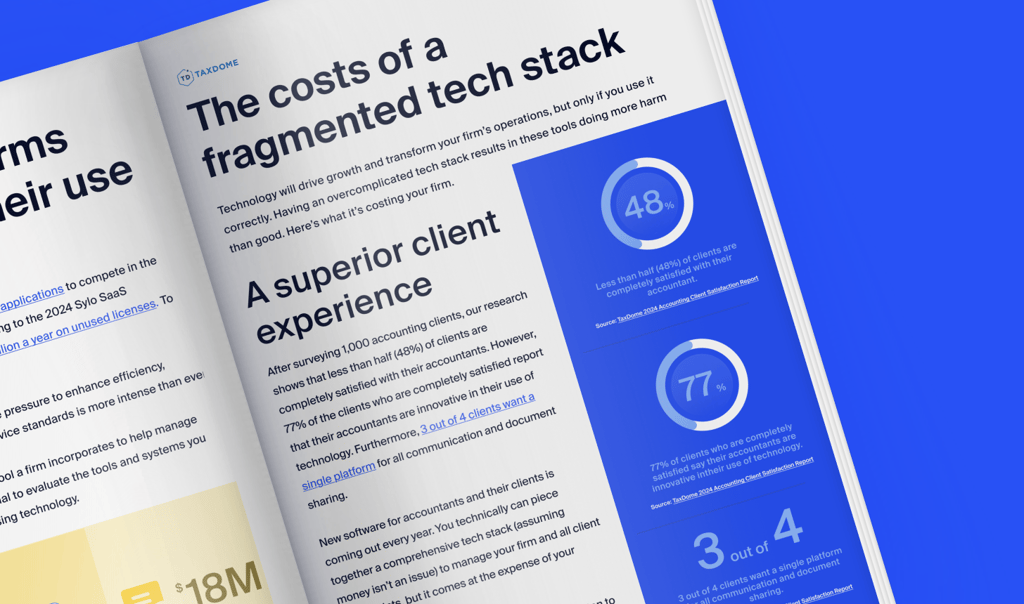
The numbers reflect that breakdown. Based on responses from 1,000 US taxpayers, only 48% of clients say they are fully satisfied with their accountant. Many point to disjointed communication as one of their biggest frustrations.
Clients expect not just accuracy, but confidence. When their accountant’s communication feels reactive or disorganized, trust erodes quickly. And in a competitive market, clients who feel uncertain or neglected are far more likely to seek out other firms.
Key takeaway
The importance of communication in accounting is hard to overstate. It directly shapes client satisfaction, staff efficiency, and the firm’s ability to grow without chaos. When communication works, firms run seamlessly and relationships strengthen.
Common communication problems in accounting firms
Before firms can improve communication, they need to recognize where things actually go wrong. Many firms live with these issues for years because the warning signs don’t always feel urgent until they accumulate and start slowing down the entire accounting process.
What clients experience when communication breaks down:
- Being asked for the same document more than once
- Having to chase for updates or responses that should’ve been automatic
- Receiving vague or unclear instructions for document prep or forms
- Facing urgent, last-minute requests that could have been handled earlier
- Hearing confusing financial terms they don’t fully understand but are too embarrassed to question
- Feeling like they’re driving the process instead of being guided
What teams experience inside the firm:
- Tasks sitting unassigned because no one’s clear on ownership
- Multiple team members duplicating work unknowingly
- Wasting time digging through emails, chats, and spreadsheets to find scattered information
- Client requests getting “lost” between departments or roles
- Shifting priorities without clear resets, creating confusion about what’s urgent
- Staff quietly growing frustrated by constant rework and preventable errors
These aren’t rare problems — they’re exactly what starts happening as firms scale, manage more clients, and juggle multiple tools that don’t speak to each other. Left unchecked, these communication gaps silently cost firms time, client trust, and team stability.
If you’re unsure how serious the communication gaps are in your firm, start by answering a few simple questions.
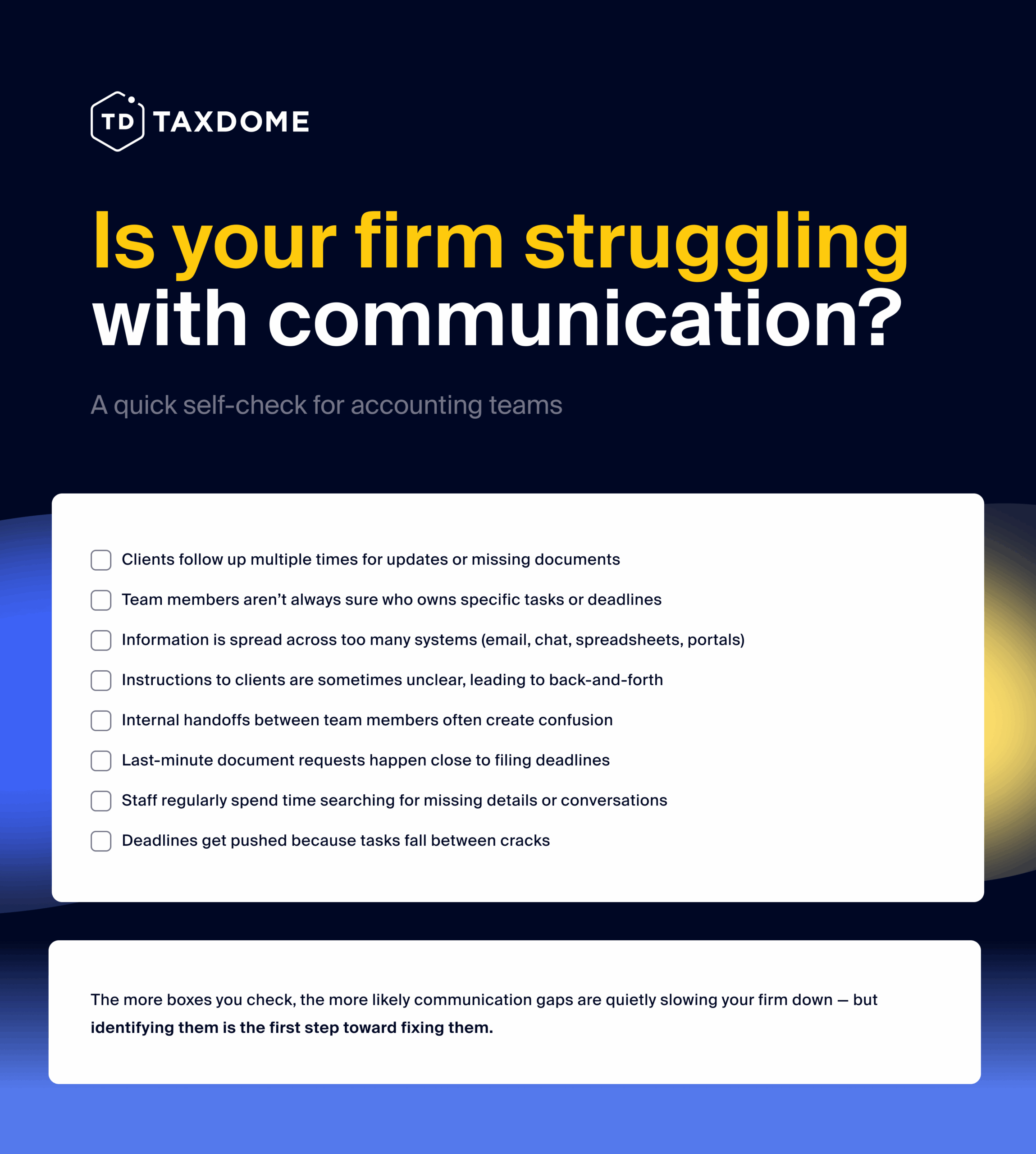
In short, communication problems in accounting firms usually hide in routine work: repeated client follow-ups, unclear task ownership, scattered information, and daily internal confusion. Spotting these patterns early is the first step toward building better systems — and protecting both client experience and team efficiency.
What communication skills do accountants actually need?
Improving communication across a firm always starts with people. That’s why developing effective communication skills is the first — and most important — step toward solving the issues we’ve identified.
Depending on the types of communication in accounting, different skills come into play. Let’s break down the most important ones.
1. Verbal communication
Accountants need to guide conversations that help clients share accurate accounting information. This means asking open-ended questions that invite full explanations, clarifying vague answers, rephrasing technical terms into client-friendly language, and listening closely to catch missing details before they become issues.
Why it matters:
Clients feel heard and don’t need to repeat themselves. Teams collect complete information upfront, reduce rework, and serve more clients without adding complexity.
What challenges it helps prevent:
- Incomplete client records or missing financial data
- Rework caused by misunderstood requests
- Scope creep from unclear expectations
- Client frustration due to feeling unheard
2. Written communication
Accountants need to write in a way that feels friendly, easy to follow, and structured. That means using simple language, breaking complex topics into clear steps, and avoiding long, dense paragraphs that overwhelm clients. The tone should feel approachable while still staying professional.
Why it matters:
Clear, structured messages help clients respond quickly and correctly. Internally, written clarity keeps teams aligned and work moving without extra clarification.
What challenges it helps prevent:
- Delays in receiving necessary documents
- Clients submitting incomplete or incorrect information
- Excessive follow-up emails to clarify requests
- Internal confusion when tasks change hands
3. Digital communication proficiency
As firms adopt client portals, task systems, chats, and email threads, accountants need to know not just how to use these tools but how to be effective communicators within each one. This includes knowing how much detail to include depending on the platform, keeping emails clear but complete, keeping chat threads short and focused, referencing previous messages to maintain context, and tagging the right people at the right time.
Why it matters:
Clear digital communication keeps work visible, deadlines on track, and both clients and teams fully informed without back-and-forth.
What challenges it helps prevent:
- Lost client messages or untracked requests
- Information scattered across disconnected systems
- Duplicate work due to missed updates
- Confusion over task status and ownership
4. Presentation skills
Accountants need to break down complex reports and highlight what matters most to clients. This means focusing on key takeaways, using simple language, and guiding clients toward clear decisions based on financial data.
Why it matters:
Advanced presentation communication skills help accountants keep clients confident and informed. Internally, they also help teams stay aligned during planning or review sessions.
What challenges it helps prevent:
- Clients leaving meetings unsure about next steps
- Missed opportunities for advisory conversations
- Reduced client confidence in the firm’s expertise
- Team members misunderstanding financial priorities
5. Non-verbal awareness
Accountants need to pick up on client hesitation, confusion, or concern even when it isn’t spoken. This means watching for facial expressions, pauses, tone shifts, and body language that signal when clarification is needed.
Why it matters:
Spotting issues early allows accountants to address confusion before frustration builds so clients stay engaged. The same applies internally, where non-verbal signals can help managers identify burnout or misalignment early.
What challenges it helps prevent:
- Unspoken client frustration or lost confidence
- Confusion escalating into avoidable errors
- Missed warning signs of staff disengagement
- Difficult conversations that could have been resolved earlier
6. Adaptability to audience
Accountants need to adjust their language, examples, and level of detail depending on who they’re speaking with. This means simplifying explanations for clients unfamiliar with accounting while still offering more technical depth when talking to CFOs, business owners, or other professionals who want specifics.
Why it matters:
Tailored conversations keep clients involved, confident, and able to act on your recommendations. It reduces confusion, builds trust, and strengthens your role as a true advisor — not just a technical service provider.
What challenges it helps prevent:
- Clients feeling lost in technical jargon
- Misaligned expectations on deliverables or timelines
- Missed opportunities to educate clients on value-added services
- Internal miscommunications between different experience levels
7. Conflict management
Accountants need to handle difficult conversations early and directly — whether it’s a missed deadline, a billing concern, or a client misunderstanding. This means staying calm, acknowledging frustration without becoming defensive, and guiding the conversation toward a clear resolution.
Why it matters:
Strong conflict management protects client relationships when issues arise. Handled well, conflicts often strengthen trust, showing clients the firm can navigate challenges professionally and keep communication open even during tough situations.
What challenges it helps prevent:
- Escalating disagreements that damage client trust
- Clients feeling unheard or dismissed
- Small issues turning into long-term dissatisfaction
- Tension spreading across the team during conflicts
Tips to improve communication skills accountants rely on daily
Improving communication starts with small shifts that create big results over time — both for client experience and internal workflows.
1. Start by simplifying your language.
Avoid accounting jargon and focus on using client-friendly words. Break explanations into smaller parts, check for understanding as you go, and give clients space to ask questions comfortably.
2. Structure your conversations and requests.
Before meetings, prepare a short agenda and a clear list of needed documents. When requesting information, use bullet points, bold deadlines, and avoid long paragraphs that overwhelm clients.
3. Use consistent written templates.
Standardize email and document request templates across your firm. This ensures every client receives clear, easy-to-follow instructions, even when multiple staff handle the same account.
4. Leverage the right tools to support communication.
Technology helps firms stay organized as conversations and tasks multiply. With TaxDome, all client messages, document requests, and status updates stay connected to each client account.
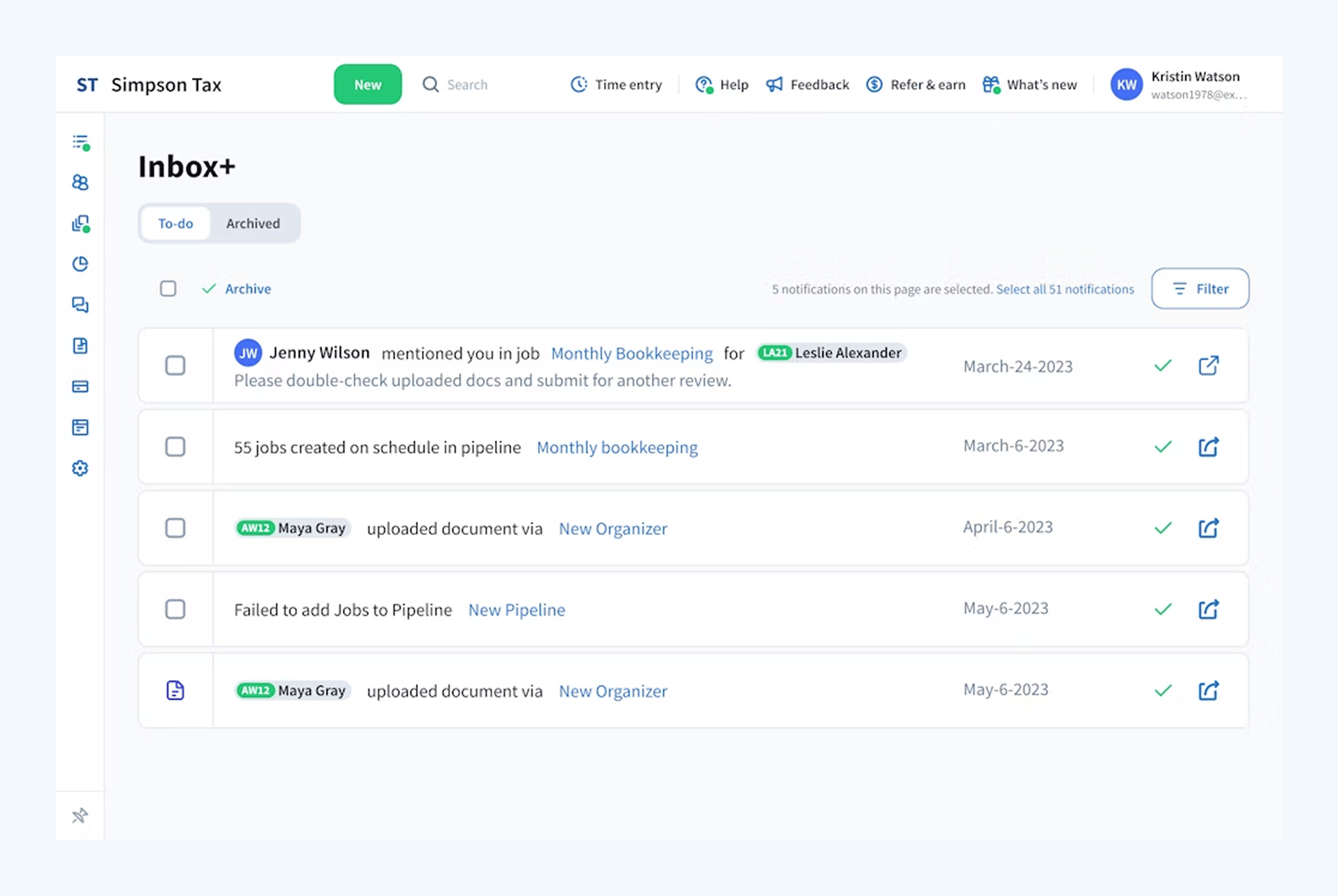
Teams can easily see what’s been shared, what’s still outstanding, and what actions need to happen next — without switching between emails, chats, or spreadsheets. This keeps projects moving forward, eliminates duplicate requests, and allows staff to focus on client work that actually adds value.
Improving communication is all about being intentional and consistent and giving both your clients and team the clarity they need to stay confident.
How a 3,000-client firm transformed client communication with TaxDome
Foundation Group, a leading US firm serving over 3,000 active nonprofit clients with a 50+ member team, struggled with scattered client communication. Their previous system made it hard to track client interactions, causing frustration for both clients and staff.
After implementing TaxDome, all client conversations, requests, and documents are now centralized and easy to manage.
“Our client communication has greatly increased, which has improved client retention and employee satisfaction.” — Andrew Payne, Senior Compliance Specialist for Foundation Group
By moving to TaxDome’s secure, user-friendly client portal and mobile app, Foundation Group improved client experience, reduced back-and-forth, and increased long-term loyalty.
Final thoughts
Communication skills help accountants build client trust, run efficient workflows, and create room for sustainable growth. With the right habits, tools, and approach, you can simplify every interaction to focus on high-value work. For firms ready to strengthen how they communicate — and grow — small shifts can deliver big returns.

Mari develops TaxDome content by combining customer insights, industry research, and real-world trends. Her structured, automation-driven approach ensures messaging is clear, relevant, and supports more connected and efficient accounting firms.
Get your free guide

Thank you!
The guide copy has been sent to your email. Please check your inbox!
Recommended articles

How to start an accounting firm: a step-by-step guide to running your own practice
Accounting process improvement: Practical strategies, tools, and real-world examples

Accounting practice management software: complete guide and comparison