 US – English
 UK – English
 Canada – English
 Australia – English
 Danmark – Dansk
 DACH - Deutsch
 France – Français
 España – Español
 Sverige – Svenska
 Italia – Italiano
 Nederland – Nederlands
 Portugal – Português
 Suomi – Suomi
 Norge – Norsk
 日本 – 日本語
 Romanian – Română












Accountancy qualifications in the UK: from beginner to chartered accountant
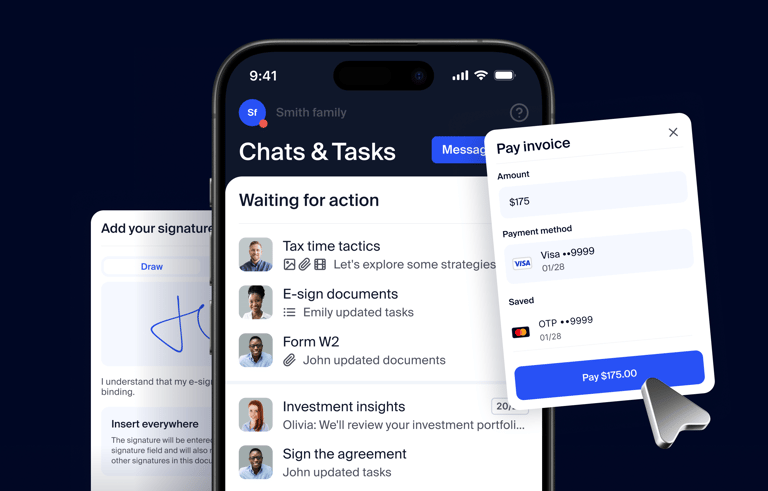
Run your entire firm on one platform
In accounting, the right qualification changes everything. It can mean the difference between chasing opportunities and having them come to you.
But with so many routes available, it’s not always clear where to begin or which path will get you where you want to go. That’s why we’ve created this guide: to help you make informed decisions with confidence.
We’ll walk you through the most popular accounting qualifications in the UK, who they’re best suited for, and the different types of roles they can lead to. You’ll also get practical tips for tackling the certification process and real-world insights from professionals who’ve already taken the leap.
Table of сontents
Why becoming a qualified accountant matters
A recognised qualification can change your career trajectory. It proves you’ve mastered complex financial principles and can apply them with accuracy, ethics, and insight. That level of trust is what clients are looking for — and it’s what sets certified professionals apart.
For employers, a professional accounting qualification often signals leadership potential. It’s your ticket to higher-responsibility roles, from financial controller to CFO. It also affects your earning power. Newly qualified accountants in the UK typically see a salary jump of £10,000–£15,000 compared to part-qualified peers. Over a career, that adds up fast.
If you’re still figuring out whether to pursue chartered status or stick with general practice, this overview explains the key differences.
Best accounting qualifications in the UK: which one is right for you?
Choosing the right qualification depends on your career goals, preferred work environment, and the type of clients or industries you want to serve. Here’s a list of the most recognised UK accountancy qualifications.
AAT (Association of Accounting Technicians)
AAT is often the first step for those entering the accounting world. It’s a technician-level qualification that doesn’t require a university degree, making it accessible and practical.
The AAT qualification covers core accounting principles, from bookkeeping and tax to budgeting and financial reporting. And many use AAT as a launchpad before progressing to chartered accountant status through qualifications like ACCA or CIMA.
You can take the AAT as a self-paced course or enrol with a college or training provider, depending on your preferred learning style.
This quick video breaks down five things you should know before getting started:
Career outcome: AAT-qualified professionals can work as finance assistants, bookkeepers, or payroll specialists. As you gain experience, you can move into roles like accounts manager or finance officer or take the next step by enrolling in higher-level accounting qualifications.
And if you’re just getting started, there are plenty of free online resources to explore the basics, such as this list of free bookkeeping courses.
ACCA (Association of Chartered Certified Accountants)
ACCA is one of the most globally recognised accounting qualifications, with over 200,000 members worldwide. It covers financial and management accounting, audit, tax, law, and ethics — giving you a well-rounded skill set.
You don’t need a degree to start ACCA, but many learners choose to follow an ACCA course to support their study. To qualify, you must pass 13 exams, complete an ethics module, and demonstrate three years of relevant work experience.
Career outcome: ACCA-qualified accountants work across industries and borders, often progressing into senior finance roles like financial controller, finance director, or CFO. It’s a popular route for those interested in public practice, corporate finance, or advisory.
Want to hear from someone who’s been through it? Check out Abbie Appiah’s story on studying ACCA, passing the exams, and becoming a chartered accountant:
CIMA (Chartered Institute of Management Accountants)
CIMA focuses on management accounting — using financial data to support business strategy, decision-making, and performance. It’s ideal for those who want to work inside organisations rather than in external audit or compliance roles.
CIMA offers the CGMA (Chartered Global Management Accountant) designation in partnership with the AICPA. You’ll progress through certificate, operational, management, and strategic levels and complete a practical experience requirement.
For a first-hand perspective, check out this video:
Career outcome: CIMA-qualified professionals typically work as business analysts, finance managers, or management accountants. Many go on to senior roles like head of finance or CFO, especially in large corporations.
CIPFA (Chartered Institute of Public Finance and Accountancy)
CIPFA is the only UK body focused solely on public sector finance. The qualification includes modules on governance, audit, and strategic public finance — alongside traditional topics like financial reporting and tax.
CIPFA is particularly relevant for roles in central and local government, health, housing, and education. Candidates typically complete their training while working in a relevant role.
Career outcome: CIPFA-qualified professionals often hold senior finance positions in the public sector, such as chief accountant, head of finance, or finance director in local authorities or NHS trusts.
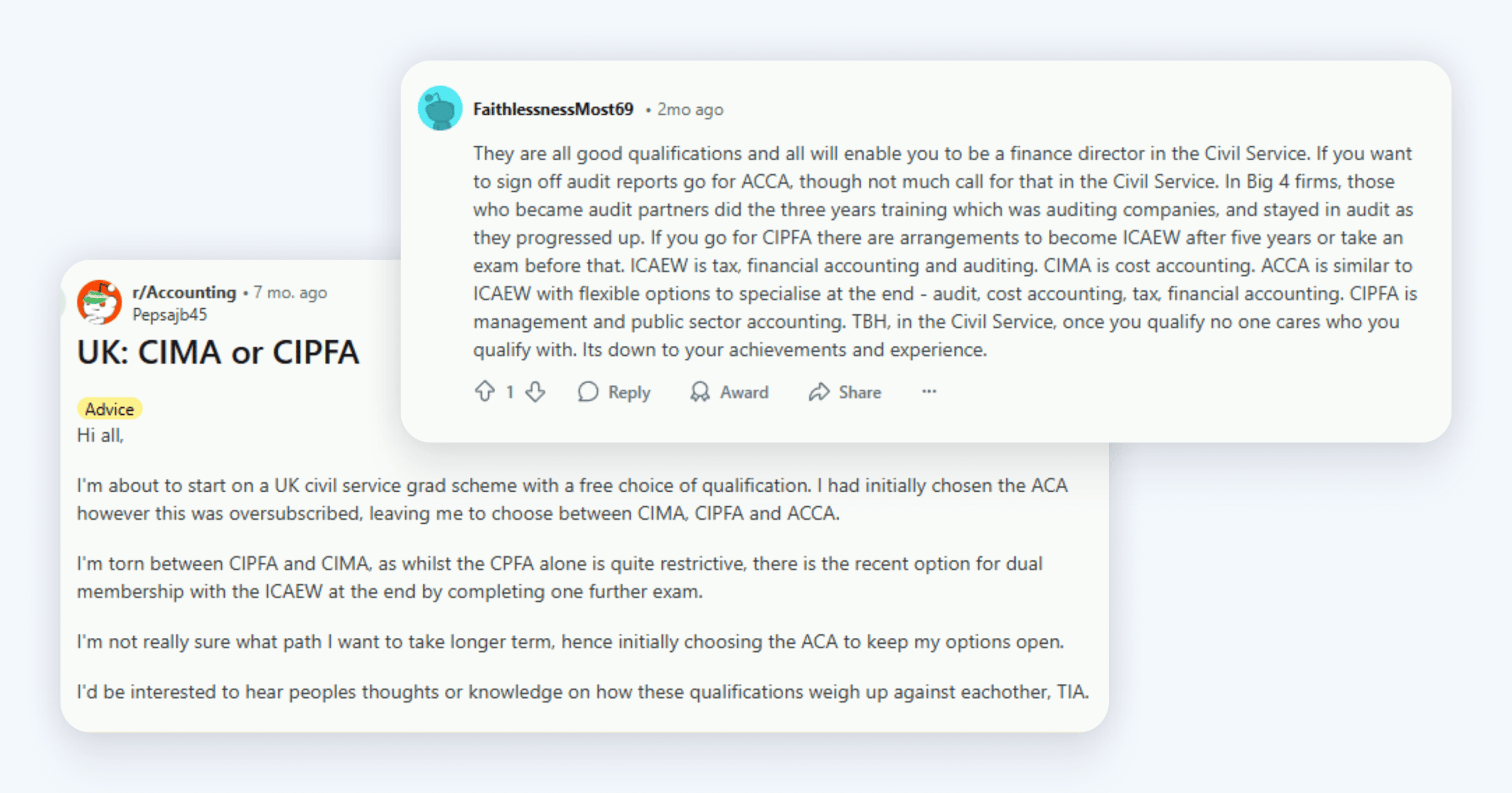
If you’re deciding between CIPFA, CIMA, or ACCA, this Reddit thread gives a glimpse into how others in the same boat are thinking it through:
ACA (Associate Chartered Accountant – ICAEW)
The ACA qualification is awarded by the Institute of Chartered Accountants in England and Wales (ICAEW) and is widely regarded as one of the highest-level accounting qualifications in the UK.
ACA is structured around 15 exams, an ethics and professional scepticism programme, and a minimum of three years’ training under an authorised employer (often one of the Big Four or mid-tier firms). You’ll gain deep expertise in audit, assurance, tax, law, and corporate reporting.
Career outcome: ACA-qualified accountants frequently work in public practice, audit, or advisory — but also hold senior positions in business, finance, and government. In the UK, the ACA is commonly viewed as a foundation for advancing to partnership level.
Planning to take this route? Here’s a quick video with tips from someone who’s already gone through the ACA:
AIA (Association of International Accountants)
AIA offers a globally focused accountant qualification that includes financial and management accounting, audit, tax, law, and ethics. It’s recognised by the UK’s Financial Reporting Council (FRC) for statutory audit registration (subject to conditions), which makes it a viable — though less common — route to becoming a chartered accountant in the UK.
The AIA qualification includes a series of professional exams, practical experience, and ongoing CPD. It appeals to professionals working in multinational organisations or those who want an alternative pathway to more mainstream routes like ACCA or ACA.
Career outcome: AIA-qualified accountants often work in international finance, SMEs, or their own firms. It’s also suitable for those looking to build careers outside of the UK while retaining a UK-recognised qualification.
The journey to certification
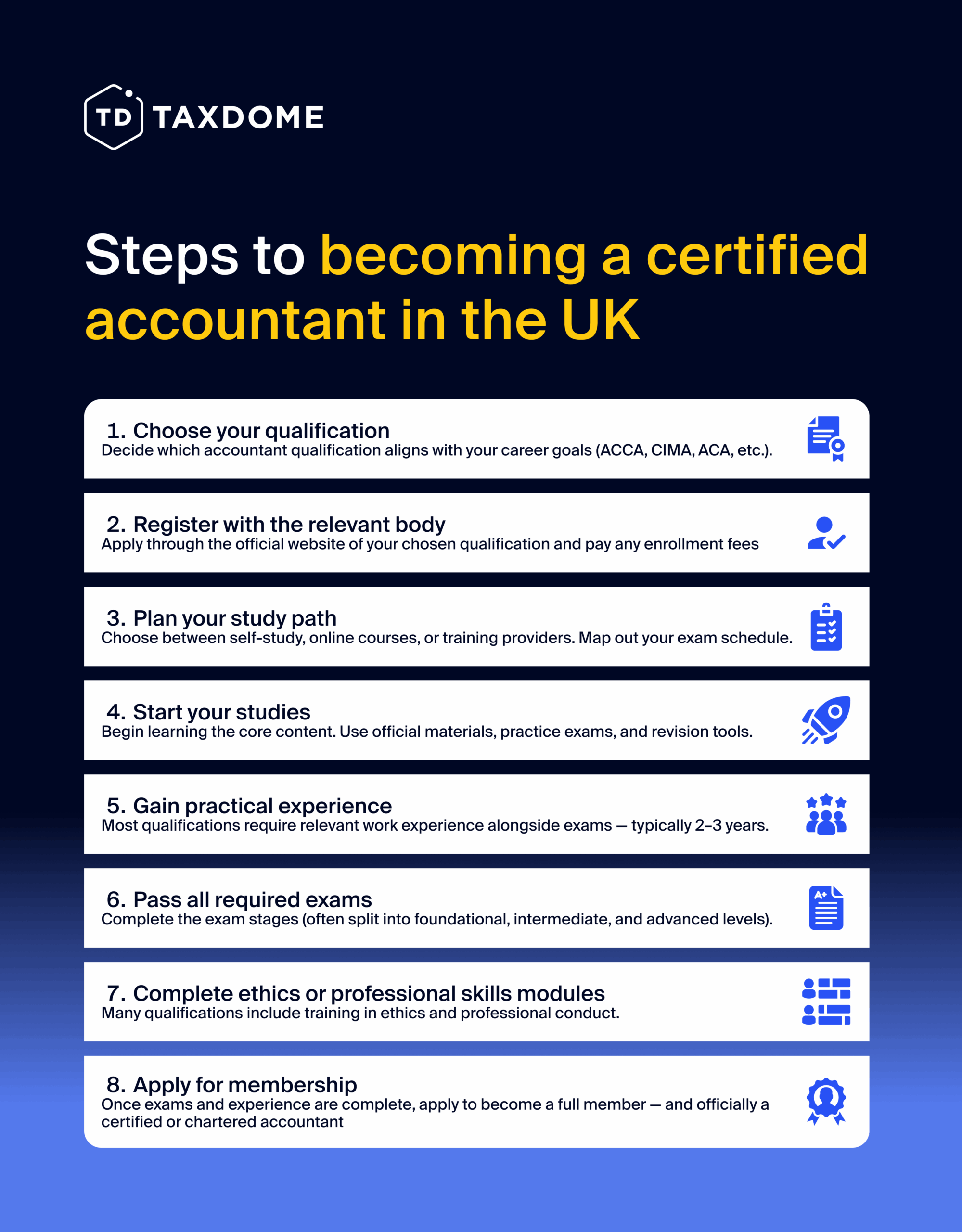
Becoming a certified accountant doesn’t happen overnight but with the right plan, it’s absolutely achievable. The first step is choosing the qualification that fits your goals. Once you’ve decided, you’ll need to register with the relevant professional body (like ACCA, CIMA, or ICAEW) and begin your studies.
You can choose from different study methods; some opt for self-study using textbooks and online resources, while others prefer structured courses through approved training providers. Many providers offer flexible options, including part-time and online formats to suit working professionals.
Exams are usually taken in stages, and most qualifications require work experience alongside them. This means managing your time well is key (especially during busy seasons).
To stay on track, it helps to set a clear study schedule and break material into smaller goals. Practice exams and mock assessments are invaluable for getting familiar with the format. Whether you’re self-studying or taking a course, these tools can help:
- Websites with learning materials and platforms from the professional bodies
- Online communities like Reddit or LinkedIn groups
- YouTube channels and podcasts with study tips and career advice
- Paid and free courses from providers like Kaplan, BPP, or Open Tuition
Everyone’s route looks a little different but with a consistent approach and the right support, getting certified is completely doable.
What they don’t teach you in the course
As you move from exams to real-world work, the right systems can make a big difference — not just in how you manage your time but in how fast you progress. Staying on top of client work, deadlines, and communication is a huge part of the job, and doing it well sets you apart.
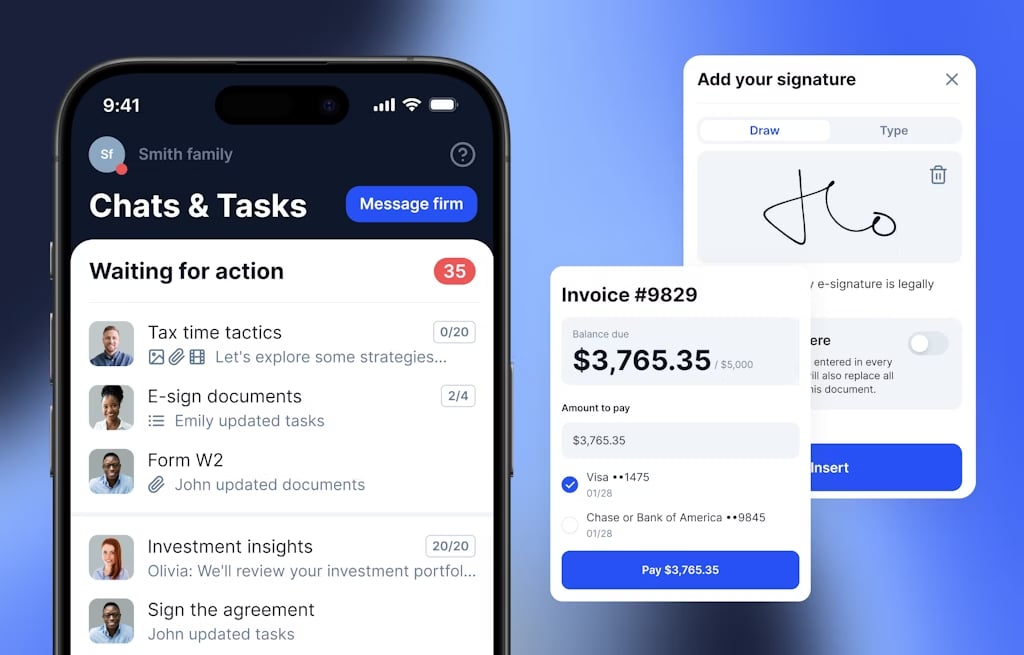
That’s where a tool like TaxDome can help. It brings everything — workflow, client tasks, documents — into one platform, helping firms save hours each week. And when you’re the person making work more efficient, that visibility can help you climb the ladder faster.
Career opportunities with accountancy qualifications
Once you’re certified, the career options are broader than most people expect. Here are just a few roles that become accessible once you’re qualified:
- Financial analyst
- Internal or external auditor
- Tax advisor
- Management accountant
- Finance business partner
- Financial controller
- Chief Financial Officer (CFO)
These roles span a wide range of sectors. Accounting certifications are highly valued in banking, insurance, consulting, government, healthcare, and corporate finance. Startups and multinationals alike rely on qualified accountants to guide decision-making and maintain financial health.
Chartered status also brings global recognition. Many UK qualifications — especially ACCA, CIMA, and ACA — are respected internationally, making it easier to work abroad or land roles with global firms. If international mobility is on your radar, these qualifications offer a real advantage.
If you’re curious about earning potential across different certifications, this video breaks down typical UK salaries for accountants with AAT, ACCA, ACA, CIMA, and more:
In short? Getting qualified gives you options and the freedom to shape your career on your terms.
Final thoughts
Each accounting qualification has its own strengths, structure, and target audience. Some are better suited for those who want to work in business or management (like CIMA), while others are ideal for public practice and audit (like ACA or ICAS). Whether you take a full-time course or balance study with work, the flexibility of modern learning options makes it easier than ever to get qualified.
The key is to match your qualification to your career goals — and to understand that becoming a chartered accountant is not a one-size-fits-all path.

Mari develops TaxDome content by combining customer insights, industry research, and real-world trends. Her structured, automation-driven approach ensures messaging is clear, relevant, and supports more connected and efficient accounting firms.
Get your free guide

Thank you!
The guide copy has been sent to your email. Please check your inbox!
Recommended articles

How to start an accounting firm: a step-by-step guide to running your own practice
Accounting process improvement: Practical strategies, tools, and real-world examples

Accounting practice management software: complete guide and comparison