 US – English
 UK – English
 Canada – English
 Australia – English
 Danmark – Dansk
 DACH - Deutsch
 France – Français
 España – Español
 Sverige – Svenska
 Italia – Italiano
 Nederland – Nederlands
 Portugal – Português
 Suomi – Suomi
 Norge – Norsk
 日本 – 日本語
 Romanian – Română












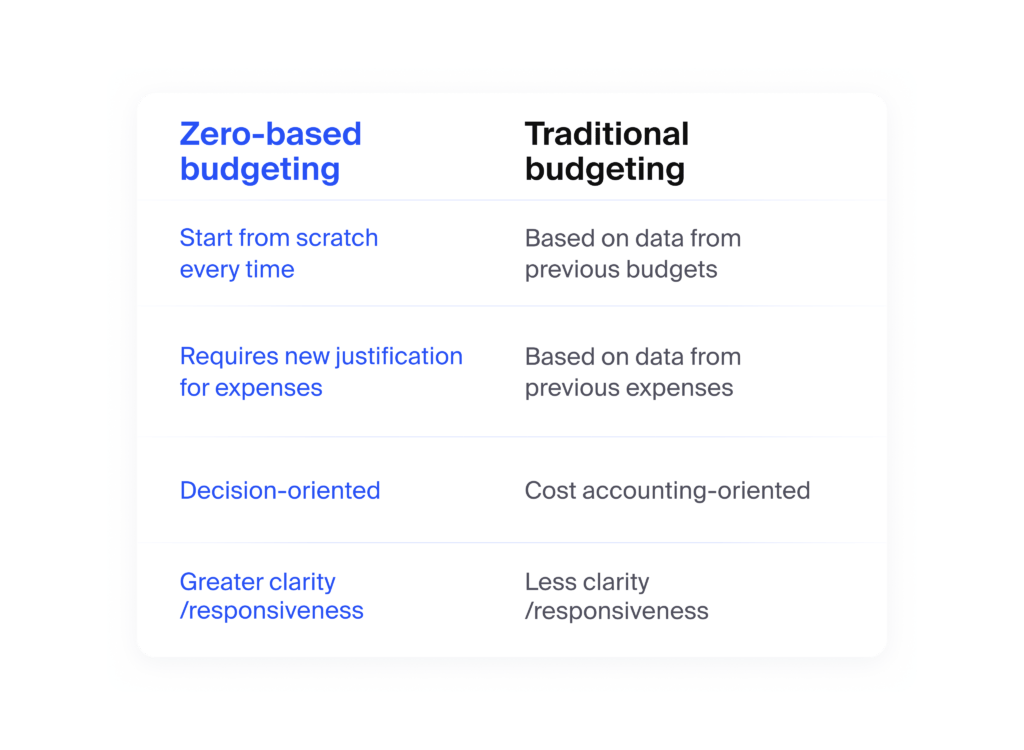
Zero-based budgeting (ZBB) is a budgeting method that requires justifying every expense from scratch for each new budgeting period.
This approach forces businesses to critically evaluate their spending and prioritize resource allocation based on current needs and future goals.
Important aspects:
- “Zero-based” signifies that the budget starts from a “zero base” each period, regardless of previous allocations
- Every expense needs a clear justification for its inclusion in the budget
- ZBB emphasizes allocating resources to activities that deliver the most value
This is how ZBB compares with traditional budgeting:
Frequently asked questions
Is ZBB suitable for all organizations?
ZBB can be beneficial for organizations of all sizes, but it’s particularly well-suited for companies undergoing significant changes, facing financial constraints, or looking to optimize resource allocation.
What are the alternatives to ZBB?
Some alternatives to ZBB are:
- Traditional budgeting, which relies on historical allocations with incremental adjustments
- Activity-based budgeting, which focuses on the activities that drive costs and allocates resources accordingly
- Performance-based budgeting, which links budget allocations to achieving specific performance goals